

Asmahan Azhari Ali
Food Research Centre, P.O. Box 213, Khartoum North, Sudan
LiveDNA: 249.21523
ORCID: 0000-0002-7305-5155
Current Research in Bacteriology
Year: 2011 | Volume: 4 | Issue: 1 | Page No.: 16-22







ABSTRACT
The present study was conducted to evaluate the technological characteristics of lactic acid bacteria used as lactic acid starter in the manufacturing of fermented dairy products and which are suitable to local conditions. Morphological, cultural, physiological and biochemical characteristics were employed to identify Lactic Acid Bacteria (LAB), isolated from drinking yoghurt in different areas in Khartoum state, Sudan. The purification of isolates was done by transferring Gram +ve rods and cocci shaped bacteria to the plates of selective media MRS and M-17, respectively. These isolates were further sub cultured until pure isolates were obtained. From 18 drinking yoghurt samples a total of 303 LAB positives were determined, in which 47 (17.38%) and 256 (82.62%) were identified as lactic acid cocci and lactic acid bacilli, respectively. Additionally, our biochemical tests showed the occurrence of 22 (44.44%) Lactococcus lactis subsp. cremoris and 25 (55.56%) Leuconostoc mesenteroides subsp. cremoris among lactic acid cocci. While, in the case of lactic acid bacilli, Lactobacillus helveticus 35 (15.3%); Lactobacillus plantarum 74 (22.3%); Lactobacillus brevis 17 (21%); Lactobacillus casei subsp. casei 36 (15.5%) and Lactobacillus delbrueckii subsp. bulgaricus 94 (25.9%) was found. Among lactic acid cocci and bacilli, Leuconostoc mesenteroides subsp. cremoris and Lactobacillus delbrueckii subsp. bulgaricus were found to be the more dominant species, respectively. The current study constitutes the first step in the designing process of LAB starter cultures, in order to protect the typical organoleptic characteristics of traditional drinking yoghurt. However, in the future we can consider genetical characterization and selection of the most desirable strains and assess their potential as starter cultures for commercial use.
PDF Abstract XML References Citation
Received: August 03, 2010;
Accepted: September 28, 2010;
Published: March 25, 2011
How to cite this article
Asmahan Azhari Ali, 2011. Isolation and Identification of Lactic Acid Bacteria Isolated from Traditional Drinking Yoghurt in Khartoum State, Sudan. Current Research in Bacteriology, 4: 16-22.
DOI: 10.3923/crb.2011.16.22
URL: https://scialert.net/abstract/?doi=crb.2011.16.22
DOI: 10.3923/crb.2011.16.22
URL: https://scialert.net/abstract/?doi=crb.2011.16.22
INTRODUCTION
Fermented milks are products prepared by controlled fermentation of milk to produce acidity and flavour to desired level. Fermented milks are the most common products from which other products are also made (Thapa, 2000). Starter culture organisms used in fermentations belongs to a family of bacteria collectively known as the Lactic Acid Bacteria (LAB). These LABS are united by a constellation of morphological, metabolic and physiological characteristics. There are several factors, which influence the quality of yoghurt. These include type of milk, processing conditions, storage conditions etc., however, quality of starter culture is the most important factor that influence the development of quality yoghurt. Lactic Acid Bacteria (LAB) are widely distributed in nature and occur naturally as indigenous microflora in raw milk, drinking yoghurt, etc. They are gram positive bacteria that play an important role in many food fermentation processes. Some species of the genus Lactobacillus (Lb.), Lactococcus (Lc.) and Leuconostoc (Ln.) are included in this group. The lactic acid fermentation has long been known and applied by humans for making different food stuffs. For many centuries, LAB have been an effective form of natural preservation. In addition, they strongly determine the flavour, texture and frequently, the nutritional value of food and feed products. However, the application of well-studied starter cultures has been established for decades (Lee, 1996; Tserovska et al., 2002). The dairy industry has developed considerably, thanks to the use of selective lactic acid bacteria, the choice being based on their production of lactic acid, aromatic compounds, bacteriocins and their resistance to the phages (Herrero et al., 1996). Industrialization of the biological transformation of foodstuffs has increased the economic importance of lactic acid bacteria, because they play crucial role in the sensorial and safety aspects of fermented products. It is well recognized that technological properties of yoghurt, such as acidification, flavour production and viscosity in great extent are strain dependent (Accolas and Auclair, 1977). Lactic acid is used today by food industry as acidulent and preservative for the production of sour curd cheese and yoghurt (Linkater and Griffin, 1971) but Lipinsky (1981) has emphasized on the potential importance of biotechnologically produced lactic acid as chemical feedstock via lactonitrile and lactides. Lactococci are the major mesophilic bacteria used for acid production in dairy fermentations and used as starter cultures in the manufacture of a vast range of dairy foods including fermented milks, lactic butter, cheese and lactic casein (Ward et al., 2002). The aim of the present study was isolation and identification of a large number of lactic acid bacteria from drinking yoghurt in order to constitute an original collection of Khartoum state LAB strains and to study their technological characteristics in order to select strains of lactic acid bacteria used as lactic acid starter in the manufacturing of fermented dairy products and which are suitable to local conditions.
MATERIALS AND METHODS
Drinking yoghurt samples: The present study was conducted during the period from January to April 2010, a total of 18 drinking-yoghurt samples were collected from the households of three geographical regions of Khartoum state. The samples were collected in sterile bottles and kept cool until they could be taken to the laboratory, where they were kept at 4°C for further use.
Isolation of lactic acid bacteria: The samples were aseptically weighed and homogenized. From each sample, a 1:10 dilution was subsequently made using peptone water followed by making a 10 fold serial dilution. The 0.1 mL from each dilution was then sub cultured, in duplicate, into the M 17 and MRS agars (Merck, Germany) used for isolating LAB (Badis et al., 2004a; Guessas and Kihal, 2004). To prevent the growing of yeasts, the media were then supplemented with 100 mgL-1 of cycloheximide before being incubated at the appropriate temperatures (42, 35 and 30°C) for 2-3 days (Beukes et al., 2001; Kalavrouzioti et al., 2005). The MRS agar plates were incubated anaerobically using the Gas Pack system (Merck Anaerocult type A) at 42, 35 and 30°C for 3 days, in order to provide an optimal temperature for growing Thermophilic lactobacilli, mesophilic lactobacilli and Leuconostoc, respectively. M17 agar plates were also incubated aerobically at 30°C for 2 days, in order to set up an optimal temperature for growing lactococci. To perform the total counts, the higher dilutions were used. Colonies were randomly selected and streak plating was then used to purify the strains which were subsequently kept in two different conditions including at 4°C for MRS and M17 plates and at -20°C for M17 and MRS broths supplemented by 20% glycerol for further use (Mathara et al., 2004).
Identification of the bacterial strains: All strains were initially tested for gram reaction, catalase production and spore formation (Harrigan and McCance, 1976). Colonies were characterized on MRS and M 17 agar. Strains with gram positive and catalase negative reactions were finally used for further identification (Sharpe, 1979). Growth at different temperatures (10, 15, 37, 40 and 45°C) for 5 days, resistance to 60°C for 30 min (Sherman test), growth in the presence of 2, 3, 4 and 6.5% NaCl and different pHs (4.5 and 6.5) were considered to identify the strains. Hydrolysis of arginine and asculin, utilization of citrate, production of acetone, gas formation from glucose and dextran production from sucrose were also determined (Samelis et al., 1994). All strains were also tested for fermentation of L-arabinose, D-xylose, galactose, D-fructose, sorbitol, lactose, melibiose, saccharose, D-raffinose, melezitose, mannose and glucose (Tserovska et al., 2002). The growth of bacterial strains at 10, 15, 37, 40 and 45°C was visually confirmed by the changes in turbidity of MRS or M17 broth after 24, 48 and 72 h of incubation. The tolerance of microorganisms to the different levels of salt, pH and heat (60°C) was also visually evaluated (Harrigan and McCance, 1976). Arginine dihydrolase agar and asculin azid agar (Merck, Germany) were employed to perform the hydrolysis tests. For evaluation of citrate utilization and acetone production, citrate and MR-VP agars (Merck, Germany) were used. MRS or M17 broths containing inverted Durham tubes were used for evaluation of gas production and the production of dextran from sucrose was done in MRS agar (Mayeux et al., 1962). In order to assess the fermentation of sugars a medium with the following composition was employed (gL-1): bovine extract, 10.0; neopepton, 10.0; yeast extract, 5.0; K2HPO4, 2.0; CH3COONa+3H2O, 5.0; diamonium citrate, 2.0; MgSO4, 0.2; MnSO4, 0.05; brom-cresol-purple, 0.17; tween 80, 1 mL. Carbon sources were added individually to this medium as filter sterilized solutions to a final concentration of 1%. Carbohydrate utilization was assessed at the 24th and 48th h and on the 7th day of the growth at the corresponding temperature (Tserovska et al., 2002).
RESULTS
All 303 Gram positive, catalase negative and non spore-forming isolates were further characterized as follows:
Mesophilic homo-fermentative cocci, 22 isolates: This group was represented by ADH (-) (arginine dihydrolase) (negative arginine hydrolysis), citrate (-) (negative citrate utilization) and acetoin (-) (negative acetoin production) isolates, which were identified as Lactococcus lactis subsp. Cremoris (Table 1). In this group, the microorganisms were spherical or ovoid in shape, occurring in pairs and short chains with non motile, facultative anaerobic fermentative metabolism (Holt, 1994).
Mesophilic heterofermentative cocci, 25 isolates: The microorganisms in this group were closely related to Leuconostoc mesenteroides subsp. cremoris which represented a reduced fermentative profile, unable to hydrolyse arginine, producing gas from glucose with citrate and acetoin positive and dextrane negative reactions (Table 1). These microaerophilic organisms were also characterized by the fermentation metabolism of lactose, glucose and Galactose (Server-Busson et al., 1999; Hemme and Foucaud- Scheunemann, 2004).
Lactobacilli bacteria, 256 isolates: We have divided the Lactobacilli group into three subgroups according to Stiles and Holzapfel (1997), as follows (Table 1): (1) Mesophilic facultative heterofermentative Lactobacilli (110 isolates), which included Lb. plantarum (74 isolates, 22.3%) and Lb. casei subsp. casei (36 isolates, 15.5%). (2) Thermophilic obligate homo-fermentative Lactobacilli (129 isolates), including Lb. helveticus (35 isolates, 15.3%) and Lb. delbrueckii subsp. bulgaricus (94 isolates, 25.9%) which had a narrow fermentation profile and was able to ferment lactose and fructose and thus, would likely belong to Lactobacillus delbrueckii subsp. bulgaricus (Samelis et al., 1994; Guessas and Kihal, 2004; Ammor et al., 2005) and (3) mesophilic obligate hetero-fermentative Lactobacilli (17 isolates). Lb. brevis (17 isolates, 21%) was included in this group.
| Table 1: | Physiological and biochemical characteristics of isolated strains |
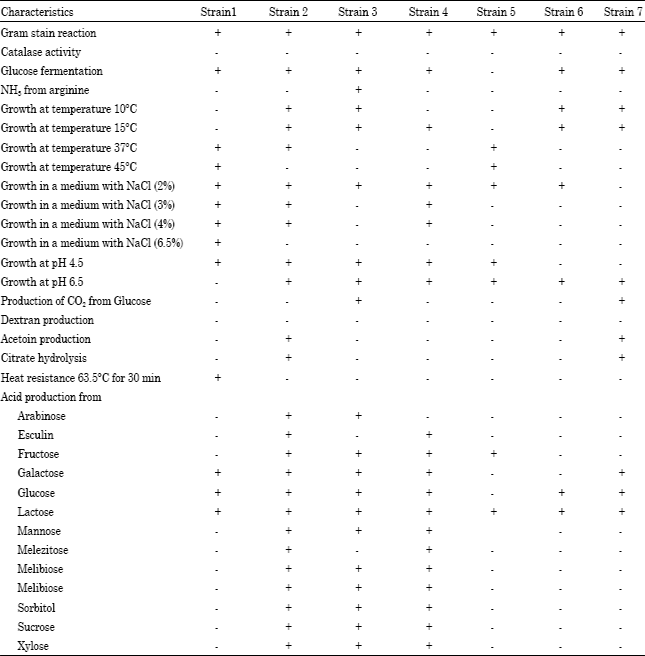 | |
| 1: Lactobacillus helveticus, 2: Lactobacillus plantarum, 3: Lactobacillus brevis, 4: Lactobacillus casei subsp. casei, 5: Lactobacillus delbrueckii subsp. Bulgaricus, 6: Lactococcus lactis subsp. cremoris, 7: Leuconostoc mesenteroides subsp. cremoris | |
DISCUSSION
It was noted that the mesophilic facultative hetero-fermentative lactobacilli group was represented by two species; 74 isolates were identified as Lb. plantarum and 36 isolates as Lb. casei subsp. casei according to Collins et al. (1989). The last species together with Lb. helveticus is included in starter cultures during the production of the cheese Gruyere, Gorgonzola and Mozzarella (Tserovska et al., 2002). The above-mentioned results are in accordance with other research groups, in raw goat milk (Guessas and Kihal, 2004). Lb. plantarum was also the major lactobacillus species found in kule naoto, the Maasai traditional fermented milk (Mathara et al., 2004). For group two, 35 and 94 isolates were identified as Lb. helveticus and Lb. delbrueckii subsp. bulgaricus, respectively. Moreover, in the last group, a supplementation test for mannose and melezitose fermentation permitted the identification of 17 isolates as Lb. brevis (Samelis et al., 1994). Olarte et al. (2000) noted that the presence of Lb. plantarum in the cheese (Cameros) from goat milk decreased the number of the enterobacteriacae and fecal coliforms in the final product. Lactobacilli isolated from household bushera belonged to Lb. plantarum, Lb. brevis and Lb. delbrueckii subsp. bulgaricus (Muyanja et al., 2003). In the characterization of microflora of Homemade semi hard white zlatar cheese, Lactobacillus brevis was found as one of the main groups (Terzic-Vidojevic et al., 2007). In the cocci group, 25 isolates were identified as Leuconostoc mesenteroides subsp. cremoris and 22 isolates as Lactococcus lactis subsp. cremoris. The lower number of lactic acid cocci is probably due to their inability to compete with lactic acid bacilli in mixed cultures (Teuber and Geis, 1981; Togo et al., 2002). As starter cultures, LAB are omnipresent in dairy manufacturing. Specific fermentation processes have been developed in order to encourage the growth of the desired species, some of which are fastidious organisms such as Lb. delbrueckii subsp. bulgaricus and Lb. helveticus (Bottazzi, 1988). Isolates belonging to the Lb. plantarum group were shown to be the predominant members of the LAB flora of acid-fermented condiment (Tempoyak). In addition, isolates belonging to the Lb. brevis group and Ln. mesenteroides were also observed (Leisner et al., 2001). Beukes et al. (2001) found Lb. plantarum, Lb. delbrueckii, Ln. mesenteroides and Lc. lactis as dominant microorganisms of South African traditional fermented milks. The most abundant isolated species from raw goat’s milk of four Algerian races were Lb. helveticus, Lb. plantarum, Lb. delbrueckii subsp. bulgaricus, Lb. brevis and Lc. lactis subsp. lactis (Badis et al., 2004b). Leisner et al. (1999) identified Lactic Acid Bacteria (LAB) of Chili Bo and found Lb. plantarum to be the most important predominant organism. Isolation and identification of Sudanese traditional drinking yoghurt has been conducted for the first time. There is no record in the literature to demonstrate the isolation and identification of the Sudanese traditional drinking yoghurt, so far. There is, however, a big economic loss due to the import of yoghurt starters, annually. Because of increased demands for traditional fermented products, the results of the present study might be able to launch a considerable native achievement in the production of drinking yoghurt. The identified isolates are used to establish the production of volatile compounds and to assess their potential as starter cultures for their commercial uses.
REFERENCES
- Ammor, S., C. Rachman, S. Chaillou, H. Prevost and X. Dousset et al., 2005. Phenotypic and genotypic identification of lactic acid bacteria isolated from a small-scale facility producing traditional dry sausages. Food Microbiol., 22: 373-382.
CrossRef - Beukes, E.M., B.H. Bester and J.F. Mostert, 2001. The microbiology of South African traditional fermented milks. Int. J. Food Microbiol., 63: 189-197.
CrossRefPubMedDirect Link - Bottazzi, V., 1988. An introduction to rod shaped lactic-acid bacteria. Biochemie, 70: 303-315.
PubMed - Server-Busson, C., C. Foucaud and J.Y. Leveau, 1999. Selection of dairy Leuconostoc isolates for important technological properties. J. Dairy Res., 66: 245-256.
CrossRef - Collins, M.D., B.A. Phillips and P. Zanoni, 1989. Deoxyribonucleic acid homology studies of Lactobacillus casei, Lactobacillus paracasei sp. nov., subsp. paracasei and subsp. Tolerans and Lactobacillus rhamnosus sp. nov., comb. nov. Int. J. Syst. Bacteriol., 39: 105-108.
CrossRef - Guessas, B. and M. Kihal, 2004. Characterization of lactic acid bacteria isolated from Algerian arid zone raw goats milk. Afr. J. Biotechnol., 3: 339-342.
CrossRefDirect Link - Hemme, D. and C. Foucaud-Scheunemann, 2004. Leuconostoc, characteristics, use in dairy technology and prospects in functional foods. Int. Dairy J., 14: 467-494.
CrossRef - Herrero, M., B. Mayo, B. Gonzalez and J.E. Suarez, 1996. Evaluation of technologically important traits in lactic acid bacteria isolated from spontaneous fermentation. J. Applied Bacteriol., 82: 565-570.
Direct Link - Kalavrouzioti, I., M. Hatzikamari, E. Litopoulou-Tzanetaki and N. Tzanetakis, 2005. Production of hard cheese from caprine milk by the use of two types of probiotic cultures as adjuncts. Int. J. Dairy Technol., 58: 30-38.
CrossRef - Leisner, J.J., B. Pot, H. Christensen, G. Rusul and J.O. Olsen et al., 1999. Identification of lactic acid bacteria from Chilli Bo, a Malaysian food ingredient. Applied Environ. Microbiol., 65: 599-605.
PubMed - Leisner, J.J., M. Vancanneyt, G. Rusul, B. Pot, K. Lefebvre, A. Fresi and L.K. Tee, 2001. Identification of lactic acid bacteria constituting the predominating microflora in an acid-fermented condiment (Tempoyak) popular in Malaysia. Int. J. Food Microbiol., 63: 149-157.
CrossRefDirect Link - Mathara, J.M., U. Schillinger, P.M. Kutima, S.K. Mbugua and W.H. Holzapfel, 2004. Isolation, identification and characterization of the dominant microorganisms of kule naoto: The Maasai traditional fermented milk in Kenya. Int. J. Food Microbiol., 94: 267-278.
PubMed - Muyanja, C.M.B.K., J.A. Narvhus, J. Treimo and T. Langsrud, 2003. Isolation, characterisation and identification of lactic acid bacteria from Bushera: A Ugandan traditional fermented beverage. Int. J. Food Microbiol., 80: 201-210.
CrossRefDirect Link - Olarte, C., S. Sanz, E. Gonzalez- Fandos and P. Torre, 2000. The effect of a commercial starter culture addition on the ripening of an artisanal goats cheese (Cameros Cheese). J. Applied Microbiol., 88: 421-429.
PubMed - Samelis, J., F. Maurogenakis and J. Metaxopoulos, 1994. Characterisation of lactic acid bacteria isolated from naturally fermented Greek dry salami. Int. J. Food Microbiol., 23: 179-196.
CrossRefPubMedDirect Link - Stiles, M.E. and W.H. Holzapfel, 1997. Lactic acid bacteria of foods and their current taxonomy. Int. J. Food Microbiol., 36: 1-29.
Direct Link - Terzic-Vidojevic, A., M. Vukasinovic, K. Veljovic, M. Ostojic and L. Topisirovic, 2007. Characterization of microflora in homemade Int. J. Food Microbiol., 114: 36-42.
PubMed - Togo, C.A., S.B. Feresu and A.N. Mutukumira, 2002. Identification of lactic acid bacteria isolated from Opaque beer (Chibuku) for potential use as a starter culture. J. Food Technol. Afr., 7: 93-97.
Direct Link - Tserovska, L., S. Stefanova and T. Yordanova, 2002. Identification of lactic acid bacteria isolated from Katyk, goats milk and Cheese. J. Cult. Collect., 3: 48-52.
Direct Link - Badis, A., D. Guetarni, B. Moussa-Boudjema, D.E. Henni and M. Kihal, 2004. Identification and technological properties of lactic acid bacteria isolated from raw goat milk of four Algerian races. Food Microbiol., 21: 579-588.
CrossRefDirect Link - Badis, A., D. Guetarni, B. Moussa-Boudjema, D.E. Henni, M.E. Tornadijo and M. Kihal, 2004. Identification of cultivable lactic acid bacteria isolated from Algerian raw goat's milk and evaluation of their technological properties. Food Microbiol., 21: 343-349.
CrossRef
kokila M Reply
very nice paper