

Emad I. Hussein
Department of Biological Sciences, Yarmouk University, Irbid, Jordan
Fuad A. Al-Horani
University of Jordan-Aqaba, College of Marine Sciences, Aqaba, Jordan
Hanan I. Malkawi
Department of Biological Sciences, Yarmouk University, Irbid, Jordan
Biotechnology
Year: 2012 | Volume: 11 | Issue: 4 | Page No.: 189-198







ABSTRACT
Crude petroleum-oil is a complex mixture of hydrophobic components like n-alkanes, aromatics, resins and asphaltenes. Microorganisms are known to attack and degrade a specific component as compared with other components of oil. This study aimed at investigating the biodegradation potential of 20 bacterial consortia that were previously isolated from 20 different contaminated sites at the Aqaba region and to screen their potential to biodegrade different types of hydrocarbons and clean up oil spills in different contaminated sites in Aqaba (Jordan) in situ and ex situ. In these contaminated soil and seawater sites, the concentrations of Total Petroleum Hydrocarbon (TPH) ranged between 45000-65000 ppm in soil and 25000-35000 ppm in seawater. Twenty different bacterial consortia from soil and seawater samples of a petroleum contaminated sites were constructed and screened for their ability to degrade crude petroleum oil. In general, bacterial consortia derived from contaminated soil and seawater sites showed maximum percentage of degradation 85 and 70%, respectively, of crude oil after 11th week of incubation. However, this study demonstrated that microbial consortia or microbial population of crude oil biodegraders could be maintained for extended periods while at and still be effective in degrading crude oil or other mixtures of toxic organics even high concentrations.
PDF Abstract XML References Citation
Received: April 16, 2012;
Accepted: July 18, 2012;
Published: October 09, 2012
How to cite this article
Emad I. Hussein, Fuad A. Al-Horani and Hanan I. Malkawi, 2012. Bioremediation Capabilities of Oil-degrading Bacterial Consortia Isolated from
Oil-contaminated Sites at the Gulf of Aqaba (Jordan). Biotechnology, 11: 189-198.
DOI: 10.3923/biotech.2012.189.198
URL: https://scialert.net/abstract/?doi=biotech.2012.189.198
DOI: 10.3923/biotech.2012.189.198
URL: https://scialert.net/abstract/?doi=biotech.2012.189.198
INTRODUCTION
Petroleum-oil is a mixture of various compounds including hydrocarbons (made exclusively of hydrogen and carbon) and distributed in different geological locations and therefore its composition and physical properties may vary from one type to another (Atlas, 1991; Zhang et al., 2011). However, saturated hydrocarbons, aromatics, asphaltenes and the resins are among the main groups that make up petroleum-oil (Colwell et al., 1977).
Petroleum-oil, most of which is formed by geological processes inside Earth, is a potential pollutant due to leakage in storage tanks, road accidents and outflow during oil refining (Zhang et al., 2011). Petroleum compounds are either volatile (those with light molecular weights) and thus is a potential atmospheric pollutant, or non-volatile (those with heavier molecular weights) and a potential soil and water pollutant (Atlas, 1991; Zhang et al., 2011). The hydrocarbons released into soil surface are Ultimately adsorbed on the organo-mineral matter of the soil (Chaineau et al., 2002).
The presence of hydrocarbons in the environment is generally considered a public health and an ecological hazard, as an example are BTEX compounds (benzene, ethylbenzene, toluene and xylene) which are considered as toxic hydrocarbon compounds (Plaza et al., 2007; El-Hammadi et al., 2007; Venkataraman et al., 2010; Jain et al., 2011; Hidayat and Tachibana, 2012). Those compounds are soluble to some extent in water, which gives them the opportunity to contaminate groundwater (Daane et al., 2001; Plaza et al., 2007). Studies had been done to explore the oil degradation ability of different organisms and their possible role in cleaning up the environment, i.e., bioremediation (Hubert et al., 1999; Vieira et al., 2007). Bioremediation describes the process of using microorganisms (such as bacteria) to degrade or remove hazardous components of wastes from environment (Dua et al., 2002), the efficiency of which depends on the activity of indigenous microorganisms and the environmental conditions leading to the formation of CO2 and H2O (Geets et al., 2003).
Some studies had indicated the isolation of several bacterial strains which showed the ability to degrade petroleum hydrocarbons (Leahy and Colwell, 1990; Atlas, 1991; Rahman et al., 2002; Wang et al., 2010; Mukred et al., 2008). Locally, 34 oil-degrading bacterial isolates were isolated from oil contaminated soil sites collected from Jordanian petroleum oil-refinery at Zarqa-city, Jordan (Al-Deeb and Malkawi, 2009). The isolated bacteria showed high oil degradation ability, 18 of them belonging to the genus Pseudomonas and the rest to the genera Acinetobacter, Alcaligenes, Comamonas, Bacillus, Micrococcus, Moraxella, Comamonas sp., Moraxella sp. and Bordetella sp. of which six bacterial consortia were constructed and examined for their biodegradation abilities (Malkawi et al., 2009). This study aimed at investigating the biodegradation potential of the consortia that were constructed from 20 different contaminated sites (soil and seawater) at the Aqaba region for the degradation of oil hydrocarbons and their potential to be used in clean up of oil spills.
MATERIALS AND METHODS
Sample collection and enrichment of oil-degrading microorganisms: Soil samples (500 g each) were collected from nine sites in Aqaba (South Jordan) that were already exposed to contamination by petroleum (Table 1). Soil samples were taken from the surface layer (0-8 cm) of nine locations. Samples were kept in sterilized bottles and transported to the lab while being stored in ice. Soil samples were crushed and sieved through 2 mm pore-sized sieve, then placed in polyethylene bags and stored at 4°C until use. Soil samples (150 g) were mixed with 450 mL sterile Stanier’s media and shaken on an orbital shaker at maximum speed (350 rpm) for 120 min. The samples' suspensions were centrifuged at 4000 rpm for 10 min, then the supernatants were transferred into fresh sterile Stanier's media supplemented with 1000 ppm crude oil and were incubated at 28-30°C with continuous shaking (150 rpm).
Additional seawater samples (1 L each) were collected from eleven locations in the Gulf of Aqaba, red sea (close to and around the oil terminal, at Prince Rashid Club including the swimming area near Prince Rashid Club) during mid-January 2009. Water samples were kept in sterile plastic containers until arriving at the laboratory and stored 4°C. Seawater samples (50 mL) were inoculated in autoclaved 250 mL Erlenmeyer flasks with 100 mL of Stanier's minimal media supplemented with 1000 ppm of crude oil as carbon source. Flasks were incubated at 28-30 °C with continuous shaking (150 rpm).
Enrichment of indigenous bacteria and construction of consortia: Twenty bacterial consortia were constructed from the above mentioned bacterial suspensions. Cells obtained from each of the twenty collected samples, were enriched in Stanier's minimal media supplemented with crude oil and were cultivated as a consortium (Stanier et al., 1966).
| Table 1: | Site description |
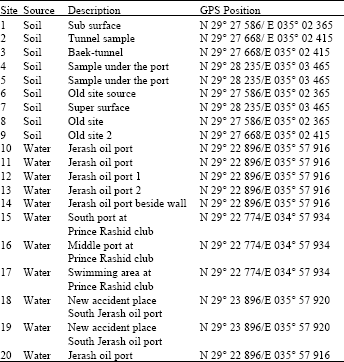 | |
Enriched organisms (consortia) from each of the twenty collected samples (Table 1) were grown in Stanier's media. Bacterial consortia were grown in the presence of different petroleum concentrations (400, 1000 and 2000 ppm) as a sole carbon and energy source. Bacterial growth in the presence of petroleum hydrocarbons was monitored by viable count method. Colony forming units per gram of soil (CFU g-1) was determined for each sample on nutrient agar after a series of dilutions (10-5-10-18). The colonies were repeatedly sub-cultured on the Stanier's medium to confirm the oil-degradation ability.
Determination of total petroleum hydrocarbon levels: Sediment and water samples were extracted for petroleum hydrocarbon analyses. The hydrocarbons were extracted from soil and water samples according to the EPA methods 8100 and 3510, respectively (US EPA Method 8100, 1986; US EPA Method 3510, 1996). The TPH were measured by a modified EPA method 8015B using gas chromatography/flame ionization detection (GC/FID) (US EPA method 8015B, 1986). Both internal 1,4-difluorobenzene (1,4-diFBz) and surrogate standards p-bromofluorobenzene (BFB) are used to quantify oil recovery and to monitor TPH detection. Samples were extracted with dichloromethane and the resulting extracts were analyzed by gas chromatograph (Calruse 500, with an auto sampler, Perkin Elmer, USA), using a capillary column Rtx-1 (60 mx053 mm; 0.1 μm film thickness; Silica fused, Philadelphia, Pa., USA), equipped with a Flame Ionization Detector (FID) to quantify the hydrocarbon compounds. Temperature of the injection port and detector were kept constant at 290 and 320°C, respectively. Oven temperature was kept constant at 50°C for 5 min and then increased at a rate of 10°C min-1 to reach 320°C. Hydrogen gas and air flow rates for the flame ionization detector was set at (2 mL min-1). Helium was used as a carrier gas. The initial temperature and temperature progress rate were selected based on the retention time of the spiked compounds.
Determination of residual hydrocarbons: To study the influence of crude oil on the bacterial communities, the constructed bacterial consortia were grown in Stanier's media supplemented with different concentrations of crude oil (1000-3500 ppm) that was added sequentially as the sole source of C and/or N over a 14 weeks period. A negative containing Stanier’s minimal media with added crude oil and a positive control containing Stanier’s minimal media, crude oil with added oil-biodegrading bacteria. Samples were collected every week from each flask. Biodegradation of crude oil was determined by measuring the residual Total Petroleum Hydrocarbon (TPH) in the media, using Gas Chromatography. Broth samples for GC analysis were extracted according to EPA method 3510. The extract was analyzed by gas chromatograph as described earlier. Leftover hydrocarbons concentration was measured and the lost amount was calculated.
RESULTS
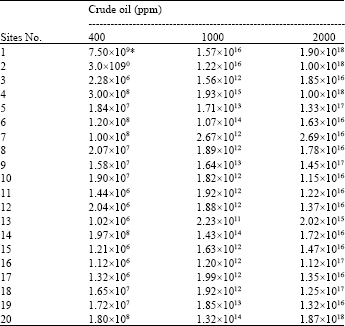
Enrichment of indigenous bacteria: Results presented in Table 2 indicate the viable bacterial count expressed as Colony-forming Units (CFU) of the collected samples obtained from enrichment cultures containing different petroleum concentrations (400, 1000 and 2000 ppm). As shown in Table 2, site 1 (Sub surface of an accident site along back oil tanker road) had the highest bacterial counts (7.50x10⁹, 1.57x10¹⁶ and 1.90x10¹⁸ CFU mL-1), whereas, site 13 (Jerash oil port 2, near the oil storage ship at the Gulf of Aqaba) showed the least bacterial counts (1.02x10⁶, 2.23x10¹¹ and 2.02x10¹⁵ CFU mL-1) at various crude oil concentrations (400, 1000 and 2000 ppm, respectively).
Total petroleum hydrocarbon levels in the soil and water samples: Initial concentrations of the Total Petroleum Hydrocarbons (TPH) (expressed as ppm) in the soil and seawater samples are indicated in Table 3, which revealed high levels of contamination in the selected sites.
| Table 2: | Growth of bacterial isolates from soil samples at different concentration of crude oil |
 | |
| *Colony forming unit (CFU mL-1) | |
| Table 3: | Hydrocarbon concentration in various samples from selected sites |
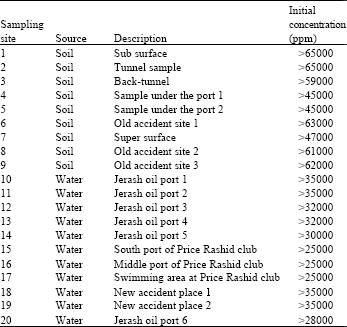 | |
Hydrocarbon concentration in different soil contaminated sites ranged between 45000-65000 ppm or more while the level TPH in water contaminated sites ranged between 25000-35000 ppm.
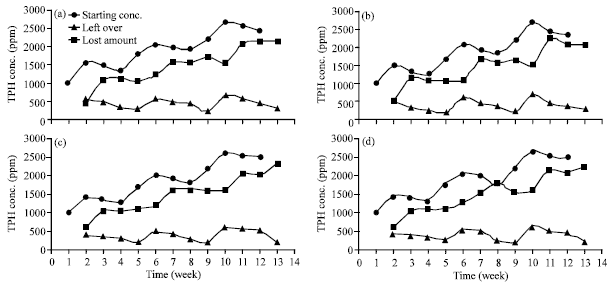
Determination of biodegradation level and residual hydrocarbon analysis: Figure 1 shows the level of Total Petroleum Hydrocarbon (TPH) degradation by the microbial consortia constructed from bacterial isolates obtained from sampling sites number 1 (Sub surface, soil), 2 (Tunnel sample, soil), 3 (Back-Tunnel, soil) and 4 (Sample under the port 1, soil). The concentrations of total petroleum hydrocarbons (ppm) present in tested soil samples from the twenty different sites were determined by retention time using the gas chromatography device. Figure 1a-c shows the highest level of hydrocarbon loss and the least in terms of hydrocarbon leftover with regard to the added hydrocarbon. Whereas, site 13 (Jerash oil port 2, near the oil storage ship at the Gulf of Aqaba) showed the least bacterial counts.
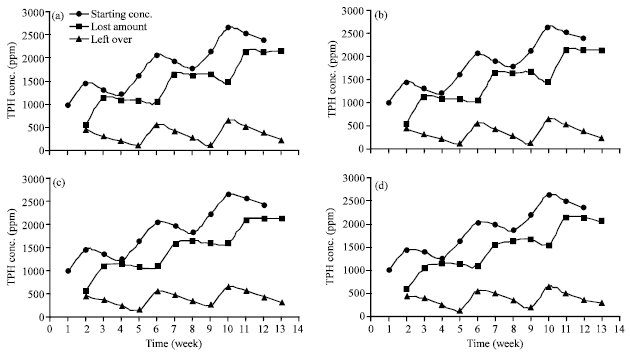
Figure 2 shows the level of Total Petroleum Hydrocarbon (TPH) degradation by the microbial consortia constructed from bacterial isolates obtained from sampling sites number 5 (Sample under the port 2, soil), 6 (Old Accident site 1, soil), 7 (Super surface, soil) and 8 (Old Accident site 2, soil).
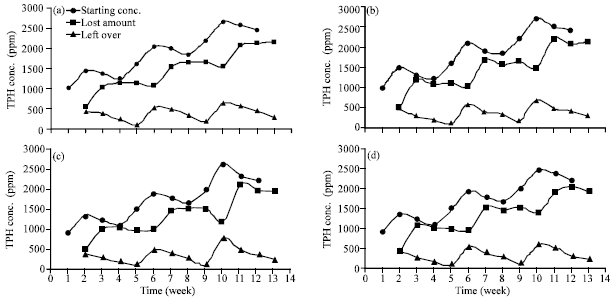
Figure 3 shows the level of Total Petroleum Hydrocarbon (TPH) degradation by the microbial consortia constructed from bacterial isolates obtained from sampling sites number 9 (Old Accident site 3, soil), 10 (Jerash oil port 1, water), 11(Jerash oil port 2, water) and 12 (Jerash oil port 3, water).
Figure 4 shows the level of Total Petroleum Hydrocarbon (TPH) degradation by the microbial consortia constructed from bacterial isolates obtained from sampling sites number 13 (Jerash oil port 4, water), 14 (Jerash oil port 5, water), 15 (South port of Price Rashid club, water) and 16 (Middle port of Price Rashid club, water).
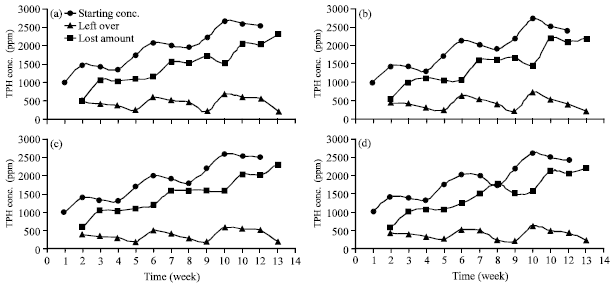 | |
| Fig. 1(a-d): | Crude oil biodegradability by bacterial consortia collected from different sites, (a) Consortium 1, (b) Consortium 2, (c) Consortium 3 and (d) Consortium 4, TPH: Total petroleum hydrocarbon |
 | |
| Fig. 2(a-d): | Crude oil biodegradability by bacterial consortia collected from different sites, (a) Consortium 5, (b) Consortium 6, (c) Consortium 7 and (d) Consortium 8, TPH: Total petroleum hydrocarbon |
 | |
| Fig. 3(a-d): | Crude oil biodegradability by bacterial consortia collected from different sites, (a) Consortium 9, (b) Consortium 10, (c) Consortium 11 and (d) Consortium 12, TPH: Total petroleum hydrocarbon |
 | |
| Fig. 4(a-d): | Crude oil biodegradability by bacterial consortia collected from different sites, (a) Consortium 13, (b) Consortium 14, (c) Consortium 15 and (d) Consortium 16, TPH: Total petroleum hydrocarbon |
Figure 5 shows the level of Total Petroleum Hydrocarbon (TPH) degradation by the microbial consortia constructed from bacterial isolates obtained from sampling sites number 17 (Swimming area at Price Rashid club, water), 18 (New accident place 1, water), 19 (New accident place 2, water) and 20 (Jerash oil port 6, water).
Results indicated that bacterial populations isolated and enriched from all sampled sites exhibited the highest level of oil biodegradation at week 11 to 13, as indicated by the level of lost amount of TPH, which showed continuous biodegradation activity over a long period of time. However, the extent of hydrocarbon degradation represented by the amount of lost hydrocarbon in the presence of each consortium increased when increasing the crude oil concentration.
The level of lost hydrocarbon in the presence of consortia obtained from soil samples was higher than that in the presence of consortia obtained from seawater samples as indicated in Fig. 3b-d, 4 and 5.
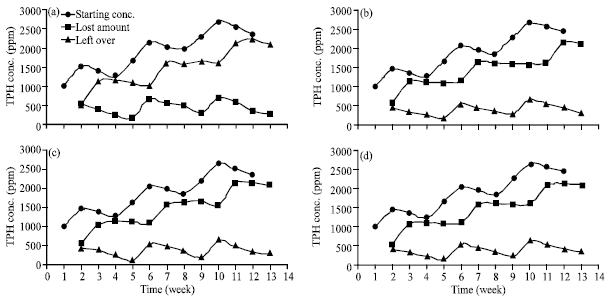 | |
| Fig. 5(a-d): | Crude oil biodegradability by bacterial consortia collected from different sites, (a) Consortium 17, (b) Consortium 18, (c) Consortium 19 and (d) Consortium 20, TPH: Total petroleum hydrocarbon |
Constructed consortia continued to consume crude oil and increase their cell number during the experiment and showed high tolerance toward the increasing concentration of crude oil and time of exposure.
DISCUSSION
The level of TPH in contaminated soil and seawater in Aqaba are summarized in Table 3. In the contaminated soil sites, the concentrations ranged between 45000- 65000 ppm. Seawater samples, however, had lower values, ranging between 25000-35000 ppm (Table 3). The high levels of TPH detected in the contaminated soil sites coincided with the different crude oil spillage through oil-tanker accidents during transportation of crude oil from Aqaba (from the storage-tanks for crude oil located within the vicinity of Aqaba city) to the oil refinery in Zarqa, Jordan.
Generally, it was observed that the levels of TPH in the contaminated soil were relatively higher than the values recorded for the contaminated seawater. Contaminated soil and seawater are considered long-term storehouses for hydrocarbons released into the environment and expectedly, high concentrations of petroleum hydrocarbons are found in contaminated sites, which may exert an adverse effect on terrestrial area, ground water sources and marine habitats (Bossert and Bartha, 1984; Fowler et al., 1993; Randolph et al., 1998; Thavasi et al., 2007). Therefore, enhanced levels of TPH obtained from contaminated soil and seawater are sufficiently high to cause chronic effects on terrestrial habitats and aquatic organisms. Elevated concentrations of TPH were reported for sediments exposed to oil spills (Atlas, 1991; Bartha, 1986; Xu et al., 2009). However, it has been reported that levels of TPH greater than 1 mg g-1 dry sediment were able to cause significant amphipod mortality and alterations in detoxification enzymes in fishes (Vignier et al., 1992; Randolph et al., 1998). It was also suggested that hydrocarbons adsorbed in sediments can be accumulated by animals living in land or aquatic environments and thus re-enter the food chain (Meador et al., 1995; Hadibarata et al., 2007; Benson et al., 2008; Adenipekun and Isikhuemhen, 2008).
Hydrocarbon degrading bacterial populations were high in samples, where higher quantities of oil contents exist (Table 3). Similarly large populations of hydrocarbon degrading bacteria were recorded from oil-polluted environments (Walker and Colwell, 1976; Fowler et al., 1993; Wrenn and Venosa, 1996; Cabello, 1997; Popp et al., 2006). Population levels of hydrocarbon degraders within the microbial community appear to be an indicator of environmental exposure to hydrocarbons. In unpolluted environments, hydrocarbon degraders usually represent less than 0.1% of the microbial community while in crude-oil polluted environments they constitute up to 100% of the viable microbes (Fowler et al., 1993; Wrenn and Venosa, 1996; Cabello, 1997; Sarma et al., 2004). The nature of microbial populations usually reflects the extent of exposure of a particular environment to hydrocarbon contamination (Atlas, 1991; Radwan et al., 1995; Chikere et al., 2009).
Microorganisms are known to degrade specific components of the crude oil (Das and Mukherjee, 2007; Amini et al., 2011; Olabemiwo et al., 2011). It has been observed that the same compounds in different crude oil samples were degraded to a different extent by the same organisms, indicating that the bioavailability of a particular compound in a crude oil sample and not its chemical structure may be the determining factor for effective biodegradation of the compound (Atlas, 1991; Bartha, 1986).
Present study, the enriched bacterial consortia were monitored with time for the increase in cell number after the subsequent addition of crude oil. The plating technique was effective in enumerating the total oil degrading bacteria in each consortium. Bacterial populations in terms of Colony Forming Units (CFU) were monitored for more than 14 weeks (data not shown). There was a variation in the bacterial population monitored in all consortia. Walter et al. (1997) reported similar observations with oil contaminated soil under field conditions in the presence of mixed bacterial consortium. The residual TPH remaining in the culture compared to the starting hydrocarbon, indicates that oil degrading bacteria used crude oil to build more cell mass. The current study focused on the constructed consortia isolated from crude oil contaminated soils and seawater. Table 2 shows that hydrocarbon degrading bacterial count ranged from 1.0x10⁷-1.0x10¹⁸ CFU g-1 soil or mL of seawater, which indicate that these bacterial isolates are adapted to the high level of crude oil since they were isolated from old contaminated sites. However, the variations in bacterial counts detected in these consortia may be traced to the fact that the freshly contaminated sites have high toxicity levels of contaminants when compared with the old sites which reflects adverse effects on microbial biodiversity. This was in agreement with the findings of Saadoun et al. (2008), were they observed a greater decline of bacterial counts and diversity in the fresh contaminated soils as compared to the old ones. Our data suggest that all consortia were able to degrade crude oil efficiently. The total extent of degradation of crude oil is indicated by the increase in microbial population (Table 2) with time and by the residual hydrocarbon and level of lost hydrocarbon amount (Fig. 1-5), since the only carbon source available for these bacterial consortia was crude oil.
The concentrations of total petroleum hydrocarbons (ppm) present in tested soil samples from the twenty different sites, indicated (Fig. 1-5) that bacterial populations at all sites exhibited the highest level of oil biodegradation at week 11-13, as indicated by the level of lost amount of TPH, which showed a continued biodegradation activity over a long period of time. The results of our study clearly shows that oil contaminated soil can be a principle source for potent oil degrading bacteria because they are adapted to high levels of crude oil.
In general, bacterial consortia derived from contaminated soil sites showed 85% maximum percentage of degradation of crude oil after the 11th week of incubation (Fig. 1, 2-3a). On the other hand, bacterial consortia derived from contaminated seawater sites showed 70% maximum percentage of crude oil degradation after the 11th week of incubation (Fig. 3b-d, 4-5). Chhatre et al. (1996) reported about 50% of degradation of crude oil using a semi-continuous crude oil fed reactor using a four member consortia. Other studies (Lal and Khanna, 1996; Sugiura et al., 1997) showed that a bacterial consortium was able to degrade 28-51% of saturated hydrocarbons and 0-18% of aromatics present in crude oil or up to 50% crude oil by mixed consortia. The percentage of biodegradation was significantly higher than that achieved by individual isolates.
Most of the published literature, on biodegradation, was focused on the degradation of pure chemicals at very low concentrations by a single microbial cultures or a culture of two or three microbial organisms but not on the biodegradation of highly complex mixtures of organic pollutants at high concentrations (e.g., crude oil) by mixed microbial population. The extent of petroleum hydrocarbon biodegradation demonstrated in this study was higher than those reported in other studies such as, Limbert and Betts (1994), showed, three bacterial isolates were required to treat a mixture of compounds consisted of benzene, o-xylene, nitrobenzene, naphthalene and other chemicals at low concentrations of 15-60 ppm. Their isolates were able to degrade up to 60% of these chemicals, in 18 h.
Grant et al. (2002) have shown how the concentration of a target chemical can influence the growth of bacteria and indicated that higher concentrations resulted in lower cell growth due to the increased toxicity of that chemical. Heitkamp et al. (1987) showed that it takes 17-31 days to effectively degrade naphthalene, when added to selected soil microcosms at levels of less than 1 ppm. Those and similar studies all argue that aerobic degradation of mixtures of toxic organics is limited to diluted aqueous solutions. However, the experiments conducted at our laboratory clearly demonstrated that microbial consortia or microbial populations of crude oil biodegraders could be maintained stably for extended periods while at the same time, effectively degrading crude oil or other mixtures of toxic organics present at high concentrations.
CONCLUSION
Thus the performance demonstrated by these consortia regarding crude oil biodegradation, showed that effective microbial bioremediation is not limited to the treatment of diluted aqueous chemicals but can be used to treat concentrated chemicals and that the bioremediation process is an effective method for site remediation of petroleum hydrocarbon contaminated soils and seawater.
Bioremediation has an edge over other treatment methods because it can efficiently destroy the pollutant hydrocarbons present and doesn’t allow the contaminant to accumulate. The present study showed that by using the mixed bacterial consortia which can efficiently degrade the crude oil components, higher percentages of oil degradation can be achieved. Hence we suggest the use of the above optimized conditions and the mixed bacterial consortia for bioremediation of crude oil contaminated sites.
ACKNOWLEDGMENT
This research was supported by Scientific Research Fund/Ministry of Higher Education and Scientific Research-Jordan, project No. 22/2008. We would like to express our deep thanks to Mr. Abd Al Salam Aljahmani, Mr. Mahmoud Telfah and Mr. Mohammad Al-Edwan from Yarmouk University for their assistance. Great thanks are also due to Laila Saadeh, Mostafa Al-Shabi, Tasneme Al-Orani and the all the staff at the Marine Science station for their help and support.
REFERENCES
- Adenipekun, C.O. and O.S. Isikhuemhen, 2008. Bioremediation of engine oil polluted soil by the tropical white rot fungus, Lentinus squarrosulus Mont. (Singer). Pak. J. Biol. Sci., 11: 1634-1637.
CrossRefPubMedDirect Link - Al-Deeb, T.M. and H.I. Malkawi, 2009. Isolation, molecular and biochemical characterization of oil degrading bacteria from contaminated soil at an oil refinery. J. Applied Sci. Technol., 14: 1-12.
Direct Link - Amini, S., A.H. Zulkifly, W. Wen-Yong and F. Huyop, 2011. Molecular identification and characterization of a bacterium that has potential to degrade low concentration of haloalkanoic acid. Res. J. Microbiol., 6: 552-559.
CrossRef - Atlas, R.M., 1991. Microbial hydrocarbon degradation: Bioremediation of oil spills. J. Chem. Technol. Biotechnol., 52: 149-156.
CrossRef - Bartha, R., 1986. Biotechnology of petroleum pollutant biodegradation. Microb. Ecol., 12: 155-172.
Direct Link - Benson, N.U., J.P. Essien, G.A. Ebong and A.B. Williams, 2008. Petroleum hydrocarbons and limiting nutrients in Macura reptantia, Procambarus clarkii and benthic sediment from Qua Iboe Estuary, Nigeria. Environmentalist, 28: 275-282.
CrossRef - Cabello, M.N., 1997. Hydrocarbon pollution: Its effect on native Arbuscular Mycorrhizal Fungi (AMF). FEMS Microbiol. Ecol., 22: 233-236.
CrossRef - Chaineau, C.H., C. Yepremian, J.F. Vidalie, J. Ducreux and D. Ballerini, 2003. Bioremediation of a crude oil-polluted soil: Biodegradation, leaching and toxicity assessments. Water Air Soil Pollut., 144: 419-440.
CrossRefDirect Link - Chhatre, S., H. Purohit, R. Shanker and P. Khanna, 1996. Bacterial consortia for crude oil spill remediation. Water Sci. Technol., 34: 187-193.
Direct Link - Chikere, C.B., G.C. Okpokwasili and B.O. Chikere, 2009. Bacterial diversity in a tropical crude oil-polluted soil undergoing bioremediation. Afr. J. Biotechnol., 8: 2535-2540.
Direct Link - Colwell, R.R., J.D. Walker and J.J. Cooney, 1977. Ecological aspects of microbial degradation of petroleum in the marine environment. Crit. Rev. Microbiol., 5: 423-445.
CrossRef - Daane, L.L., I. Harjono, G.J. Zylstra and M.M. Haggblom, 2001. Isolation and characterization of polycyclic aromatic hydrocarbon-degrading bacteria associated with the rhizosphere of salt marsh plants. Applied Environ. Microbiol., 67: 2683-2691.
CrossRefDirect Link - Das, K. and A.K. Mukherjee, 2007. Crude petroleum-oil biodegradation efficiency of Bacillus subtilis and Pseudomonas aeruginosa strains isolated from a petroleum-oil contaminated soil from North-East India. Bioresour. Technol., 98: 1339-1345.
CrossRefPubMedDirect Link - Dua, M., A. Singh, N. Sethunathan and A. Johri, 2002. Biotechnology and bioremediation: Successes and limitations. Applied Microbiol. Biotechnol., 59: 143-152.
CrossRef - El-Hammadi, M.A., M. Trabelsi and B. Hanchi, 2007. Composition of aliphatic hydrocarbons in tunisian textile sludge and produced composts as a function of sludge ratio. Res. J. Environ. Toxicol., 1: 198-203.
CrossRefDirect Link - Fowler, S.W., J.W. Readman, B. Oregioni, J.P. Villeneuve and K. McKay, 1993. Petroleum hydrocarbons and trace metals in nearshore Gulf sediments and biota before and after the 1991 War: An assessment of temporal and spatial trends. Mar. Pollut. Bull., 27: 171-182.
CrossRef - Grant, R.J., T.J. Daniell and W.B. Betts, 2002. Isolation and identification of synthetic pyrethroid-degrading bacteria. J. Applied Microbiol., 92: 534-540.
CrossRef - Plaza, G.A., J. Wypych, C. Berry and R.L. Brigmon, 2007. Utilization of monocyclic aromatic hydrocarbons individually and in mixture by bacteria isolated from petroleum-contaminated soil. World J. Microbiol. Biotechnol., 23: 533-542.
CrossRefDirect Link - Geets, J., J. Vangronsveld, L. Diels and D. van der Lelie, 2003. The application of molecular tools to follow up bioremediation. J. Soils Sediments, 3: 251-251.
CrossRefDirect Link - Hadibarata, T., S. Tachibana and K. Itoh, 2007. Biodegradation of n-eicosane by fungi screened from nature. Pak. J. Biol. Sci., 10: 1804-1810.
CrossRefPubMedDirect Link - Heitkamp, M.A., J.P. Freeman and C.E. Cerniglia, 1987. Naphthalene biodegradation in environmental microcosms: Estimates of degradation rates and characterization of metabolites. Applied Environ. Microbiol., 53: 129-136.
Direct Link - Hidayat, A. and S. Tachibana, 2012. Biodegradation of aliphatic hydrocarbon in three types of crude oil by Fusarium sp. F092 under stress with artificial sea water. J. Environ. Sci. Technol., 5: 64-73.
CrossRef - Hubert, C., Y. Shen and G. Voordouw, 1999. Composition of toluene-degrading microbial communities from soil at different concentrations of toluene. Applied Environ. Microbiol., 165: 3064-3070.
Direct Link - Jain, P.K., V.K. Gupta, R.K. Gaur, M. Lowry, D.P. Jaroli and U.K. Chauhan, 2011. Bioremediation of petroleum oil contaminated soil and water. Res. J. Environ. Toxicol., 5: 1-26.
CrossRefDirect Link - Leahy, J.G. and R.R. Colwell, 1990. Microbial degradation of hydrocarbons in the environment. Microbiol. Mol. Biol. Rev., 54: 305-315.
Direct Link - Lal, B. and S.J. Khanna, 1996. Degradation of crude oil by Acinetobacter calcoaceticus and Alcaligenes odorans. J. Applied Bacteriol., 81: 355-362.
CrossRefDirect Link - Limbert, E.S. and W.B. Betts, 1994. Biodegradation of trace levels of a complex organic pollutant mixture. Microbios, 78: 237-243.
PubMedDirect Link - Malkawi, H.I., M.Y. Jahmani, E.H. Hussein, F.A. Al-Horani and T.M. Al-Deeb, 2009. Investigation of the ability of soil bacterial isolates to degrade petroleum hydrocarbons. Int. J. Integr. Biol., 7: 93-99.
Direct Link - Meador, J.P., E. Casilas, C.A. Sloan and U. Varanasi, 1995. Comparative bioaccumulation of polycyclic aromatic hydrocarbons from sediment by two infaunal invertebrates. Mar. Ecol. Prog. Ser., 123: 107-124.
CrossRefDirect Link - Mukred, A.M., A.A. Hamid, A. Hamzah and W.M. Wan Yusoff, 2008. Enhancement of biodegradation of crude petroleum-oil in contaminated water by the addition of nitrogen sources. Pak. J. Biol. Sci., 11: 2122-2127.
CrossRefPubMedDirect Link - Olabemiwo, O.M., G.O. Adediran, F.A. Adekola, O.O. Adelowo and A.A. Olajire, 2011. Preliminary study on biodegradation of Nigerian natural bitumen. Microbiol. J., 1: 139-148.
CrossRef - Popp, N., M. Schlomann and M. Mau, 2006. Bacterial diversity in the active stage of a bioremediation system for mineral oil hydrocarbon-contaminated soils. Microbiology, 152: 3291-3304.
CrossRef - Venkataraman, G.V., P.N.S. Rani, N.S. Raju, S. T. Girisha and B.V. Raghavendra, 2010. Physico-chemical characteristics and impact of aquatic pollutants on the vital organs of a fresh water fish Glossogobius giuris*. Res. J. Eniron. Toxicol., 4: 77-91.
Direct Link - Vieira, P.A., R.B. Vieira, F.P. de Franc and V.L. Cardoso, 2007. Biodegradation of effluent contaminated with diesel fuel and gasoline. J. Hazard. Mater., 140: 52-59.
CrossRefDirect Link - Radwan, S.S., N.A. Sorkhoh, F. Fardoun and R.H. Al-Hasan, 1995. Soil management enhancing hydrocarbon biodegradation in the polluted Kuwaiti desert. Applied Microbiol. Biotechnol., 44: 265-270.
CrossRef - Rahman, K.S.M., T. Rahman, P. Lakshmanaperumalsamy and I.M. Banat, 2002. Occurrence of crude oil degrading bacteria in gasoline and diesel station soils. J. Basic. Microbiol., 42: 284-291.
CrossRef - Randolph, R.C., J.T. Hardy, S.W. Fowler, A.R.G. Price and W.H. Pearson, 1998. Toxicity and persistence of nearshore sediment contamination following the 1991 Gulf War. Environ. Int., 24: 33-42.
CrossRef - Saadoun, I., M.J. Mohammad, K.M. Hameed and M. Shawaqfah, 2008. Microbial populations of crude oil spill polluted soils at the Jordan-Iraq Desert (The Badia Region). Braz. J. Microbiol., 39: 453-456.
CrossRef - Sarma, P.M., D. Bhattacharya, S. Krishnan and B. Lal, 2004. Degradation of polycyclic aromatic hydrocarbons by a newly discovered enteric bacterium, Leclercia adecarboxylata. Applied Environ. Microbiol., 7: 3163-3166.
CrossRefDirect Link - Sugiura K., M. Ishihara, T. Shimauchi and S. Harayama, 1997. Physicochemical properties and biodegradability of crude oil. Environ. Sci. Technol., 31: 45-51.
CrossRef - Thavasi, R., S. Jayalakshmi, R. Radhakrishnan and T. Balasubramanian, 2007. Plasmid incidence in four species of hydrocarbonoclastic bacteria isolated from oil polluted marine environment. Biotechnology, 6: 349-352.
CrossRefDirect Link - Wang, W., L. Wang and Z. Shao, 2010. Diversity and abundance of oil-degrading bacteria and alkane hydroxylase (alkB) genes in the subtropical seawater of xiamen island. Microb. Ecol., 60: 429-439.
CrossRefPubMedDirect Link - Walker, J.D. and R.R. Colwell, 1976. Enumeration of petroleum-degrading microorganisms. Applied Environ. Microbiol., 31: 198-207.
Direct Link - Walter, M.V., E.C. Nelson, G. Firmstone, D.G. Martin, M.J. Clayton, S. Simpson and S. Spaulding, 1997. Surfactant enhances biodegradation of hydrocarbons: Microcosm and field study. J. Soil Contam., 6: 61-77.
Direct Link - Wrenn, B.A. and A.D. Venosa, 1996. Selective enumeration of aromatic and aliphatic hydrocarbon degrading bacteria by a most-probable-number procedure. Can. J. Microbiol., 42: 252-258.
PubMedDirect Link - Xu, T., C. Chen, C. Liu, S. Zhang, Y. Wu and P. Zhang, 2009. A novel way to enhance the oil recovery ratio by Streptococcus sp. BT-003. J. Basic Microbiol., 49: 477-481.
CrossRefDirect Link - Zhang, S.Y., Q.F. Wang and S.G. Xie, 2011. Microbial community changes in contaminated soils in response to phenanthrene amendment. Int. J. Environ. Sci. Technol., 8: 321-330.
Direct Link - Stanier, R.Y., N.J. Palleroni and M. Doudoroff, 1966. The aerobic pseudomonads: A taxonomic study. J. Gen. Microbiol., 43: 159-271.
CrossRefPubMedDirect Link