

B.N. Shah
Vidyabharti Trust College of Pharmacy, Umrakh, Gujarat, India
A.K. Seth
Sumandeep Vidyapeeth University, Piperia, Gujarat, India
R.V. Desai
Vidyabharti Trust College of Pharmacy, Umrakh, Gujarat, India
Asian Journal of Plant Sciences
Year: 2010 | Volume: 9 | Issue: 3 | Page No.: 152-157







ABSTRACT
Lagenaria siceraria (Mol.) Standl. (Bottle gourd), of the family Cucurbitaceae, is a climbing perennial plant widely cultivated as a vegetable crop in tropical countries, such as India, Japan and Thailand. Fruits of which are widely used in Ayurveda and other folk medicines traditionally used for its cardioprotective, cardiotonic, general tonic, diuretic, aphrodisiac, antidote to certain poisons, scorpion strings, alternative purgative and cooling effects. It cures pain, ulcers and fever and used for pectoral cough, asthma and other bronchial disorders-especially syrup prepared from the tender fruits. The fruit is reported to contain the triterepeniode cucurbitacins B, D, G, H and 22-deoxy cucurbitacin the bitter principle of cucurbitaceae. Two sterols i.e., fucosterol and campesterol, aerpene byonolic acid (an allergic compound), flavone-C glycosides, a ribosome inactivating protein), Lagenin, (antiproliferative, immunosuppressive, antifertility). This study is an attempt to compile an up-to-date and comprehensive review of Lagenaria siceraria that covers its traditional and folk medicinal uses, phytochemistry and pharmacology.
PDF Abstract XML References Citation
Received: January 25, 2010;
Accepted: March 18, 2010;
Published: June 02, 2010
How to cite this article
B.N. Shah, A.K. Seth and R.V. Desai, 2010. Phytopharmacological Profile of Lagenaria siceraria: A Review. Asian Journal of Plant Sciences, 9: 152-157.
DOI: 10.3923/ajps.2010.152.157
URL: https://scialert.net/abstract/?doi=ajps.2010.152.157
DOI: 10.3923/ajps.2010.152.157
URL: https://scialert.net/abstract/?doi=ajps.2010.152.157
INTRODUCTION
Cucurbitaceae family is commonly mentioned as the gourd, melon or pumpkin family, is medium sized generally a climbing plants family, composing 118 genera and 825 species having wide distribution in the warmer regions of the world. The plants of which provide the major contribution for economically important domesticated species and many of these are earliest cultivated plants and are used for medicinal and nutritional values (Habib-ur-Rahaman, 2003). Among all plants of the cucurbitaceae family, Lagenaria species have important contribution for the overall popularity. The bottle gourd belongs to the genus Lagenaria that is derived from lagena, meaning, bottle. In the older literature it is often referred to as Lagenaria vulgaris (common) or Lagenaria leucantha (white flowered gourd) but it is now generally agreed that the correct name is Lagenaria siceraria (Mol.) Standl. It seems that bottle gourd was originated from India because its wild races are still found in Dehradoon (high humid area) and Malabar costal area. Old Indian script reveals its cultivation 2000 B.C. Archeological supports man’s association with bottle gourd in Peru from 1100 to 13000 years B.C. (Sirohi and Sivakami, 1991).
Bottle gourd (syn. white flowered gourd) is an important warm-season fruit vegetable. It is grown throughout India and its fruits are available in the market throughout the year. Bottle gourd has been found wild in India, the Moluccas and Ethiopia. The centre of origin has been located as the coastal areas of Malabar (North Kerala) and the humid forests of Dehradun (North India). The fossil records indicate its culture in India even before 2000 B.C. The archaeological evidences suggest that Lagenaria is not a monotypic genus and has an ancient pan tropical distribution.
Occurrence of considerable diversity in the morphology of fruits in the archaeological sites suggested a steady influx of new germplasm from outside the immediate area. Genus Lagenaria to which bottle gourd belongs is characterized by key characters-fruits fleshy and many seeded pepo, flowers solitary and chalky white. Both the male ad female flowers open at the same time. Male flowers remain open only for a few hours, after word the petals withered, thus the flowers are short lived. Being a monoecious crop, bottle gourd is strictly cross pollinated. Bees are the major pollinators (Decker-Walter et al., 2004; Heiser, 1979a, b; Sivaraj and Pandravada, 2005).
Lagenaria siceraria commonly known as Bottle gourd Syn. Doodhi, Syn Lauki (Hindi), Kadoo (Marathi) which is official in Ayurvedic Pharmacopoeia. It is one of the excellent fruit for human being made and gifted by the nature having composition of all the essential constituents that are required for normal and good human health (Habib-ur-Rahaman, 2003). It’s time to turn camera on overall constituents and character of Lagenaria siceraria fruit for the better human health and lives. Two varieties of this fruit drug sweet and bitter are mentioned. Botanically, both belong to same genus, the former known by the Sanskrit synonym Alaba and Tumbi and latter by the names as Iksuaku, Katutumbi and Mahaphala. The sweet variety is generally used as a vegetable, while the wild variety bitter, latter is preferred for the medicinal use. The former variety is cultivated widely for its fruit and vegetable. The latter is found wild previously in most areas but now in some hot areas of country, obviously as wild and has bitter fruits and preferred for medicinal use. Nevertheless, the difficulty in procuring and loosing interest in cultivation of wild variety, the sweet and edible variety is now being used in medicine as well (Sivarajan and Balchandran, 1996).
Transverse section of Lagenaria siceraria leaf showed upper epidermis consists of elongated parenchymatous cells, covered by cuticle. It shows few stomata, which are of anisocytic type. Palisade cells are present at upper and lower epidermis. It shows hexagonal to polygonal, large, thin walled colourless cells, may be water storing.
Mesophyll:
Mesophyll is made up of 3-4 layered chloroplast containing, compactly arranged, oval to circular cells. It is interrupted by vascular bundles of various sizes.
Vascular bundles:
Vascular bundles are surrounded by 2-3 layered sclerenchyma. They are conjoint, collateral and closed. Xylem is placed towards upper epidermis and phloem towards lower epidermis. Lower epidermis contains elongated wavy walled parenchymatous cells covered by cuticle. Number of covering and collapsed trichomes are present, while very few glandular trichomes are also present (Shah and Seth, 2010).
TRADITIONAL USES
Lagenaria siceraria fruits are traditionally used for its cardioprotective, cardiotonic, general tonic, diuretic, aphrodisiac, antidote to certain poisons, scorpion strings, alternative purgative and cooling effects. It cures pain, ulcers and fever and used for pectoral cough, asthma and other bronchial disorders-especially syrup prepared from the tender fruits (Sivarajan and Balchandran, 1996; Nadkarni, 1992; Duke, 1992). The pulp of the fruit is considered cool, diuretic, antibilious and useful in coughs and as antidote to certain poisions (Duke, 1992; Van Wyk and Gericke, 2000).
The tribal communities (Koyas, Gutti Koyas and Lambadas) located in the Northern Telangana zone use the dry hard shells of bottle gourd fruits for various purposes. Bottle gourd is variously referred as sorakaya, anapakaya, anamgapkaya, burrakaya and tumri in the vernacular language by the tribal communities. Domestic utensils like bottles, bowls, milk pots, spoons and containers of several types are made out of the dried shells. It is a common sight everywhere in the tribal dominated pockets of Khammam district that the ethnic groups are mainly using the dry shells for carrying country liquor (mahua drink, toddy), honey and water. In some of the pockets it is being used for making stringed and wind musical instruments and pipes. At few places, the natives use the dried shells as floats on water bodies as well. Though it is nutritionally less calorific, tribal prefer bottle gourd as a vegetable for preparation of curries and pickles (Rood, 1994; Chittendon, 1956; Summit and Widess, 1999). The Koya community uses the fruits of the wild types for medicinal purposes (purgatives). Probably, the bitter principle found in the wild bottle gourds is responsible for the purgative property. The Gutti Koya tribals use the bottle gourd as a cure for headache (external application) by mixing the seed oil with castor oil. The pulp of the fruit is considered cool and diuretic (Duke, 1992; Warrier et al., 1995).
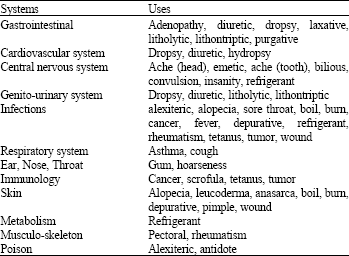
Leaves of Lagenaria siceraria are taken as emetic in the form of leaf juice or decoction. This by adding sugar also used in Jaundice. Crushed leaves are used for baldness and applied on the head for the headache. Leaves are also used as alternative purgative (Chopra and Chopra, 1992) Flowers are also mentioned as antidote in certain kind of poisons. Stem bark is diuretic (Duke, 1992). Roots are emetic and used in dropsy. Ethnobotanical uses of the fruit are shown in Table 1.
| Table 1: | Ethanobotanical uses of Lagenaria siceraria (Mol.) Standl. Fruit (Habibur Rahaman, 2003) |
 | |
PHYTOCHEMISTRY
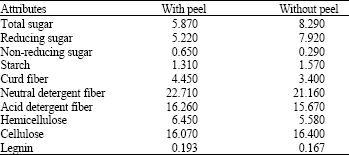
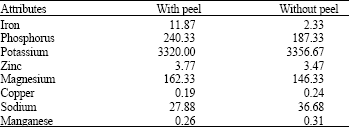
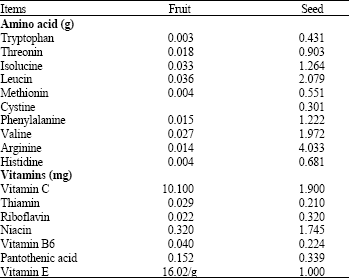
The edible portion of fruits is fair source of ascorbic acid, beta carotene and good source of vitamin B complex, pectin dietary soluble fibers and contains highest source of choline level-a lipotropic factor, a healer of mental disorders, along with required metabolic and metabolite precursors for brain function, amongst any other vegetable known to man till date. It is also good source of carbohydrates and dietary constituents (Table 2), minerals (Table 3), amino acids and vitamins (Table 4) (Nadkarni, 1992; Anonymous, 1996; Kiritikar and Basu, 2001; Modgil et al., 2004). The fruit is reported to contain the triterpenoid cucurbitacins B, D, G, H and 22-deoxy cucurbitacin the bitter principle of cucurbitaceae. The fruit juice contains beta glycosidase-elasterase enzyme (Duke, 1992; Van WyK and Gericke, 2000). Two sterols were identified and isolated from petroleum ether fractions of ethanol extract of dried fruit pulp of Lagenaria siceraria namely Fucosterol and campesterol (Shirwaikar and Sreenivasan, 1996). The HPLC analysis of extract of flowering plant of Lagenaria siceraria shows presence of flavone-C glycosides (Baranoswka and Cisowski, 1994). The effect of semi purified dietary fibers isolated from the fruit of Lagenaria siceraria effects on fecal steroid excretion was reported (Sannoumaru and Shimizu, 1996).
It is also reported to have content more proportion of Soluble Dietary Fibers (SDF) than insoluble fibers. SDF are having profound effect in lowering serum cholesterol, which also reveals that the pectin is predominant component of soluble fibers in Lagenaria siceraria fruits (Chang et al., 1995).
Peroxidase and polyperoxidase activity in relation to its blanching period and total enzymatic inactivation of blanched sample (i.e., residual peroxidase activity is less than one) is also reported in 180 sec. In addition, small amount of unidentified mono-and di-caffeoylquinic acid derivative was detected. 30% inhibition of superoxide formation in xanthine and xanthine-oxidase medium by methanolic extract (500 μg mL-1) from fruit of Lagenaria siceraria is also reported (Jiwjinda et al., 2002).
The seeds considered as the least importance are having prime role in the human nutrition due to encapsulation of innumerable phytochemicals, vitamins, minerals, amino acids along with saponin and essential fixed oils especially of unsaturated type (Habib-ur-Rahaman, 2003; Warrier et al., 1995). A ribosome inactivating protein, Lagenin was isolated from lyophilized water extracts of seeds, the biological actions of which include antiproliferative, immunosuppressive and antifertility (Wang and Ng, 2000).
| Table 2: | Carbohydrate and dietary constituents of bottle gourd (g/100 g dry weight basis) (Modgil et al., 2004) |
 | |
| Table 3: | Mineral content of Bottle gourd (mg/100 g dry weight basis) (Modgil et al., 2004) |
 | |
| Table 4: | Amino acids and vitamins content of Lagenaria siceraria fruit and seed (Gopalan et al., 1996) |
 | |
Seeds are also used in dropsy, worm infection and as nutritive. Ripe seeds are having a 45% yield of clear limbid oil (Warrier et al., 1995). Seed oil which have cooling effect and can be applied in migraine type headache. A poultice of boiled seeds has been used in the treatment of boils, taken with Acchrynthus species the seeds are used to treat the toothache and gums. In many parts of China three grams per day of this species (the report does not say what part of the plant) has been used as a single treatment for diabetes mellitus (Duke, 1992).
A triterpene bryonolic acid an antiallergic compound was reported from callus culture of Lagenaria siceraria roots (Tabata et al., 1993). Bitter fruits yield 0.013% of a solid foam containing cucurbitacins B, D, G and H, mainly cucurbitacin B. These bitter principles are present in the fruit of agalycones. The leaves contain cucurbitacins B, D and traces of E. The fruit juice contains beta-glycosidase (elasterase) (Khare, 2004).
The mucilage is also present in the fruit, which can be extracted by microwave assistance extraction (Shah et al., 2010).
PHARMACOLOGICAL ACTIVITIES
Antihyperlipidemic activity:
Antihyperlipidemic effect of four different extract viz., petroleum ether, chloroform, alcoholic and aqueous extracts from bottle gourd in triton induced hyperlipidemic were studied. Chloroform and alcoholic extract at two different doses (200 and 400 mg kg-1, p.o.) showed significant effects in lowering total cholesterol, triglyceride and low density lipoproteins along with an increased in HDL level (Ghule et al., 2006a). Isolated constituents from Langearia siceraria fruit juice extract namely LSN-I, LSN-II and LSN-III was found to be having antihyperlipidemic activity against triton-X induced hyperlipidemia (Mohale et al., 2008).
Analgesic and anti-inflammatory activity:
Langenaria siceraria Stand Fruit Juice Extract (LSFJE) was studied for its analgesic effect using acetic acid induced writhing and formalin induced pain in mice. LSFJE (150-300 mg kg-1, p.o.) showed a dose dependent inhibition of writhing and also showed a signification inhibition of both phases of the formalin pain test, but with a less intense effect on the first than the second phase. Juice extract of L. siceraria also shows anti-inflammatory activity against acute inflammatory models i.e., ethyl phenyl propionate-induced ear edema, carrageenan and arachidonic acid-induced hind paw edema model (Shah et al., 2007) and also the albumin induced paw edema in rats. The LSFJE elicited significant (p<0.05) inhibitory effect on the ear edema formation at 30 min, 1 and 2 h after ethyl phenyl propionate injection. The extract significantly inhibited carrageenan and arachidonic acid-induced hind paw edema. The LSFJE also causes inhibition of albumin induced paw edema over a period of 90 min (Ghule et al., 2006a, b).
Diuretic activity
Vacuum dried extract and methanol extract of L. siceraria fruit was evaluated for its diuretic activity by Ghule et al. (2007). Diuretic activity was assessed by measuring different parameters like total urine volume, urine concentration of sodium, potassium and chloride and found that both the extracts (100-200 mg kg-1, p.o.) showed higher urine volume and exhibited dose dependent increased in excretion of electrolytes when compared with respective control.
Antioxidant activity:
Acetone extract of fruit epicarp of L. siceraria fruit showed maximum antioxidant activity against in vitro model using DPPH (Rachh et al., 2009). The fresh juice of the fruit also shows antiradical activity. The juice as such and its ten times dilution showed radical scavenging activity where as 100 and 1000 times diluted juice does not show any radical scavenging activity (Deshpande et al., 2007). Extract is also effective in CCl4 induced liver damage where it maintained the level of endogenous antioxidant enzymes (superoxide dismutase, catalase and glutathione peroxidase) and marker of lipid peroxidation to that of normal (Fard et al., 2008).
Immunomodulatory activity:
The researchers studies the immunomodulatory effects of n-butanol soluble and ethyl acetate soluble fraction of successive methanolic extract of LSF in rats. Result of the study showed that the test fraction possess promising immunomodulatory activity as they increases both primary and secondary antibody titre and also significantly inhibited delayed type hypersensitivity reaction in rats. Both the fractions significantly increases total WBC, neutrophils and lymphocytes count while insignificant changes were observed in monocytes, eosinophils and basophils count (Gangwal et al., 2008). Ethanol extract of LS also showed significant prevention in reduction of humoral immune response, cellular immune response and percent neutrophil adheron in mice in the presence of chemical stressor i.e., Pyrogallol (Deshpande et al., 2008). Mixture of sterols and two flavonoids were isolated from the n-butanol and ethyl acetate soluble fractions of successive methanol extract of Lagenaria siceraria fruit and were identified as oleanolic acid (I), mixture of β-sitosterol (II) and campesterol (III), isoquercitrin (IV) and Kaempeferol (V).
All these compounds were tested for immunomodulatory activity. Compound I and IV were significantly increased haemagglutination antibody titre and significantly inhibited delayed type hypersensitivity response in rats compared to control group animals. They also increased rate of carbon clearance from the blood of mice indicating increased phagocytosis (Gangwal et al., 2009).
Hepatoprotective activity:
Deshpande et al. (2008) evaluated ethanolic extract of LS epicarp for hepatoprotective activity. The LS (100 and 200 mg kg-1) showed significant prevention of elevated levels of serum glutamate oxaloacetate, serum glutamate pyruvate transaminase, alkaline phosphatase and bilirubin and these data is also in correlation with histopathological findings. The antihepatotoxic activity of different fractions of the ethanolic extract of L. siceraria fruit, administered orally to different groups of rats was evaluated using the CCl4-induced hepatotoxicity test. All fractions tested, in a dose of 250 mg kg-1 showed significant activity, with the petroleum ether fraction exhibiting comparatively higher activity (Gopalan et al., 1996).
Cardioprotective activity:
The fruit powder of L. siceraria also showed good cardioprotective effects. The drug was studied against Doxorubicin induced cardiotoxicity in rats at 200 mg kg-1, p.o. for 18 days. The LS prevents the alteration in endogenous antioxidants (superoxide dismutase, reduced glutathione) and lipid peroxidation where as markers of cardiotoxicity i.e., CK-MB and LDH were significantly reduced. Further the LS powder also showed the protection against changes in ECG and histopathological alteration induced by doxorubicin (Fard et al., 2008). Ethanolic extract of L. Siceraria fruits also showed increased in force of contraction and decrease in rate of contraction (from 66 to 44) in isolated frog heart when perfused with normal ringer solution (Deshpande et al., 2008).
Anthelmintic activity:
The anthelmintic efficacy of four plants of the cucurbitaceae against Hymenolepis nana (tapeworm) and Aspicularis tetraptera (pinworm) infections in mice was evaluated utilizing piperazine citrate as a reference substance for comparison. The ethanolic extracts of the seeds of Cucumis sativus, Cucurbita maxima and L. siceraria exhibited a potent activity against tapeworms which was comparable to the effect of piperazine citrate. Some activity against pinworms was demonstrated by seeds of Cucurbita maxima (Elisha et al., 1987).
CONCLUSIONS
Lagenaria siceraria is a well-known plant used in the Indian system of medicine, besides which folklore medicine also claims its uses especially in cardiac and hepatic diseases, ulcer, etc. L. siceraria fruit is cultivated in India, Japan, Sri Lanka, China and Thailand for its vegetable use. This fruit is the source of Dudhi Bhopala Juice, which is used as a supplement to the treatment of cardiac diseases. Presently there is an increasing interest worldwide in herbal medicines accompanied by increased laboratory investigation into the pharmacological properties of the bioactive ingredients and their ability to treat various diseases. Numerous drugs have entered the international market through exploration of ethnopharmacology and traditional medicine. Although, scientific studies have been carried out on a large number of Indian botanicals, a considerably smaller number of marketable drugs or phytochemical entities have entered the evidence-based therapeutics. Efforts are therefore needed to establish and validate evidence regarding safety and practices of Ayurvedic medicines.
REFERENCES
- Krauze-Baranowska, M. and W. Cisowski, 1994. High-performance liquid chromatographic determination of flavone C-glycosides in some species of the Cucurbitaceae family. J. Chromatogr. A, 675: 240-243.
CrossRefDirect Link - Shah, B.N. and A.K. Seth, 2010. Pharmacognostic studies of the Lagenaria siceraria (Molina) standley. Int. J. Pharm. Technol. Res., 2: 121-124.
Direct Link - Shah, B.N., A.K. Seth and B.S. Nayak, 2010. Microwave assisted isolation of mucilage from the fruits of Lagenaria siceraria. Der Pharmacia Lett., 2: 202-205.
Direct Link - Decker-Walter, D.S., M. Wilkins-Ellert, S.M. Chung and J.E. Staub, 2004. Discovery and genetic assessment of wild bottle gourd [Lagenaria siceraria (Mol.) Standley, Cucurbitaceae] from Zimbabwe. Econ. Bot., 58: 501-508.
CrossRefDirect Link - Deshpande, J.R., M.R. Mishra, V.S. Meghre, S.G. Wadodkar and A.K. Dorle, 2007. Free radical scavenging activity of Lagenaria siceraria (Mol.) Standl. fruit. Nat. Prod. Radiance, 6: 127-130.
Direct Link - Deshpande, J.R., A.A. Choudhari, M.R. Mishra, V.S. Meghre, S.G. Wadodkar and A.K. Dorle, 2008. Beneficial effects of Lagenaria siceraria (Mol.) Standley fruit epicarp in animal models. Indian J. Exp. Biol., 46: 234-242.
PubMedDirect Link - Elisha, E.E., H.A.A. Twaij, N.M. Ali, J.H. Tarish, M.M. Al-Omari and S. Karim, 1987. The anthelmintic activity of some Iraqi plants of the Cucurbitaceae. Pharma. Biol., 25: 153-157.
CrossRefDirect Link - Fard, M.H., S.L. Bodhankar and M. Dikshit, 2008. Cardioprotective activity of fruit of Lagenaria siceraria (Molina) standley on doxorubicin induced cardiotoxicity in rats. Int. J. Pharmacol., 4: 466-471.
CrossRefDirect Link - Gangwal, A., S.K. Parmar, G.L. Gupta, A.C. Rana and N.R. Sheth, 2008. Immunomodulatory effects of Lagenaria siceraria fruits in rats. Pharmacognosy Mag., 4: S234-S238.
Direct Link - Ghule, B.V., M.H. Ghante, A.B. Upaganlawar and P.G. Yeole, 2006. Analgesic and anti-inflammatory activities of Lagenaria siceraria Stand. fruit juice extract in rats and mice. Pharmacogn. Mag., 2: 232-238.
Direct Link - Ghule, B.V., M.H. Ghante, A.N. Saoji and P.G. Yeole, 2006. Hypolipidemic and antihyperlipidemic effects of Lagenaria siceraria (Mol.) fruit extracts. Indian J. Exp. Biol., 44: 905-909.
PubMedDirect Link - Ghule, B.V., M.H. Ghante, P.G. Yeole and A.N. Saoji, 2007. Diuretic activity of Lagenaria siceraria fruit extracts in rats. Indian J. Pharma. Sci., 69: 817-819.
CrossRef - Rahman, A.S.H., 2003. Bottle gourd (Lagenaria siceraria) a vegetable for good health. Nat. Prod. Radiance, 2: 249-256.
Direct Link - Jiwjinda, S., V. Santisopasn, A. Murakam, O.K. Kim, H.W. Kim and H. Ohigashi, 2002. Suppressive effects of edible Thai plants on super oxide and NO generation. Asian Pacific J. Cancer Prev., 3: 215-223.
PubMedDirect Link - Modgil, M., R. Modgil and R. Kumar, 2004. Carbohydrate and mineral content of chyote (Sechium edule) and bottle gourd (Lagenaria Siceraria). J. Hum. Ecol., 15: 157-159.
Direct Link - Mohale, D.S., A.P. Dewani, A.N. Saoji and C.D. Khadse, 2008. Antihyperlipidemic activity of isolated constituents from Lagenaria siceraria in albino rats. Int. J. Green Pharm., 2: 104-107.
Direct Link - Rachh, P.R., M.R. Rachh, D.C. Modi, B.N. Shah, A.S. Bhargava, N.M. Patel and M.J. Ruareliya, 2009. In vitro evaluation of antioxidant activity of punarnava (Boerhaavia diffusa Linn.). Int. J. Pharmaceut. Res., 1: 36-40.
Direct Link - Shah, B.N., B.S. Nayak, S.P. Bhatt, S.S. Jalalpure and A.K. Seth, 2007. The anti-inflammatory activity of the leaves of Colocasia Esculenta. Saudi Pharma. J., 15: 228-232.
Direct Link - Shirwaikar, A. and K.K. Sreenivasan, 1996. Chemical investigation and antihepatotoxic activity of the fruits of Lagenaria siceraria. Indian J. Pharm. Sci., 58: 197-202.
Direct Link - Sivaraj, N. and S.R. Pandravada, 2005. Morphological diversity for fruit characters in bottle gourd germplasm from tribal pockets of Telangana Region of Andhra Pradesh, India. Asian Agric. History, 9: 305-310.
Direct Link - Tabata, M., S. Tanaka, H.J. Cho, C. Uno and J. Shimakura et al., 1993. Production of an anti-allergic triterene bryonolic acid by plant tissue cultures. J. Nat. Prod., 56: 165-174.
PubMedDirect Link
ravi prem kalsait Reply
this paper give all over idea about the other contents or constituents in the extract, which are help ful for my research work to find out other constituents and compairing with these one
regards