

A.M. Basheer Al-Alak
Department of Marketing, Faculty of Economics and Administrative Sciences, AL-Zaytoonah Private University of Jordan, P.O. Box 130, Amman 11733, Jordan
Asian Journal of Marketing
Year: 2009 | Volume: 3 | Issue: 2 | Page No.: 33-51







ABSTRACT
This study assessed overall business students satisfaction perceptions from the higher education institutions in Jordan and investigated the differences in satisfaction perceptions of business students from three public and three private universities. The results of this study show that business colleges at private universities are really competing well and even well ahead of business colleges at government universities in delivering services and other related outputs. Business students at private universities perceive higher quality services than their counterparts at public universities and are much more satisfied with such services compared to business students at public universities. It is quite evident that business colleges at private universities are differentiating themselves by delivering consistently higher quality services than business colleges at public universities.
PDF Abstract XML References Citation
How to cite this article
A.M. Basheer Al-Alak, 2009. Measuring and Evaluating Business Students Satisfaction Perceptions at Public and Private Universities in Jordan. Asian Journal of Marketing, 3: 33-51.
DOI: 10.3923/ajm.2009.33.51
URL: https://scialert.net/abstract/?doi=ajm.2009.33.51
DOI: 10.3923/ajm.2009.33.51
URL: https://scialert.net/abstract/?doi=ajm.2009.33.51
INTRODUCTION
No country can achieve sustainable economic development without sustainable investment in human capital. During the twentieth century, education, skills and the acquisition of knowledge have become crucial determinants of a persons and a nations productivity. One can even call the twentieth century the Age of Human Capital in the sense that the primary determinant of a countrys standard of living is how well it succeeds in developing and utilizing the skills and knowledge and furthering the health and educating the majority of its population. Investment in human capital can have little impact on growth unless people can use education in competitive and open markets. This is so because education is turning into a commodity. Many of the world’s public and private universities and colleges have made significant contributions to economic development efforts. These successful institutions have the desire to do so and have been able to discover their strengths and assets that can be leveraged to benefit their organizations and geographical areas in which they can have an impact. Besides, these institutions have a vision of what they would like to achieve, as well as implementable strategic plans. In these instances, emphasis has been made on the quality of education, which is regarded as the key factor in invisible competition among nations (Feigenbaum, 1994). Higher educations worldwide have attempted to enhance their customers perceptions of quality through adoption of Total Quality Management (TQM) systems to bolster competitive positions (Albrecht, 1991; Coffey et al., 1991). Some universities have attempted to get ISO-9000-type quality process designations to attract students for particular degree program (Ford et al., 1999).
The current research begins with a review of the relevant literature and previous empirical research, which lead to the research objectives, followed by a brief description of the research methodology. Subsequently, results are presented and discussed, followed by research conclusion. Finally, limitations and directions for future research are provided.
Practitioners and writers in the popular press tend to use the terms satisfaction and quality interchangeably, but researchers have attempted to be more precise about the meanings and measurement of the two concepts, resulting in considerable debate (Parasuraman et al., 1994; Dabholkar et al., 2000; Cronin et al., 2000). Consensus is growing that the two concepts are fundamentally different in terms of their underlying causes and outcomes (Brady and Cronin, 2001). Although they have certain things in common, satisfaction is generally viewed as a broader concept, whereas service quality assessment focuses specifically on dimensions of service. Based on this view, perceived service quality is a component of customer satisfaction. Service quality is a focused evaluation that reflects the customer’s perception of elements of service such as interaction quality, physical environment quality and outcome quality (Brady and Cronin, 2001). These elements are in turn evaluated based on specific service quality dimensions: reliability, assurance, responsiveness, empathy and tangibles (Parasuraman, et al., 1988). Satisfaction, on the other hand, is more inclusive: It is influenced by perceptions of service quality, product quality and price as well as situational factors and personal factors. For example, service quality of an educational organization, like a university, is judged on attributes such as whether equipment is available and in working order when needed, how responsive the administration is to student needs, how competent and cooperative the lectures are and whether the facilities are well-maintained. Customer satisfaction with the university is a broader concept that will certainly be influenced by perceptions of service quality but that will also include perceptions of the service product quality (such as the quality of course content or syllabus, friendly service, pace of providing feedback), university fees, personal factors such as the student’s emotional state and even uncontrollable situational factors such as economic conditions and legislations.
Different authors and researchers have given different definitions of service quality. Zeithaml and Bitner (2003), Bitner and Hubbert (1993) defined service quality as a comparison of what customers feel a service provider should offer (i.e., their expectations) with how the provider actually performs. Others (Oliver, 1994; Bitner, 1995) define service quality as perceived by customers as the degree and directions of discrepancy between customers service perceptions and expectations. It is also defined as difference between technical quality (what is delivered) and functional quality (how it is delivered) and as process quality (judged during the service) and output quality (judged after the service) (Gronroos, 1983; Lehtinen, 1983). Ghobadian et al. (1994) argue that quality in a service business is a measure of the extent to which the service delivered meets the customers’ expectations. The nature of most service is such that the customer is present in the delivery process, which means that the conception of quality is influenced not only by the service outcome but also by the service process. The perceived quality lies along a continuum. Unacceptable quality lies at one end of this continuum, while ideal quality lies at the other end.
Indeed, the service area has turned out to be the leading element of the economy. Ghobadian et al. (1994) state that service quality is a requirement for success and survival in todays competitive environment and that the interest in service quality has increased noticeably. In order to remain competitive and financially successful, Presbury et al. (2005) confirm that the most important concern is the provision of quality service to meet customer expectations. According to Antony et al. (2004), service quality includes the concept of meeting and exceeding the expectations of the customer and unless these expectations are exceeded, customers will regard the service as mere ordinary or inferior. Customers hold service expectations based on many criteria, such as past experiences, word of mouth and advertising (Kotler and Keller, 2006). In general, customers compare the perceived service with the expected service (Grewal et al., 1998). Ingram (1996) stated that service quality has received a lot of attention in the wider business community due to its practical implications for customer satisfaction and a positive word of mouth.
Harvey (1998) argued that service quality is so intangible that objective measurement is impossible. The challenge lies mostly in managing appearances and perceptions. Berry et al. (1985, 1988) regard service quality as a significant differentiator and the most powerful competitive weapon, which all the service organizations want to possess.
In the tough competitive milieu, measurement of service quality has increasingly created an interest among service providers and scholars alike. It is so because service quality is being used to position their respective products in the market place. The different service quality models that have been developed to measure the quality of services in chronological order are as follows:
| • | The SERVQUAL model A |
| • | The SERVQUAL model B |
| • | The SERVPERF model |
| • | The human-societal element model |
Parasuraman et al. (1988, 1994) were the first to coin the concept of measuring service quality, popularly referred to as SERVQUAL Model. They started the unending journey of conceptualizing the measurement of service quality in 1985 with ten service quality dimensions. Later on the customer’s perception and expectation regarding the service was filtered and refined to five major quality dimensions, namely: tangibles, reliability, responsiveness, assurance and empathy. Again the five major service quality dimensions were refined further and fine tuned by changing the statements to get more reliable and valid results, but the same criteria were used to check the psychometric properties of the SERVQUAL scale. Despite its usefulness in several types of service settings, such as hospitals, credit card companies, banks, university libraries, international airline, information systems, hospitality industry, a series of criticisms of the SERVQUAL Model have been raised which focus on the following:
| • | The potential inappropriateness of the five dimensions (tangibles, reliability, responsiveness, assurance and empathy) of choice criteria used by SERVQUAL (Cronin and Taylor, 1992) |
| • | The inability of expectations to remain constant over time (Corman, 1990) |
| • | The lack of prior knowledge and experience with university education and the unrealistic expectations of incoming university students (Chapman, 1979) |
| • | The inability of SERVQUAL to provide management with sufficient information for strategy implementation and resource allocation aimed at enhancing customer satisfaction (Hemmasi et al., 1997) |
The strong critics of SERVQUAL model had developed a new model in 1992, which was popularly called SERVPERF model (Cronin and Taylor, 1992). They developed their model based on Performance Model Satisfaction over the Disconfirmation Paradigm used by the SERVQUAL scale. They reduced the number of items to be measured, but they used the same service quality dimensions of SERVQUAL viz., tangibles, reliability, responsiveness, assurance and empathy. However, this model has been criticized for being preoccupied with psychometric and methodological soundness of scales. It is used and tested only in developed nations (Mostafa, 2006).
The Human-Societal Element Model (Sureshchandar et al., 2001) was developed with a view to overcoming the drawbacks of SERVQUAL scale, as the SERVQUAL Instrument does not address certain important constituents of service quality, like service product or core service and systematization/standardization of service delivery. This model conceptualizes customer perceived service quality based on the following dimensions: core service or service product, human element of service delivery, systematization of service delivery, tangibles of service and social responsibility.
Satisfaction refers to the buyers state of being adequately rewarded in a buying situation for the sacrifice he/she has made. Adequacy of a satisfaction is a result of matching actual past purchase and consumption experience with the expected reward from the brand in terms of its anticipated potential to satisfy the customers motives (Loudon et al., 1993). Oliver (1997) defines satisfaction as the customers fulfillment response. It is a judgment that a product or service feature, or the product or service itself, provides a pleasurable level of consumption-related fulfillment. Zeithaml and Bitner (2003) translate Olivers definition of satisfaction to mean that satisfaction is the customers evaluation of a product or service in terms of whether that product or service has met their needs and expectations. Failure to meet needs and expectations is assumed to result in dissatisfaction with the product or service.
It is also important to recognize that satisfaction is a dynamic, moving target that may evolve over time, influenced by a variety of factors (Fournier and Mick, 1999). Customer satisfaction is influenced by specific product or service features and by perceptions of quality. It is also influenced by customers emotional responses, their attributions and their perceptions of equity (Zeithaml and Bitner, 2003).
Because satisfaction is basically a psychological state (Fournier and Mick, 1999), care should be taken in the effort of quantitative measurement, although, a large quantity of research in this area has been developed. Work done by Berry and Brodeur, between 1990 and 1998 defines ten Quality Values, which influence satisfaction. These ten domains of satisfaction include: Quality, Value, Timeliness, Efficiency, Ease of Access, Environment, Inter-departmental Teamwork, Front Line Service Behaviors, Commitment to the Customer and Innovation. These factors are emphasized for continuous improvement and organizational change measurement and are most often utilized to develop the architecture for satisfaction measurement as an integrated model. Work done by Parasuraman, Zeithaml and Berry between 1985 and 1988 provides the basis for the measurement of customer satisfaction with a service by using the gap between the customers’ expectation of performance and their perceived experience of performance. This provides the measurement with a satisfaction gap which is objective and quantitative in nature. Work done by Cronin and Taylor (1992) proposes the confirmation/disconfirmation theory of combining the gap described by Parasuraman (1988, 1994) and Zeithaml and Berry (2003) as two different measures (perception and expectation of performance) into a single measurement of performance according to expectation. The usual measures of customer satisfaction involve a survey with a set of statements using a Likert Technique or scale. The customer is asked to evaluate each statement and in term of the perception and expectation of performance of the organization being measured.
Ostrom and Iacobucci (1995) conducted a study on MBA students in the USA. A conjoint analysis was used to examine the subjects’ utilities for service alternatives that differ in terms of price, level of quality, friendliness of the service personnel and the degree of customization of the service. The results indicated that all service attributes were important to students and that their importance varied with mediating factors. Researchers investigated the quality of services offered to students in an institutional computer center in New Delhi, India and measured tangible and intangible aspects of service quality, customer satisfaction and post-visit intentions. The study indicated that service performance generally lags behind users expectations. Improvement in the quality of services enhanced the level of satisfaction of the user. Satisfied users intended to revisit the computer center and advised others to visit it. Yet, these studies failed to measure the quality of educational services offered by the teaching staff and as such were regarded as inadequate in terms of explaining the extent of overall satisfaction with the education service. Furthermore, no factor analysis or reliability test were conducted on the data.
Mostafa (2006) used Importance-Performance (I-P) analysis, to provide some insights into the factors associated with service quality in higher education within an Arab, non-Western context. The study reveals that the more is known of how students perceive service quality in higher education, the more quickly and efficiently quality can be enhanced, thereby allowing universities to capitalize on opportunities that will emerge as private education markets open in Egypt.
LeBlanc and Nguyen (1997) examined the concept of service quality in business education with data collected from 338 students using a 38-item instrument based on SERVQUAL. The researchers identified seven factors, which influence student evaluations of service quality. In descending order of importance these factors are: reputation, administrative personnel, faculty, curriculum, responsiveness, physical evidence and access to facilities. However, the data presented in these studies are cross-sectional in nature. Quality is not found to improve unless it is regularly measured (Reichheld and Sasser, 1990). Thus, the implementation of I-P analysis should include a formal timetable for application on a regular basis to produce updated action grids.
Ruby (1998) used SERVQUAL to study student satisfaction with four areas of support services related to enrolment management, namely academic records, admissions, career services and financial aid The sample included 748 students enrolled in general education courses at ten different private institutions within a four state region in the United States. The greatest gaps for academic records, admissions and financial aid occurred in the item involving error free records. For career services, the lack of convenient office hours appears to be the area of greatest concern. When evaluated according to overall dimensions of service quality, the largest gap for both academic records and financial aid occurred on the dimension of reliability. The largest gap for admissions offices was the dimension of responsiveness. Students were least satisfied with the dimension of empathy in career services.
Smith (2004) investigated students’ perception of the quality of off-campus support in distance learning in New Zealand. Forty-nine students responded to a questionnaire designed to gather data about the types of off-campus support considered important by students, the types of support actually utilized by these students, their perceptions of what constitutes quality off-campus support and their perceptions of the lecturer skills and behaviors required to deliver the support effectively. The data gathered were used in the development of a model of quality off-campus support in the context of advanced level, distance-learning programs.
Sauer and Donnell (2006) examined the impact of new major offerings on student retention and found that the launch of new courses and new majors by colleges and universities had the potential of reducing student attrition. This was perceived by students as the most important service attribute and as such were very satisfied with it, However, the generalizability of the results of the reported study was limited by the fact that the university at which the study was conducted was of a particular type (liberal arts college )and located in a remote geographic area of the USA.
The above literature review and previous empirical studies show how difficult it is to measure service quality and to arrive at customer satisfaction in service industries. The outcomes are found to be divergent based on different contexts. It can also be understood that there seems to be no clear-cut consensus among the authors in measuring service quality and customer satisfaction in service industries.
Reflecting the prior discussion and responding to previous researchers call, the current research strives to bring to light some of the critical determinants of service quality that have been overlooked and to present a 22-items instrument based on a variety of customer satisfaction measures that are closely related to higher education sector in Jordan. The research aims to realize the following objectives:
| • | To assess overall students’ satisfaction from the higher education institutions in Jordan |
| • | To investigate the differences in satisfaction levels of students from public and private universities |
| • | To suggest proper measures to fill gaps in serving students to their satisfaction level |
MATERIALS AND METHODS
Data Source and Scale
This study is a descriptive research designed to collect data and to conduct further analysis. The data were collected from three public universities and three private managed universities in Jordan. For confidentiality reasons, the names of these universities are not revealed here. Public or government funded universities are identified as GFU-1, GFU-2 and GFU-3 and private universities as PU-1, PU-2 and PU-3.
The field study was conducted in the cities of Amman and Irbid during the period 15\9\2008 -22\4\2009.
The study made use of primary and secondary data. The secondary data were collected through resources such as journals, magazines, textbooks and other periodicals and presented as literature review in this study. The primary data were collected through survey. The survey instrument is a questionnaire. The questionnaire was pre-tested and implemented through a carefully chosen group of research assistants who volunteered to administer the questionnaire. Fifty five questionnaires were distributed for the purpose of pre-testing the questionnaire contents. Based on the comments collected during the pre-testing period, a complete questionnaire was developed.
The questionnaire was intended to collect data from at least 130 respondents from each university. However, after thorough editing of unusable questionnaires, the usable sample number from each university came out as follows: GFU-1: 105, GFU-2: 110, GFU-3: 112, PU-1: 108, PU-2: 115, PU-3: 112. Student questionnaires were distributed during classes and collected from participants immediately upon completion. Distribution of these surveys resulted in a convenience sample of 665 usable responses, meaning that a response rate of 82.7% was returned. This total was used for analysis.
Questions asked respondents to rate their degree of agreement using a 7-point Likert scale ranging from 1 = strongly disagree to 7 = strongly agree. The collected data were analyzed by using the Statistical Package for Social Sciences, known shortly as (SPSS) (Malhotra, 2002).
The survey approach was chosen as it is by far the most common method of primary data collection in marketing research. It has the advantages of ease, reliability and simplicity. It also simplifies coding, analysis and interpretation of data (Malhotra, 2002).
The analysis includes descriptive and inferential statistical analysis. Overall, statistical methods such as factor analysis, reliability analysis and chi-squared analysis were conducted on the data to draw conclusions. The chi-squared test was implemented in particular as it is one of the most widely used theoretical distributions in inferential statistics (Malhotra, 2002; Mostafa, 2006; Alak, 2006; Choi and Chu, 2001).
Chi-squared test is also useful because, under reasonable assumptions, easily calculated quantities can be proven to have distributions that approximate to the chi-square distribution if the null hypothesis is true.
The best-known situations in which the chi-square distribution is used are the common chi-square tests for goodness of fit of an observed distribution to a theoretical one and of the independence of two criteria of classification of qualitative data. Many other statistical tests also lead to a use of this distribution, like Friedmans analysis of variance by ranks.
Inferential statistics are used in the current study. The findings of the analysis are presented and discussed.
RESULTS AND DISCUSSION
Sample Profile
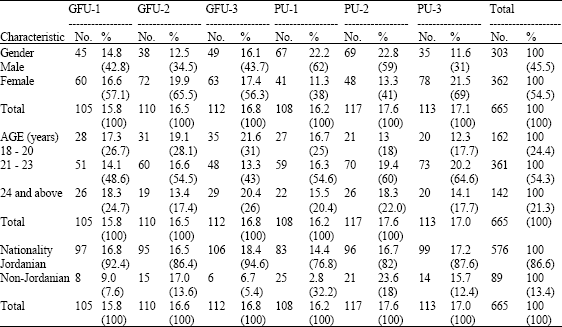
The data obtained from the survey were analyzed for frequency analysis. Among respondents, male was 45.5% (303) and female was 54.5 (362). Almost 79% of respondents were between the age of 18 and 23 (523). Older students (24 years and more) constituted only 21% of total respondents. As far as the nationality of respondents was concerned, 86.6% was Jordanian (575) compared to 13.4% non-Jordanian (89). It is interesting to note that the three surveyed private universities had twice the number of non-Jordanian respondents (60) compared to government universities (29) (Table 3).
Sample Educational Information
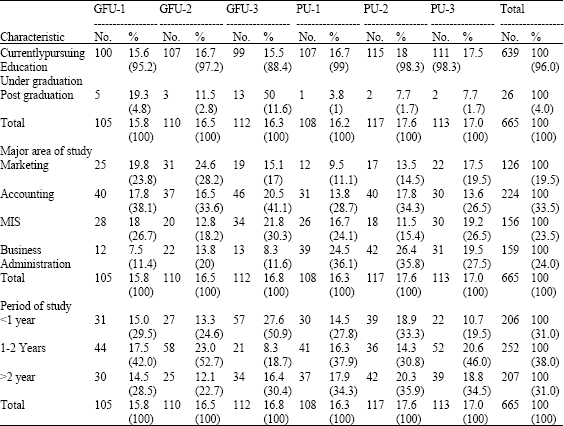
It can be observed from Table 4 that 96% of respondents were undergraduates and graduates. Only a small (4%) of the students were at the postgraduate level.
Ninteen percent of total respondents (126) were studying marketing, 33.5% were studying accounting (224), 23.5% were studying management information systems (MIS) (156) and 24% were studying business administration (159). The majority (69%) of the respondents had been with their respective universities for more than a year, whereas 31% of the respondents had been studying for a period exceeding 2 years (207). This fact renders the information realistic.
Comparative Analysis of Students Satisfaction Between Public Universities and Private Universities
A list of variables that may influence students satisfaction and may be affected by it was developed. These variables were carefully selected in the light of previous empirical studies on the subject matter, with slight adaptation by the researcher of this study in order to express more clearly the uniqueness of the higher education sector as service providers. Students satisfaction was studied under four broad areas for each of the participating universities. These areas were: (1) Service product, (2) administration of the university, (3) lectures of the university and (4) facilities.
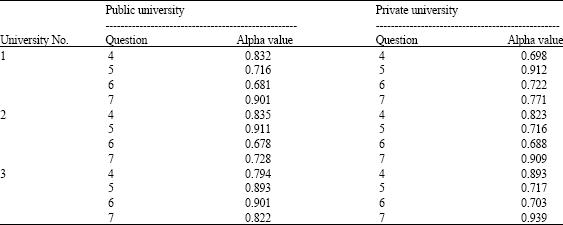
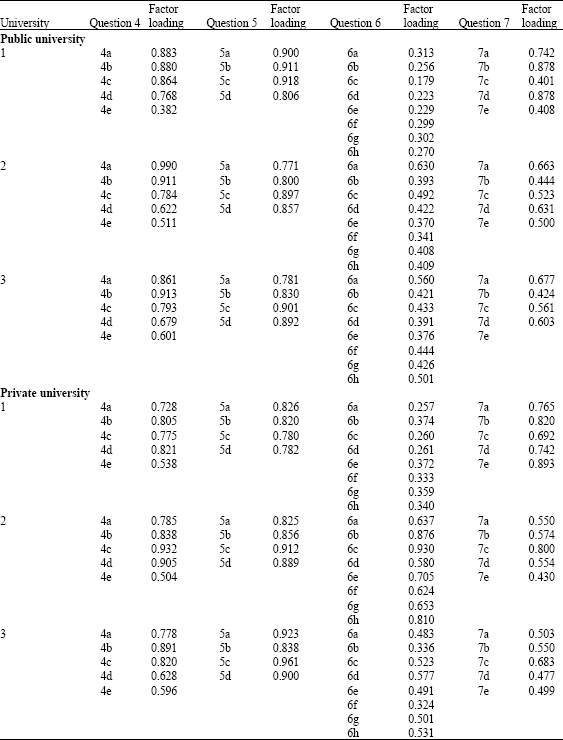
Under each broad area, there were certain questions, which were answered by the respondent. All the questions under each category were summed up and averages were taken to interpret the information for a particular area. This approach was practiced and recommended by many researchers of the service industry (Taylor, 1992; Shainesh, 1996; Bitner, 1995; Alak, 2006). However, before arriving at the summed average, an internal consistency analysis was performed to assess the reliability aspect of the instrument. Reliability refers to the instruments ability to provide consistent results in repeated uses (Gatewood and Field, 1990). Coefficient (Cronbachs) alpha is the basic measure for reliability (Green et al., 2000). The results are shown in Table 1 and 2, respectively. It should be stated that the use of KMO statistic and Bartletts test statistic (through SPSS version-2) found that data was suitable for this analysis.
Coefficient alpha value was found to be more than the cut-off value of 0.6 (Hair et al., 1995). Since, all the α values were in between 0.68 and 0.93 and all above 0.6, this suggested that our scale had adequate measurement properties.
Two types of statistical analysis were used in the above-mentioned four broad areas to understand students satisfaction. The first statistical test was mean values. Mean values were arrived at by adding up the responses to the sub questions in each broad category. The second statistical test was the inferential statistical test, Chi-squared test, which was found to be suitable for drawing conclusions (Choi and Chu, 2001).
| Table 1: | Reliability analysis |
 | |
| Table 2: | Factor analysis |
 | |
MEAN VALUE ANALYSIS
Service Product
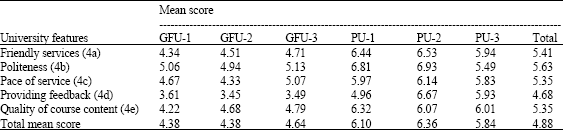
Service product was measured by five indicators: friendly services (4a), politeness (4b), pace of service (4c), providing feedback (4d) and quality of course content (4e). The majority of respondents agreed that politeness was important, with a mean of (5.63) (Table 3). Friendly service was another indicator, with a mean of) 5.41 (followed by pace of service (5.35), quality of course content (5.35) and providing feedback (4.68). PU-2 respondents rated services offered to them as superior, with the highest mean of (6.36), followed by PU-1 (6.10) and PU-3 (5.84).
| Table 3: | Sample demographic profile |
 | |
| Table 4: | Sample educational information |
 | |
It is interesting to note that the respondents at private universities were more satisfied with the services offered compared to government universities, as evident from the mean values shown in Table 5.
Administration
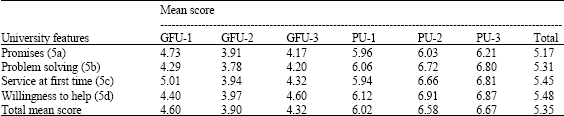
Administration was measured by four indicators: promises (5a), problem solving (5b), service at first time (5c) and willingness to help (5d). It can be observed from Table 4 that PU-1, PU-2 and PU-3 respondents agreed that the administration of their universities was superior with mean values of (6.02), (6.58) and (6.67) respectively. PU-3 respondents were the most satisfied with the administration among all respondents. However, GFU-2 respondents were the least satisfied, with a mean value of (3.90). In fact, respondents at the three government universities felt that the administration should be improved in their respective universities. The data revealed that private university students were more satisfied with the administration of their universities compared to government universities, whose students had some reservations regarding the performance of the administration of their universities.
Lecturers
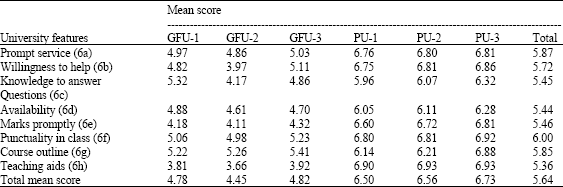
This variable was measured by eight indicators: prompt service (6a), willingness to help (6b), knowledge to answer questions (6c), availability (6d), marks promptly (6e), punctuality in class (6f), course outline (6g) and teaching aids (6h). Table 5 shows that the majority of respondents agreed that their lecturers had very good record in terms of punctuality in class, with the highest mean of (6.00), followed by prompt service (5.87), course outline (5.85), willingness to help (5.72), marks promptly (5.46), knowledge to answer questions (5.45), availability (5.44) and teaching aids (5.36). However, private universities had the upper edge regarding lecturers in this respect compared to government universities. It is quite evident that the highest satisfaction level was registered by the students of private universities, where the mean values stood at (6.50), (6.56), (6.73) for PU-1, PU-2 and PU-3, respectively. This can be attributed to the ratio of lecturer to students where public universities have a very high ratio compared to private universities. Therefore, private university teaching could be classified as more personalized and customized.
Facilities
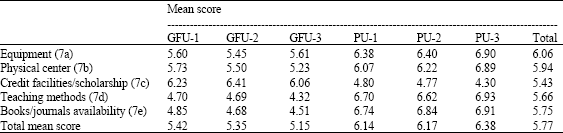
This variable was measured by five indicators: equipment (7a), physical center (7b), credit facilities (7c), teaching methods (7d) and books/Journal availability (7e). Table 6 shows that student respondents at government universities were more satisfied with the credit facilities/scholarships offered by their universities, compared to student respondents at private universities.
| Table 5: | Service product |
 | |
| Table 6: | Administration |
 | |
This is attributed to the fact that government regulations encourage public universities to offer financial assistance and scholarships to their students, whereas private universities are not covered by such regulations. Besides, private universities are only allowed to grant limited number of scholarships to their students under the pretext that private university students are well off compared to public university students. However, it is evident that private university students were more satisfied with their university facilities compared to their counterparts at public universities. PU-3 respondents were the most satisfied (6.38), whereas GFU-3 respondents were the least satisfied (5.15) with the facilities offered by their university. With the exception of credit facilities / scholarships, private university students covered by the survey expressed much more satisfaction with the facilities offered by their universities compared to public university students. It is widely acknowledged in Jordan that private universities invest heavily in facilities compared to public universities, especially in the acquisition of books / Journals, teaching methods and equipment.
In a nutshell, it is quite evident that private university respondents were more satisfied with service product, administration, lecturers and facilities of their universities compared to public university respondents. The results obtained so far show quite clearly that private universities in Jordan strive to score some competitive advantages over public universities. Regulations issued by the Higher Education Council have actually enhanced the performance of private universities. Regulations are issued for licensing and accreditation with criteria-so specific as the proper student/faculty ratio, the minimum (80%) proportion of full time academic staff, the maximum teaching load for each academic rank, the student/book-Journal ratio, the maximum number of students in each class (not exceeding 32) and the maximum number of credit hours a student may take per semester. Public universities, on the other hand, are not subject to the Councils accreditation or review procedures and many start new programs, build new buildings, place as many students in a class as possible and allocate few lecturers to huge number of students without Council or other government approvals. It is not surprising, therefore that respondents at private universities were more satisfied compared to respondents at public universities.
CHI-SQUARED ANALYSIS
The Chi-square statistic (χ2) was used to test the statistical significance of the observed association in a cross tabulation. Here, the test was conducted based on <4 (dissatisfied) and >4 (satisfied). The questions set with a mean value of 4 were excluded from the test and analysis, because respondents were neutral in their opinion. They were neither satisfied not dissatisfied. Four hypotheses were formulated to address the four broad areas (variables) of the current study namely: service product, administration, lecturers and facilities. These hypotheses are presented and tested below.
Service Product Analysis
Ho:There is no difference in the satisfaction levels of the students with respect to service products of private and government universities
Ha:There is difference in the satisfaction levels of the students with respect to service products of private and government universities
Inference
Calculated Chi-squared value was (39.57), which was greater than table value of (3.841) at one degree of freedom and 1 percent significance level. Hence, Ho was rejected and the alternative hypothesis (Ha) was accepted (Table 7). It can be inferred that there was difference in the satisfaction levels of the students with respect to service products of private and government universities. Similar results came from the mean values as private universities had a mean of (6.1) compared to (4.47) by the government universities (Table 3) with respect to the satisfaction from service product (Table 8).
Administration Analysis
Ho:There is no difference in the satisfaction levels of the students with respect to administration of private and government universities
Ha:There is difference in the satisfaction levels of the students with respect to administration of private and government universities
Inference
Calculated Chi-squared value was (45.61), which was greater than table value of (3.841) at one degree of freedom and 1% significance level. Hence, Ho was rejected and the alternative hypothesis (Ha) was accepted (Table 9). It can be inferred that there was difference in the satisfaction levels of the students with respect to administration of private and government universities.
Table 6 indicates that private universities had the mean satisfaction value of (6.42) compared to (4.27) by the government universities. This result supports the Chi-squared test Calculated Chi-squared value = 39.57. Table value at one degree of freedom and 1% significance level is: 3.841 where there appeared to be a difference in the satisfaction level of the students with respect to administration.
| Table 7: | Lecturers |
 | |
| Table 8: | Service product analysis |
 | |
| Table 9: | Administration analysis |
 | |
| Calculated Chi-squared value = 45.61. Table value at one degree of freedom and 1% significance level is: 3.841 | |
It is evident that private university students were more satisfied with the administration setup of their universities compared to their counterparts at government universities.
Lecturers Analysis
Ho:There is no difference in the satisfaction levels of the students with respect to lecturers of private and government universities
Ha:There is difference in the satisfaction levels of the students with respect to lecturers of private and government universities
Inference
Calculated Chi-squared value was (29.33), which was greater than table value of (3.841) at one degree of freedom and 1 percent significance level. Hence, Ho was rejected and the alternative hypothesis (Ha) was accepted (Table 10). It can be inferred that there was difference in the satisfaction levels of the students with respect to lecturers of private and government universities.
Table 5 shows that private universities had the mean satisfaction value of (6.60) compared to (4.68) by the government universities. This result supports the Chi-squared test where there was a good evidence to suggest that there was a difference in the satisfaction level of the students with respect to lecturers. This shows that respondents at private universities were more satisfied with their lecturers compared to respondents at public universities.
Facilities Analysis
Ho:There is no difference in the satisfaction levels of the students with respect to facilities of private and public universities
Ha:There is difference in the satisfaction levels of the students with respect to facilities of private and government universities
Inference
Calculated Chi-squared value was (51.45), which was greater than table value of (3.841) at one degree of freedom and 1% significance level. Hence, Ho was rejected and the alternative hypothesis (Ha) was accepted (Table 12). It can be inferred that there was difference in the satisfaction levels of the students with respect to facilities of private and government universities.
As can be seen from Table 11, private universities had the mean satisfaction value of (6.23) compared to (5.31) by the government universities, thus supporting the Chi-squared test where there appeared to be a difference in the satisfaction level of students with respect to facilities. This indicates that private universities’ respondents were more satisfied with the facilities provided by their universities compared to respondents at public universities, despite the fact that public universities’ respondents were more satisfied with credit facilities/scholarships offered by public universities, than their counterparts at private universities.
| Table 10: | Lecturers analysis |
 | |
| Calculated Chi-squared value = 29.33. Table value at one degree of freedom and 1% significance level is: 3.841 | |
| Table 11: | Facilities |
 | |
| Table 12: | Facilities analysis |
 | |
| Calculated Chi-squared value = 51.45. Table value at one degree of freedom and 1% significance level is: 3.841 | |
It is interesting to note that the results of the current study contradict with those conducted by other researchers (Mostafa, 2006; Willis, 2006) where public universities in Egypt and China were found to be more superior in terms of performance and student satisfaction compared to private universities. This is attributed to two main reasons:
| • | Public universities in Egypt and China were better equipped to handle educational matters and better financed to support students compared to private universities |
| • | Public universities in Jordan are not subject to the Higher Education Council accreditation or review procedures, whereas private universities are subject to the strictest review procedures. Indeed, private universities are no longer restricted to the existing tradition in curriculum and delivery; they are reaching out for innovation and creativity-a step which may enable private universities to cross the threshold into a new importance in Jordanian higher education |
CONCLUSIONS
This study has assessed overall students satisfaction from the higher education institutions in Jordan and investigated the differences in satisfaction levels of the students from public and private universities. It is a welcoming outcome that private universities are really competing well and even well ahead of government universities in delivering services and other related outputs. Students at private universities perceive higher quality services than their counterparts at public universities and are more satisfied with such services compared to students at public universities. It is quite evident that private universities are differentiating themselves by delivering consistently higher quality services than the public universities. It is also interesting to note that the significant power exercised by the Higher Education Council over private universities, especially regarding the unprecedented and strict review procedures and accreditation criteria, has actually enabled private universities not to settle for merely good service; they aim for 100% defect-free service in order to be up to the challenge and provide superior services unmatched by public universities.
Public universities, on the other hand, are not subject to the Councils accreditation or review procedures and seem to have escaped scrutiny in spite of a certain amount of administrative and fiscal recklessness. Yet, this exemption seems to have worked against the interests of students at public universities, who are less satisfied with the received education service compared to their counterparts at private universities.
It can easily be deducted from the findings of this study that students at the surveyed private universities were by far more satisfied with 21 out of the 22 items contained in the questionnaire than their counterparts at public universities. The only item which received the highest score by students at public universities was that related to credit facilities/scholarships. Student respondents at public universities were more satisfied with the credit facilities offered by their universities, compared to their counterparts at private universities. Yet, this finding does not necessarily imply that public universities were more superior in terms of education service than private universities. Neither private universities nor their students receive financial support from the government. Besides, the Ministry of Higher Education and Scientific Research encourages public universities to offer credit facilities / scholarships to their students at the expense of their counterparts at private universities, under the pretext that private university students could easily support themselves as long as they were able to pay the high tuition fees charged by private universities. Scholarships offered by private universities are also restricted by the Ministry’s strict regulations, although some private universities have managed to overcome this obstacle and sent a limited number of students to further their studies abroad.
The noticeable difference in the satisfaction levels between private and public universities, in favor of private universities, suggests that the quality of private higher education in Jordan has witnessed improvement and consequently privatization can be considered to be the right mover globally and particularly in Jordan.
In recent years, private universities have become active in efforts to support and nurture economic development efforts throughout Jordan. In some cases, these universities have supported the countrys economy through the development of technology based programs and training courses, contributed in-kind economic development services, improved their service product, administration, lecturers and facilities and helped produce a well educated workforce. Many private universities have adopted TQM measures and programs in an endeavor to upgrade the quality of education services and to differentiate themselves as the providers of truly superior education services. These universities claim that they are student-driven institutions, in the sense that they strive to meet the expectations of students and their families and even exceed such expectations.
The success stories of the private higher education sector in Jordan have led public and private organizations to call upon the government to professionalize the Higher Education Council, add private university representation, improve the management autonomy of both private and public institutions, establish an accreditation body for all higher education and ease the unfair restrictions imposed on the freedom of private universities, particularly in such areas as setting admissions criteria, introducing new types of studies and fields of specialization at various levels, setting academic and administrative standards and introducing a system of rewards and incentives suitable for their own requirements and peculiarities.
Limitations and Directions for Further Research
This study was subject to several limitations that affected the interpretation of the results. Like any statistical procedure, factor analysis is subject to measurement and sampling error (Chaterjee et al., 1991). Darden and Dorsch (1988) have noted that principal components are sample specific and may, in part, be the result of sampling variation.
Therefore future studies with large samples and application are two of the greatest necessities for the reliable identification of factors underlining service quality in higher education. It should also be noted that the outcomes of this study may not have represented the entire population, due to the detail that a non-probability sampling method was used to select the data. This method was chosen because it relies on the personal judgment of the researcher, rather than chance, in selecting sample elements. The researcher selected the sample arbitrarily based on convenience.
Furthermore, the sample was confined to management students only at private and public universities. To be able to take a broader view on this specific student university section, a study that would include more private and public universities in a range of regional settings and more varied specializations could be performed. Future research should be carried out with more variables and a larger sample.
Another important limitation is that although quality is found to be measured most accurately through the eyes of the customer (Jones and Sasser, 1995), some might argue that students are not the only group to survey in assessing quality in private and public universities, since they are in the process of acquiring their education and, for the most, may have little knowledge of what should be expected of universities along key quality dimensions. Consequently, future studies should focus on other stakeholders who depend on private and public universities’ service performance and whose satisfaction may be measured. Additional research is needed to measure the satisfaction levels of stakeholders such as alumni, employers, postgraduate students and faculty.
REFERENCES
- Alak, B.M.A.A., 2006. The impact of marketing actions on relationship quality in the higher education sector in Jordan. J. Marketing Higher Edu., 16: 1-23.
CrossRef - Berry, L.L., A. Parasuraman and V.A. Zeithaml, 1988. The service quality puzzle. Bus. Horizons, 31: 35-43.
Direct Link - Bitner, M.J., 1995. Building service relationships its all about promises. J. Acad. Market. Sci., 23: 246-251.
CrossRef - Brady, M.K. and J.J. Cronin, 2001. Some new thoughts on conceptualizing perceived service quality: A hierarchical approach. J. Market., 65: 34-49.
Direct Link - Presbury, R., A. Fitzgerald and R.Chapman, 2005. Impediments to improvements in service quality in Luxury Hotels. Managing Ser. Q., 15: 357-373.
Direct Link - Chapman, R.G., 1979. Pricing policy and the college choice process. Res. Higher Educ., 10: 37-57.
CrossRef - Chaterjee, S., L. Jamieson and F. Wiseman, 1991. Identifying most influential observation in factor analysis. Market. Sci., 10: 145-160.
CrossRef - Choi, T.Y. and R. Chu, 2001. Determinants of hotel guest's satisfaction and repeat patronage in the Hong Kong hotel industry. Int. J. Hospitality Manage., 20: 277-297.
CrossRef - Carman, J.M., 1990. Consumer perceptions of service quality an assessment of the SERVQUAL dimensions. J. Retailing, 66: 33-55.
Direct Link - Cronin, Jr. J.J. and S.A. Taylor, 1992. Measuring service quality: A reexamination and extension. J. Market., 56: 55-68.
CrossRefDirect Link - Cronin, Jr. J.J., M.K. Brady and G.T.M. Hult, 2000. Assessing the effects of quality, value and customer satisfaction on consumer behavioral intentions in service environments. J. Retailing, 76: 193-218.
CrossRefDirect Link - Darden, W.R. and M.J. Dorsch, 1988. Useful component analysis graphical views of marketing data. J. Acad. Market. Sci., 16: 60-73.
CrossRef - Ford, J.B., M. Joseph and B. Joseph, 1999. Importance-performance analysis as a strategic tool for service marketers: The case of service quality perceptions of business students in New Zealand and the USA. J. Service Market., 13: 171-186.
Direct Link - Antony, J., F.J. Antony and S. Ghosh, 2004. Evaluating service quality in a UK. Hotel Chain: A case study. Int. J. Contemporary Hospitality Manage., 16: 380-384.
CrossRefDirect Link - Hair, J.F., R.E. Anderson, R.L. Tatham and W.C. Black, 1995. Multivariate Data Analysis with Readings. 4th Edn., Prentice-Hall Inc., Upper Saddle River, New Jersey, USA, ISBN: 978-0-02-349020-0, Pages: 745.
Direct Link - Hemmasi, M., L.A. Graf and M.R. Williams, 1997. Strategic planning in health care merging two methodologies. Competitiveness Rev., 7: 38-51.
Direct Link - Ingram, H., 1996. Classification and grading of smaller hotels guesthouses and bed and breakfast accommodation. Int. J. Contemporary Hospitality Manage., 8: 30-34.
CrossRef - Jones, T.O. and W.E. Sasser Jr., 1995. Why satisfied customers defect. Harvard. Bus. Rev., 73: 88-100.
Direct Link - LeBlanc, G. and N. Nguyen, 1997. Searching for excellence in business education an exploratory study of customer impressions of service quality. Int. J. Edu. Manage., 11: 72-79.
CrossRef - Mostafa, M.M., 2006. A comparison of SERVQUAL and I-P analysis: Measuring and improving service quality in egyptian private universities. J. Market. Higher Educ., 16: 83-104.
CrossRef - Ostrom, A. and D. Lacobucci, 1995. Consumer Trade-offs and the evaluation of services. J. Market., 59: 17-28.
Direct Link - Parasuraman, A., V.A. Zeithaml and L.L. Berry, 1994. Reassessment of expectations as a comparison standard in measuring service quality implications for further research. J. Market., 58: 111-124.
Direct Link - Parasuraman, A., V.A. Zeithaml and L.L. Berry, 1988. SERVQUAL: A multiple-item scale for measuring consumer perceptions of service quality. J. Retail., 64: 12-40.
Direct Link - Ruby, C.A., 1998. Assessing Satisfaction with selected services using SERVQUAL a market driven model of service quality. NASPA J., 35: 331-341.
Direct Link - Willis, M., 2006. The development and application of a market entry process for foreign universities entering the chinese higher education market. J. Market. Higher Educ., 16: 45-82.
CrossRef - Zeithaml, V.A. and M.J. Bitner, 2003. Services Marketing: Integrating Customer Focus across the Firm. 3rd Edn., McGraw-Hill, New York, USA., ISBN-13: 9780072471427, Pages: 668.
Direct Link