

I.K. Olayemi
Department of Biological Sciences, Federal University of Technology, Minna, Nigera
I.C.J. Omalu
Department of Biological Sciences, Federal University of Technology, Minna, Nigera
S.O. Abolarinwa
Department of Biological Sciences, Federal University of Technology, Minna, Nigera
O.M. Mustapha
Department of Biological Sciences, Federal University of Technology, Minna, Nigera
V.A. Ayanwale
Department of Biological Sciences, Federal University of Technology, Minna, Nigera
A.Z. Mohammed
Department of Biological Sciences, Federal University of Technology, Minna, Nigera
I.M. Bello
Department of Biological Sciences, Federal University of Technology, Minna, Nigera
V.I. Chukwuemeka
Department of Biological Sciences, Federal University of Technology, Minna, Nigera
Asian Journal of Epidemiology
Year: 2012 | Volume: 5 | Issue: 2 | Page No.: 42-49







ABSTRACT
In order to generate baseline information for developing content and context-sensitive anti- malaria behavioral change communication messages, this study was carried out to assess the people’s knowledge about malaria in an urban area of north central Nigeria, between May and October 2010. Data were collected from about 1,500 respondents, using a pre-tested structured questionnaire, that assessed the people’s knowledge of the symptoms, mode of transmission and prevention of malaria, as well as, the frequency at which they experience episodes of the disease. The results revealed that 80.95% of the respondents correctly associated malaria with clinical symptoms of the disease, while the remaining 19.05% attributed non-malaria conditions, especially, stomach pain (4.50%), influenza (2.74%), diarrhea (2.36%), etc., to the disease. About 97% of the respondents had experienced malaria, with 49.16% of them having an episode in the three months preceding this survey. Though, all the respondents claimed to know the cause of malaria, only 89.47% correctly mentioned mosquito bites while, the remaining 10.53% gave spurious answers including, changes in weather conditions (3.09%), onset of teething in infants (2.75%), dirty environment (1.66%), etc. Almost all the respondents (96.53%) knew an appropriate method of preventing malaria, with the use of mosquito coils/aerosols (33.69%) and bed nets (27.30%) been the most preferred options. The epidemiological implications of these results were highlighted and discussed and it was concluded that the findings will serve as an impetus for re-designing anti-malaria behavioural change communication messages.
PDF Abstract XML References Citation
Received: August 03, 2011;
Accepted: November 28, 2011;
Published: January 20, 2012
How to cite this article
I.K. Olayemi, I.C.J. Omalu, S.O. Abolarinwa, O.M. Mustapha, V.A. Ayanwale, A.Z. Mohammed, I.M. Bello and V.I. Chukwuemeka, 2012. Knowledge of Malaria and Implications for Control in an Endemic Urban Area of North Central Nigeria. Asian Journal of Epidemiology, 5: 42-49.
DOI: 10.3923/aje.2012.42.49
URL: https://scialert.net/abstract/?doi=aje.2012.42.49
DOI: 10.3923/aje.2012.42.49
URL: https://scialert.net/abstract/?doi=aje.2012.42.49
INTRODUCTION
Despite over half a century of organized rigorous malaria control efforts, the disease remains the world’s most important tropical health challenge. Malaria is endemic in more than 100 countries, putting about 40% of the world’s population at risk and killing over 3 million people annually (Sachs and Malaney, 2002; Muturi et al., 2008). In Nigeria, malaria is endemic throughout the country, accounting for up to 60% outpatient visits to health facilities, 30% childhood mortality and 11% maternal deaths (FMOH, 2001, 2005). Though, the National Health policy set 2010 as the target date for 50% reduction in malaria morbidity and mortality, its attainment has being hampered by several ecological and anthropogenic factors, ranging from parasite/vector drug/insecticide resistance to counter-productive attitudes of the human populace (Federal Ministry of Health, 2004). Yet, significant reduction in malaria-related burdens, especially in Africa, is central to the alleviation of poverty in the continent.
Though, several studies have elucidated the ecological drivers of malaria transmission in Nigeria, there is a dearth of information on the people’s knowledge, attitudes and practices regarding malaria as a disease, as well as, its transmission, in the different localities, especially in the northern part, of the country. The findings of the few available studies revealed considerable locational variations in people’s knowledge of malaria and its transmission. In Oyo and Lagos, both urban communities in south western Nigeria, approximately 93 and 79%, respectively, of the sampled population correctly recognized mosquitoes as the transmitters of malaria (Adedotun et al., 2010; Iriemenam et al., 2011). However, a survey among patent medicine sellers in a rural Nigerian community, revealed that 77% of them mentioned mosquitoes as the main cause of malaria, high proportions of them (46 and 31%) believed that malaria may also be caused by staying long in the sun and drinking bad water, respectively (Okeke et al., 2006). Similar studies elsewhere in Africa also revealed spatial variations in people’s knowledge, attitudes and practices regarding malaria. In southern Ghana, the most frequently mentioned causes of malaria were “mosquito bites, eating too much fatty or oily food and heat from the sun” (Ahorlu et al., 2005). The most commonly reported symptoms of malaria in the continent include fever, shivering, headache, high body temperature body pains, etc. (Malik et al., 2006; Deressa, 2007).
According to Montgomery et al. (2006), the quality of people’s knowledge about malaria and its epidemiology, is a strong determinant of their level of participation in anti-malaria activities which, in turn, is central to the success of control programs (Service, 1993). Yet in Nigeria, people’s knowledge and behavior as contributing factors are often neglected while implementing National Malaria Control Program’s activities. To this end, community participation in and acceptance of such control programs are often below expectations thus, hampering their success. Therefore, in order to create a synergy between community efforts and Governmental/Nongovernmental-sponsored organized malaria control interventions in north central Nigeria in particular, there is an urgent need to determine the people’s knowledge and beliefs regarding malaria and its transmission.
MATERIALS AND METHODS
Description of the study area: The study was carried out in Minna, the capital city of Niger state, north central Nigeria. The area is located within longitude 6° 33´E and latitude 9° 37´N, on an estimated land area of 88 km2, with a human population of about 1.2 million. The climate is tropical, with mean annual temperature, relative humidity and rainfall of 30.20°C, 61% and 1334 mm, respectively. Two distinct seasons namely, rainy (May-October) and dry (November-April) characterize the area, with peak periods in August and March, respectively. Though, a heterogeneous community, residency in Minna is dominated by three major tribes namely, Gwari, Nupe and Hausa, with reasonable presence of Yorubas and Igbos. The people are mostly engaged in agriculture, trading, artisanship and civil service for living. Malaria is endemic in Minna, with perennial transmission and, peak periods during the months of August to October (Olayemi et al., 2009).
Study design and data collection: The study was multi-centric, cross-sectional and descriptive (Joshi and Banjara, 2008). The sample population of the study was selected by a random sampling procedure, with the city divided in to five segments and samples proportionately distributed. A structured questionnaire for data collection was designed, pre-tested and standardized. The questionnaire was prepared in English language but communicated in local languages when necessary (e.g., when dealing with illiterates). The questionnaires were administered to consenting respondents by trained personnel. The questionnaire consisted of questions regarding demographic characteristics of the respondents, knowledge of malaria symptoms, mode of transmission and prevention, as well as, frequency of malaria episodes (Agyepong et al., 1995). On the whole, a total of 1,500 questionnaires were administered between May and October, 2010, being the rainy season and coinciding with the periods of peak malaria transmission in the study area.
Data analysis: A database is prepared using Epi Info software version 6.0 and data entry is done accordingly. The data are subsequently analyzed using SPSS version 16.0. The Chi-square test was used to test the significance of differences in proportions of responses and such tests are considered significant when p-value is <0.05.
RESULTS
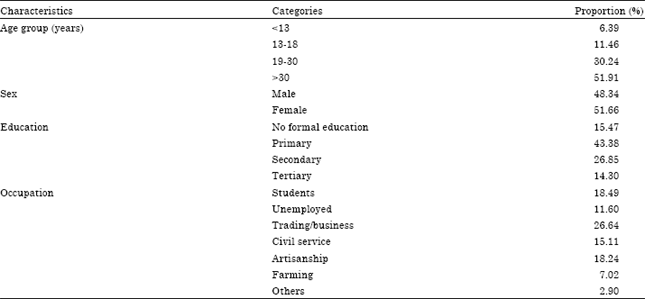
Demographic characteristics of respondents: Of the 1,500 questionnaires administered, 1,276 were retrieved and 1,254 of them were usable. Table 1 summarizes demographic characteristics of the respondents. Majority of the respondents (51.91%) were above 30 years old, distantly followed by those between 19 and 30 years while, respondents less than 30 years old were the least (6.39%). About 52% of the respondents were females and the rest were males. Among the respondents, only 15.47% were illiterate while most of them (43.38%) were educated to primary school level; about 14% of them had tertiary education. The single largest occupation group was trading/business (26.64%), followed by students and artisans which constituted about 18% each. The least occupation groups (4.90%) were ‘Others’ (mostly beggars and the physically challenged) and Farming (7.02%).
Knowledge of malaria symptoms: About 80% of the responses given regarding malaria symptoms were correct while, the remaining almost 20% were not clinical symptoms of the disease (Table 2). The most frequently mentioned correct symptoms include headache (14.50%), body weakness (12.27%), fever and high body temperature (each about 11%) and cold (10.27%).
| Table 1: | Demographic characteristics of respondents on knowledge of malaria in Minna, North Central Nigeria |
 | |
| Table 2: | Respondents’ knowledge of malaria symptoms in Minna, North Central Nigeria |
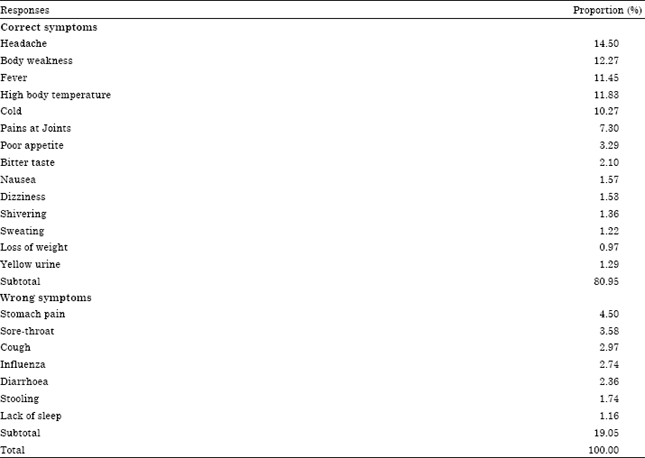 | |
On the other hand, the commonest wrong responses were stomachache (4.50%), sore-throat (3.58%), cough (2.97%), influenza and diarrhea (2.74 and 2.36%, respectively).
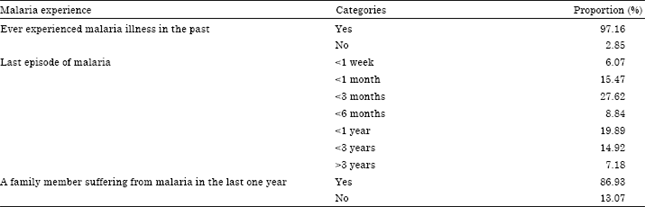
Malaria experience and recency of last episode: Table 3 shows malaria experience of the respondents, how recently they had an attack and annual frequency of cases in their families. About 3% of the respondents claimed never to have experienced malaria while, the remaining 97% were sure they have had it in the past. While, 49.16% of the respondents had malaria at least three months prior to participating in this survey, 77.89% of them experienced it in the last one year. Also, 86.93% of the respondents claimed that at least one other member of their family experienced the disease within the last one year.
Knowledge of malaria transmission and prevention: The respondents’ knowledge of malaria transmission and prevention are summarized in Table 4. Almost 90% of the respondents correctly identified mosquito bites as the mode of transmission of malaria. However, as was the case with their knowledge of the symptoms of the disease, about 10% of them believed that malaria is caused by certain conditions of practices including, changes in weather conditions (3.09%), onset of teething in infants (2.75%), dirty environment (1.66%), remaining in the sun for long (1.11%), etc.
| Table 3: | Malaria experience and recency of episode of respondents in Minna, North Central Nigeria |
 | |
| Table 4: | Respondents knowledge of malaria transmission and prevention in Minna, North Central Nigeria |
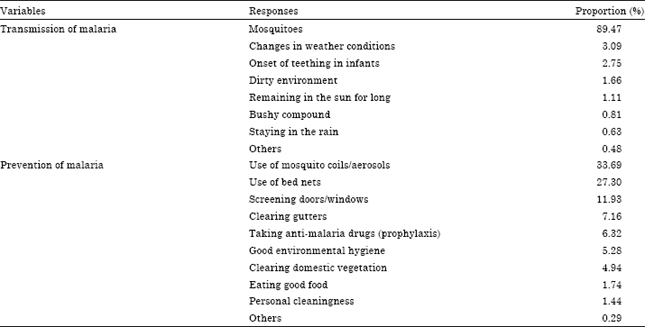 | |
However, the situation was much better regarding the respondents’ knowledge of appropriate was of preventing malaria, as only 3.18% (mainly ‘personal cleaningness’ and ‘eating good food’) of the responses were outside the purview of malaria prevention strategies (Table 4). The most frequently mentioned malaria preventive measures were use of mosquito coils/aerosols (33.69%), use of bed nets (27.30%) and screening doors/windows with netting materials (11.93%).
DISCUSSION
Majority of the respondents were either above 30 years old or aged between 19 and 30 years. Traditionally, these are the reproductive and malaria care-giving responsible groups in the society. Thus, comments from such groups on malaria should be a true reflection of the quality of knowledge of the disease in an area. The low level of illiteracy recorded in Minna, compared with similar studies elsewhere (Sharma et al., 2007; Yadav et al., 2007), may be due to the fact that this study was carried out in a city, often populated by educated people. Similar low level illiteracy (11.50%) was recorded in an urban community in south western Nigeria (Adedotun et al., 2010).
The results of this study revealed that, although, the respondents in Minna had high scientific knowledge of the symptoms, causes and prevention of malaria, they nevertheless retained some traditional misconceptions such as attributing diarrhea, cough, sore-throat, etc., to malaria; incriminating the sun, changes in weather conditions, onset of teething in infants, etc., as causes; and believing that personal hygiene or eating good food could prevent malaria. Misconceptions about malaria are very common in Africa (Mwenesi et al., 1995; Ahorlu et al., 2005; Okeke et al., 2006; Adedotun et al., 2010). Such misconceptions portend serious threats to effective malaria control. Wrong and unscientific identification of malaria in an Africa setting, where treatment-seeking behavior is dictated by the severity of manifested symptoms (De-Savigny et al., 2004); may result in the administration of anti-malaria drugs against non-plasmodial ailments, of course, with little or no improvement in the health condition of patients. This scenario may make anti-malaria drugs seem ineffective and dampen the already skeptical African malaria care-givers’ confidence in orthodox anti-malaria drugs and, perhaps strengthen traditional belief in local herbs. Also, treatment for malaria is sought outside the home, mostly when it has deteriorated to more life-threatening symptoms (Deressa, 2007). Thus, people with wrong knowledge of the symptoms of malaria may expect an episode to deteriorate to certain non-malarial symptoms before the commencement of adequate treatments. It is common knowledge that delay in malaria treatment can be very fatal (Deressa et al., 2004) but prompt interventions at the early stage of the disease prevent progression to more serious life-threatening illness (Ahorlu et al., 2005).
About 97% of the respondents claimed to have experienced malaria in the past. This finding agrees with those of similar studies in sub-Saharan Africa and goes to confirm the belief that malaria is holoendemic in the region. Earlier, Olayemi et al. (2009) reported almost 60% malaria incidence rate, during the rainy season, among the residents of Minna attending public and private health facilities in the city. Infect, the 2.85% of the respondents in this study who claimed not to have ever experienced an episode of malaria in the past, might be among those less than 13 years old and, perhaps, may not know what malaria is, even after experiencing it. In addition to most of the respondents, about 87% of them claimed that at least one member of their families experienced malaria in the last one year prior to participating in the survey. This finding, perhaps, indicate a high family expenditure on malaria management (including, cost of treatment/prevention and loss of income by family members who take time out to look after patients), in a typical third world country depressed economy. According to Onwujekwe et al. (2000), poor families in Nigeria spend up to 25% of their annual income on direct malaria treatment and prevention.
The respondents’ knowledge of the true mode of transmission of malaria, though high, was equally tainted with misconceptions as was the case with malaria symptoms. However, their knowledge of preventing the disease was much better. This may be due to the fact that anti-malaria health education campaigns in the past had emphasized on prevention rather than diagnosis, perhaps, to reduce the tendency for self-medication. Therefore, there is an urgent need for a review of the contents of anti-malaria behavioural change communication, in order to equip the people with a robust knowledge of malaria. Anti-malaria health education needs to be content and context sensitive (Montgomery et al., 2006), as it is a principal tool for increasing peoples’ knowledge about malaria, which will ultimately lead to decrease in transmission (Nieto et al., 1999). High proportions of the respondents prevent malaria in their homes using mosquito coils/aerosols or bed nets. The reasons for these behaviours may not be far-fetched. While, the for may be due to the high proliferation and aggressive marketing (through various kinds of advertisements) of insecticides by manufacturers in the country in general, the latter may be the result of widespread free distribution of insecticide-treated bed nets in Minna by governmental and non-governmental agencies shortly before the commencement of this study.
CONCLUSION
Though, the respondents were conversant with the major symptoms and cause of malaria, they also attributed the disease to symptoms of non-malaria conditions and incriminate agents other than mosquito bites as responsible for the disease; with serious implications for effective malaria management in the area. In order to reverse this situation, there is an urgent need for comprehensive malaria and anti-malaria public education, to correct the peoples’ erroneous beliefs about the disease. About 97% of the respondents had experienced an episode of malaria in the past and 78% in the last one year, indicating that Minna is holoendemic for malaria, with attendant high health and socioeconomic burdens demanding immediate increased Governments Attention. Less that 30% of the respondents mentioned the use of bed nets as their malaria preventive measure. This indicates that despite large-scale free distribution of insecticide-treated bed nets in the area prior to this survey, the level of coverage of bed nets in Minna is still relatively low. However, the fact that the use of bed nets was the second most frequently mentioned for malaria prevention by the respondents may mean increased acceptability of the strategy by the residents of Minna, with its consequent mitigating effects against malaria transmission, if the current tempo of World Health Organisation’s Roll-Back-Mlaria initiative through mass distribution of insecticide-treated bed nets, is sustained by stakeholders in malaria control in the country. The findings of this study should, therefore, provide relevant information for re-designing the contents of anti-malaria health education programs, as well as, developing community-friendly tools for malaria control in the country.
ACKNOWLEDGMENTS
The authors wish to thank the respondents who participated in this study, for their warm co-operation. We equally appreciate the assistance rendered by students of the Department of Biological Sciences, Federal University of Technology Minna, Nigeria, regarding data collection and processing. Finally, we are highly indebted to Dr (Mrs) Shittu of the Department of Biochemistry, Federal University of Technology Minna, Nigeria, for technical support on statistical analysis.
REFERENCES
- Adedotun, A.A., O.A. Morenikeji and A.B. Odaibo, 2010. Knowledge, attitudes and practices about malaria in an urban community in south-western Nigeria. J. Vector Borne Dise., 47: 155-159.
PubMed - Iriemenam, N.C., A.O. Dosunmu, W.A. Oyibo and A.F. Fagbenro-Beyioku, 2011. Knowledge, attitude, perception of malaria and evaluation of malaria parasitemia among pregnant women attending antenatal care clinic in metropolitan Lagos, Nigeria. J. Vector Borne Dis., 48: 12-17.
PubMedDirect Link - Joshi, A.B. and M.R. Banjara, 2008. Malaria related knowledge, practices and behavior of people in Nepal. J. Vector Borne Dis., 45: 44-50.
Direct Link - Montgomery, C.M., W. Mwengee, M. Kongongo and R. Pool, 2006. To help them is to educate them: Power and pedagogy in the prevention and treatment of malaria in Tanzania. Trop. Med. Int. Health, 11: 1661-1669.
CrossRefDirect Link - Muturi, E.J., P. Burgess and R.J. Navak, 2008. Malaria vector management: Where have we come from and where are we headed. Am. J. Trop. Med. Hyg., 78: 536-537.
PubMed - Mwenesi, H., T. Harpham and R.W. Snow, 1995. Child malaria treatment practices among mothers in Kenya. Soc. Sci. Med., 40: 1271-1277.
CrossRefDirect Link - Nieto, T., F. Mendez and G. Carrasquilla, 1999. Knowledge, beliefs and practices relevant for malaria control in an endemic urban area of the Colombian pacific. Soc. Sci. Med., 49: 601-609.
CrossRefDirect Link - Okeke, T., B.S.C. Uzochukwu and H.U. Okafor, 2006. An indepth study of patent medicine sellers perspectives on malaria in a rural Nigerian community. Malaria J., Vol. 5.
CrossRefDirect Link - Onwujekwe, O.E., C.O. Akpal, S. Ghasi, E.N. Shu and P.O. Okonkwo, 2000. How do rural households perceive and prioritise malaria and mosquito nets? A study in five communities of Nigeria. Public Health, 114: 407-410.
CrossRefDirect Link - Sachs, J. and P. Malaney, 2002. The economic and social burden of malaria. Nature, 415: 680-685.
CrossRefPubMedDirect Link - Service, M.W., 1993. Community participation in vector-borne disease control. Ann. Trop. Med. Parasitol., 87: 223-234.
PubMedDirect Link - Sharma, A.K., S. Bhasin and S. Chaturvedi, 2007. Predictors of Knowledge about malaria in India. J. Vector Borne Dis., 44: 189-197.
PubMedDirect Link - Yadav, S.P., R.K. Kalundha and R.C. Sharma, 2007. Sociocultural factors and malaria in the desert part of Rajasthan, India. J. Vector Borne Dis., 44: 205-212.
PubMedDirect Link - Ahorlu, C.K., K.W. Koram, C. Ahorlu, D. de-Savigny and M.G. Weiss, 2005. Community concepts of malaria-related illness with and without convulsions in Southern Ghana. Malaria J., Vol. 4.
CrossRefDirect Link - de-Savigny, D., C. Mayombana, E. Nwageni, H. Masanja and A. Minhaj et al., 2004. Care-giving patterns for fatal malaria in Tanzania. Malaria J., Vol. 3.
CrossRefDirect Link - Deressa, W., 2007. Treatment-seeking behavior for febrile illness in an area of seasonal malaria transmission in rural Ethiopia. Malaria J., Vol. 6.
CrossRefDirect Link - Malik, E.M., K. Hanafi, S.H. Ali, E.S. Ahmed and K.A. Mohamed, 2006. Treatment-seeking behavior for children under five years of age: implication for home management in rural areas in high seasonal transmission in Sudan. Malaria J., Vol. 5.
CrossRefDirect Link