

M.O. Adegunwa
Department of Foodservice and Tourism, University of Agriculture, Abeokuta, Ogun State, Nigeria
A.A. Adebowale
Department of Food Science and Technology, University of Agriculture, Abeokuta, Ogun State, Nigeria
E.O. Solano
Department of Food Science and Technology, University of Agriculture, Abeokuta, Ogun State, Nigeria
American Journal of Biochemistry and Molecular Biology
Year: 2012 | Volume: 2 | Issue: 3 | Page No.: 175-182







ABSTRACT
The study was conducted to determine the effect of different thermal processing methods (cooking, autoclaving, roasting) on the chemical composition and functional properties of beniseed (Sesamum indicum) flour. Beniseed was subjected to different thermal process, milled into flour and the proximate and mineral composition, anti-nutritional factors and functional properties of the flour determined using standard analytical procedures. Moisture, fat, crude protein, carbohydrate, ash and crude fibre contents ranged from 3.12-3.62, 49.51-53.10 15.01-18.90, 18.22-20.22, 4.98-5.30 and from 3.30-5.56%, respectively. Thermal processing methods significantly (p<0.05) affected the chemical composition of the flour. Autoclaving, roasting and cooking significantly affected (p<0.05) the functional properties of the beniseed flour. Water absorption capacity, Oil absorption capacity, Foam stability, foam stability and foaming capacity, ranged from 79.28-157.20, 63.0-83.0, 95.46-100.25 and 0.96-4.53%, respectively. The thermal processing resulted in significant (p<0.05) reductions in the content of anti-nutritional factors (oxalate, phytate and hydrocyanate). The study concluded that processing of Sesamum indicum by cooking, roasting and autoclaving had significant effect on its chemical composition and functional properties.
PDF Abstract XML References Citation
Received: September 04, 2011;
Accepted: December 06, 2011;
Published: February 21, 2012
How to cite this article
M.O. Adegunwa, A.A. Adebowale and E.O. Solano, 2012. Effect of Thermal Processing on the Biochemical Composition, Anti-nutritional Factors and Functional Properties of Beniseed (Sesamum indicum) Flour. American Journal of Biochemistry and Molecular Biology, 2: 175-182.
DOI: 10.3923/ajbmb.2012.175.182
URL: https://scialert.net/abstract/?doi=ajbmb.2012.175.182
DOI: 10.3923/ajbmb.2012.175.182
URL: https://scialert.net/abstract/?doi=ajbmb.2012.175.182
INTRODUCTION
Beniseed (Sesamum sp.) is a flowering plant in the genus ‘Sesamum’. It is believed to be the oldest spice being used over some years, even though the precise natural origin of the specie is unknown (Sonntag, 1979). It is an important annual oil seed crop. It has been cultivated for centuries, particularly in Asia and Africa, for its high content of edible oil and protein (Salunkhe et al., 1991; Biswas et al., 2001). It is now cultivated extensively in India, Burma, Indo-China, Japan and some part of Africa, the Mediterranean and more recently in USA, Mexico and other American countries (Biswas et al., 2001). It is also been cultivated in some parts of Benue, Plateau, Kwara and Niger State of Nigeria (Ojiako et al., 2010).
Beniseeds are oil bearing seeds, primarily grown for its richness in oil which comes in a variety of colour and are primarily source of cooking oil in the Eastern part of Nigeria. It is used mainly for making soups and other dishes. It can also be mixed with meal and with other grains for foods, found in salads and baked snacks which is consumable and has laxative properties and can be processed into biscuits (Kanu, 2011). Beniseeds have a rich nutty flavor and it enhances its uses by the ancient as sprinkles on bread and pastries, long before the beniseed sprinkled hamburger bun was developed, can also be baked into crackers in form of stickers (Salunkhe et al., 1991).
Beniseeds contain 20-25% protein and approximately 50% oil (Kanu et al., 2007). Beniseed is rich in methionine (3.2%) which is often the limiting amino acid in legume-based tropical diets; tryptophan and minerals like manganese, copper and calcium and vitamins B1 (thiamine) and vitamin E (tocopherol) (Biswas et al., 2001; Ojiako et al., 2010). Lignans and lignin glycosides isolated from beniseeds and beniseed oil have been reported to show hypo-cholesterolemia effects, anti-oxidative effects to rat liver and kidney and suppressive activity on chemically induced cancers (Kapadia et al., 2002). Beniseed contains a lot of nutrients and also may contain some anti-nutrients. However, one of the pressing problems in developing countries such as Nigeria is how to prevent great losses of nutrients and to reduce the presence of these anti-nutrients which cause public health problems. Preservation of nutrients and elimination of anti-nutrients is important in the processing of beniseed, therefore the most suitable processing methods that achieves these purposes need to be investigated. The objective of this study was to determine the effect of thermal processing on the chemical composition, anti-nutritional factors and functional properties of sesame seed flour.
MATERIALS AND METHODS
Sourcing and processing of beniseeds into flour: Beniseeds (variety Kano 05) used for this project were obtained from Mile 12 market in Lagos State, Nigeria. The material was cleaned to remove dirt and stones, washed and divided into four batches. The first batch was the raw sample. The second was cooked at for 30 min; the third batch was roasted at 110°C for 30 min; the fourth was autoclaved at 126°C, 15 psi for 15 min. The raw and roasted seeds were then milled using a laboratory hammer mill while the cooked and autoclaved seeds were dried in cabinet dryer at 65°C for 5 h before milling. The flour were packaged in zip-lock polyethylene sample bags and stored at 4°C until needed for analysis.
Determination of chemical composition of processed beniseed flour: Moisture content, crude protein, crude fat, ash content, crude fibre of the beniseed flour samples was determined according to AOAC (2004). Carbohydrate content was calculated by difference. Mineral digestion was done using AOAC (1990) method and the minerals (Ca, Mg, Mn, Fe, Cu, K, Na and Zn) were detected using Thermo Scientific Atomic Absorption Spectrophotometer (AAS) (model S4 AA System, r GE712354 (China). Hydrocyanide content was determined using the Essers et al. (1993) method. Phytate was determined by method of Oberlase (1962) and oxalate by the method of Dye (1956).
Determination of functional properties of processed beniseed flour: Bulk density was determined using the method of Wang and Kinsella (1976). Oil Absorption Capacity (OAC) and Water Absorption Capacity (WAC) were determined using Beuchat (1977) method. Emulsion capacity was determined using the procedure described by Kinsella (1979) while swelling power and water solubility index was determined by Takashi and Sieb (1988) method. Foaming capacity and stability were determined by the method described by Narayana and Narsing Rao (1982), modified by Fagbemi and Oshodi (1991).
Statistical analysis: All data were subjected to analysis of variance (ANOVA) and significant values at 5% were separated using Duncan’s Multiple Range Test (DMRT) using Statistical Package for Social Scientists (SPSS version 17.0).
RESULTS AND DISCUSSION
Proximate composition of thermal processed beniseed flour: The proximate composition of the raw and thermal processed beniseed flour is presented in Table 1. The crude fat content ranged from 49.51% in raw to 53.10% in autoclaved beniseed flour. The highest fat content recorded by flour from autoclaved seeds could be attributed to the disruption of the cell structures and membrane partitions of the seeds by heat during cooking, roasting or autoclaving causing the fat to melt and be easily released from the seeds. Fat is important in diets because it promotes fat soluble vitamin absorption. It is a high energy nutrient and does not add to the bulk of the diet (Bogert et al., 1994). These values agreed with the values of 41.3-56.8% reported by Oresanya and Koleoso (1990), Achinewhu (1998), Biswas et al. (2001) and Kanu (2011) for raw beniseed. This result also showed that the high fat content of raw and processed beniseed is comparable with that of other commercial oil seeds (Ojiako et al., 2010). Therefore, commercial extraction of oil from beniseed can be said to be economically viable.
The moisture content of the thermally treated beniseed ranged from 3.12-3.62%. Autoclaving and cooking did not have a significant (p>0.05) effect on the moisture content of the beniseed seed flour when compared to that of the raw sample. The result also showed that roasting resulted in the highest reduction in the moisture content of beniseed flour. The moisture contents of the flours studied fall within the recommended range of 0-13%, as reported by James (1995). This moisture content range has been reported to be suitable for storage and processing of flours without microorganism degradation of the triglyceride (James, 1995). The moisture content of autoclaved, roasted and raw beniseeds was similar to 4.1% moisture of dry beniseed reported by Oresanya and Koleoso (1990). The lowest moisture content of the flour from roasted beniseed indicates that the seed is better preserved by roasting compared to other treatment (Biswas et al., 2001).
The crude fibre is the amount of indigestible sugars present in a food sample. The amount of crude fibre varied significantly (p<0.05) among the samples. It was lowest in the cooked sample (3.30%) and highest in the roasted beniseed flour (5.56%). Maintenance of internal distension for a normal peristaltic movement of the intestinal tract is the physiological role which crude fibre plays. It has been reported that a diet low in fibre is undesirable as it could cause constipation and that such diets have been associated with diseases of colon like piles, appendicitis and cancer (Okon, 1983). They are also comparable to 4.28% for soya bean (Temple et al., 1991).
The crude protein ranged from 15.01% in cooked beniseed to 18.90% in raw beniseed. There was no significant difference (p>0.05) in the effect of the various thermal treatments on the protein content of the beniseed flour. However, there was a significant difference between the thermally processed beniseeds flour and flour from the raw seeds (p<0.05).
| Table 1: | Proximate composition (%) of thermal processed beniseed (Sesamum indicum) |
 | |
Values are means of duplicate determination. Mean values within the same column followed by different superscripts are significantly different (p<0.05) | |
It was observed that the crude protein of the thermally processed beniseed flour were lower than that of the flour from the raw seed. The carbohydrate content varied significantly among the thermally treated beniseed flours (p<0.05). The carbohydrate content was highest in cooked beniseed flour (20.66%) and lowest in the roasted beniseed flour (18.22%). Cooking has been reported to cause the granules to break down, softens the cellulose and makes the starch more available (Agiang et al., 2010).
Mineral composition of thermal processed beniseed flour: Results of the mineral composition of the raw and thermally processed sesame seeds flour are presented in Table 2. There were significant (p<0.05) variation in the mineral content of the samples. Calcium was the most abundant element varying from 120.19 mg/100 g in cooked to 199 mg/100 g in raw samples. This was followed by magnesium with values ranging from 25.18 mg/100 g in cooked to 39.33 mg/100 g in roasted samples. Potassium ranged from 22.43 mg/100 g in the cooked sample to 31.75 mg/100 g in roasted beniseed flour. Iron ranged from 0.94 mg/100 g in cooked to 2.51 mg/100 g autoclaved beniseed flour. Values for sodium ranged from 0.92 mg/100 g in autoclaved beniseed to 1.24 mg/100 g in cooked beniseed flour. While that of zinc ranged from 0.45 mg/100 g in autoclaved flour to 0.51 mg/100 g in cooked flour samples. Manganese was lowest in roasted beniseed flour 0.25 mg/100 g) and highest in raw (0.97 mg/100 g) beniseed samples. Copper was the least among the elements studied and it varied from 0.12 mg/100 g in raw and roasted, respectively to 0.95 mg/100 g in cooked samples. Results of this work showed that comparatively all the processed Sesamum indicum had higher values for sodium, iron and copper than the raw samples. Roasted had more magnesium, potassium while cooked had more zinc and autoclaved had more copper than the raw sample. This implies that thermal processing improved the concentrations of some of these minerals (Umoren et al., 2007; Obiajunwa et al., 2005). However, raw samples had higher or same values in calcium, manganese, zinc and copper, respectively.
Anti-nutritional factors content of thermal processed beniseed flour: Table 3 shows the concentration of the anti-nutritional factors determined in the raw and thermally processed sesame seed flour. The concentrations of anti-nutrients in different foodstuffs may affect their nutritive values. Oxalic and phytic acids are known to precipitate or form insoluble complexes with calcium, magnesium, zinc and iron thus interfering with their utilization. The amount of oxalate in the raw beniseed flour was significantly different (p<0.05) from that of the thermally treated samples. The amount of oxalate was lowest (51.83 mg/100 g) in roasted but highest (88.57 mg/100 g) in raw seed flour.
| Table 2: | Mineral composition (mg/100 g) of processed beniseed (Sesamum indicum) flour |
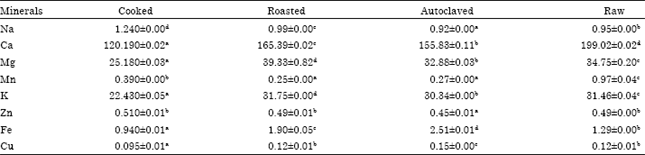 | |
Values are means of duplicate determination. Mean values within the same row followed by superscripts are significantly different (p<0.05) | |
| Table 3: | Anti-nutritional factors in processed Sesamum indicum flour (mg/100 g) |
 | |
Values are means of duplicate determination. Mean values within the same column followed by different superscripts are significantly different (p<0.05) | |
| Table 4: | Functional properties of thermal processed beniseed flour |
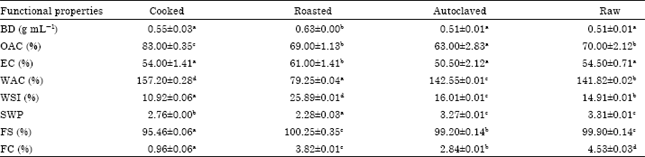 | |
Values are means of duplicate determination. Mean values within the same row followed by different superscripts are significantly different (p<0.05). BD: Bulk density, OAC: Oil absorption capacity, EC: Emulsification capacity, WAC: Water absorption capacity, WSI: Water solubility index, SWP: Swelling power, FS: Foam stability, FC: Foam capacity | |
Therefore, it is probable that roasting has a significant effect in reducing the level of oxalate in beniseed which would in turn make available the nutrients in beniseed. The amount of hydrocyanate ranged from 0.0625 mg/100 g in roasted to 0.0830 mg/100 g in raw samples. Roasting also led to more reduction in the HCN content of the samples compared to other thermal treatments. It has been reported that cooking, roasting and autoclaving decreased the concentration of the various anti-nutritional factors in sesame seeds (Chakraborty and Eka, 1978). High dose of HCN poses a serious effect inhibitory effect on the respiratory chain at cytochrome oxidase level (Onigbinde, 2005). The results also showed that the concentrations of the anti-nutrients in thermal processed beniseed flour were below toxic amounts. Roasting has been reported to increase the antioxidant activity (Jeong et al., 2004) and inactivate the anti-nutritional factors of beniseed flour (Thangadurai, 2005). A similar heat effect on the anti-nutritional factor of peanut flour has been reported by Rahma and Mastafa (1988).
Functional properties of thermal processed beniseed flour: The functional properties of the raw and thermal processed beniseed flow are presented in Table 4. The bulk density ranged from 0.51 g mL-1 in raw seed flour and 0.63 g mL-1 in roasted beniseed flour. The effect of cooking, roasting and autoclaving on the bulk density were significant (p>0.05). The Water Absorption Capacity (WAC) was lowest in roasted beniseed flour (79.28%) and highest in cooked beniseed flour (157.20%). The WAC value of the raw and thermal processed beniseed flour is comparatively lower than 512% reported for full fat Cassia fistula seed flour (Akinyede and Amoo, 2009), 243% for karkade seed product (Hamza et al., 1997) and 230% for jackfruit seed flour (Odoemelan, 2003) but higher than 137% reported for yellow tiger nut flour (Oladele and Aina, 2007). The WAC described flour-water association ability under limited water supply. Thus, processed beniseed seed flour may find use as functional ingredient in soups, gravies and baked products.
The Oil Absorption Capacity (OAC) ranged from 63% in autoclaved seed flour to 83% in cooked beniseed flour. It has been reported that variations in the content of non-polar side chains which might bind the hydrocarbon side chains of oil, explains differences in the oil binding capacity of flours (Adebowale and Lawal, 2004). Hence, the lower OAC of the raw and processed beniseed flour is due to the lower extent of hydrophobic proteins when compared to other seeds like pra seed (130.4%) (Anchan, 2010), tigernut flour (107%) (Oladele and Aina, 2007), while it was lower than the reported value for full fat C. fistula seed flour (216.2%) (Akinyede and Amoo, 2009) and defatted karkade seed flour (206%) (Hamza et al., 1997).
Proteins with high emulsifying ability are desirable for salad dressing, sausage, cake and frozen desserts (Ahmedna et al., 1999). This suggests that beniseed flour may be useful as an additive for stabilization of fat emulsions in such food formulations. The results for Foaming Stability (FS) and capacity (FC) varied significantly among the various heat treated samples (p<0.05). The foam stability ranged from 99.20% in autoclaved seed flour to 100.25% in roasted beniseed flour. This suggests that roasted beniseed may be useful as an additive for stabilization of fat emulsions in some food formulations. The FS of raw and processed beniseed flour is higher than 50.65 and 60.0% reported for yellow tiger nut seed flour and wheat flour, respectively. The FC was lowest (0.96%) in cooked beniseed and highest (4.53%) in raw beniseed. It was observed that thermal processing decreased the FC of the flours (Akubor and Badifu, 2004). The values of the FC of raw and processed beniseed are lower than that reported for wheat (40%) (Akubor and Badifu, 2004), pearl millet and quinoa flours (Oshodi et al., 1999). Foaming ability is related to the amount of solubilized protein (Narayana and Narsing Rao, 1982) and the amount of polar and non-polar lipids in a sample (Nwokolo, 1985). Akintayo et al. (1999) linked good foaming ability with the flexible protein molecules which reduce surface tension while highly ordered globular proteins which is relatively difficult to surface denature, results in low foam ability.
CONCLUSION
This study revealed that thermal processing had significant effects on the chemical and mineral composition, anti-nutritional factors and the functional properties of beniseed flour. Generally, the mineral content was sufficiently retained and anti-nutrients reduced when compared with the raw beniseed flour.
REFERENCES
- Adebowale, K.O. and O.S. Lawal, 2004. Comparative study of the functional properties of bambarra groundnut (Voandzeia subterranean), jack bean (Canavalia ensiformis) and mucuna bean (Mucuna pruriens) flours. Food Res. Int., 37: 355-365.
CrossRefDirect Link - Agiang, M.A., I.B. Umoh, A.I. Essien and M.U. Eteng, 2010. Nutrient changes and antinutrient contents of beniseed and beniseed soup during cooking using a Nigerian traditional method. Pak. J. Biol. Sci., 13: 1011-1015.
CrossRefPubMedDirect Link - Ahmedna, M., W. Prinyawiwatkul and R.M. Rao, 1999. Solubilized wheat protein isolate: Functional properties and potential food applications. J. Agric. Food Chem., 47: 1340-1345.
Direct Link - Akintayo, E.T., A.A. Oshodi and K.O. Esuoso, 1999. Effects of NaCl, ionic strength and pH on the foaming and gelation of pigeon pea (Cajanus cajan) protein concentrates. Food Chem., 66: 51-56.
CrossRef - Akinyede, A.I. and I.A. Amoo, 2009. Chemical and functional properties of full fat and defatted Cassia fistula seed flours. Pak. J. Nutr., 8: 765-769.
CrossRefDirect Link - Akubor, P.I. and G.I.O. Badifu, 2004. Chemical composition, functional properties and baking potential of African breadfruit kernel and wheat flour blends. Int. J. Food Sci. Technol., 39: 223-229.
CrossRefDirect Link - Beuchat, L.R., 1977. Functional and electrophoretic characteristics of succinylated peanut flour protein. J. Agric. Food Chem., 25: 258-261.
CrossRef - Biswas, T.K., N.K. Sana, R.K. Badal and E.M. Huque, 2001. Biochemical study of some oil seeds (Brassica, Sesame and Linseed). Pak. J. Biol. Sci., 4: 1002-1005.
CrossRefDirect Link - Abu-Tarboush, H.M., A.A.B. Ahmed and H.A. Al Kahtani, 1997. Some nutritional and functional properties of karkade (Hibiscus sabdariffa) seed products. Cereal Chem., 74: 352-355.
CrossRefDirect Link - James, C.S., 1995. Analytical Chemistry of Foods. 1st Edn., Chapman and Hall, New York, ISBN: 978-1-4613-5905-0, Pages: 178.
Direct Link - Jeong, S.M., S.Y. Kim, K.C. Nam, D.U. Ahn and S.C. Lee, 2004. Effect of seed roasting conditions on the antioxidant activity of defatted sesame meal extracts. J. Food Sci., 69: C377-C381.
CrossRef - Kanu, P.J., 2011. Biochemical analysis of black and white sesame seeds from China. Am. J. Biochem. Mol. Biol., 1: 145-157.
CrossRefDirect Link - Kanu, P.J., H.M. Zhou, K.J. Kanu, K.X. Zhu, K.R. Zhu and H. Qian, 2007. The use of response surface methodology in predicting sesame (Sesamum indicum L.) protein extractability with water and the analysis of the protein extracted for it amino acid profile. Biotechnology, 6: 447-455.
CrossRefDirect Link - Kapadia, G.J., M.A. Azuine, H. Tokuda, M. Takasaki, T. Mukainaka, T. Konoshima and H. Nishino, 2002. Chemopreventive effect of resveratrol, sesamol, sesame oil and sunflower oil in the epstein-barr virus early antigen activation assay and the mouse skin two-stage carcinogenesis. Pharmacol. Res., 45: 499-505.
CrossRefPubMedDirect Link - Narayana, K. and M.S.N. Rao, 1982. Functional properties of raw and processed winged bean (Psophocarpus tetragonolobus) flours. J. Food Sci., 47: 1534-1538.
CrossRefDirect Link - Obiajunwa, E.I., F.M. Adebiyi and P.E. Omode, 2005. Determination of essential minerals and trace elements in Nigerian sesame seeds, using TXRF technique. Pak. J. Nutr., 4: 393-395.
CrossRefDirect Link - Odoemelan, S.A., 2003. Chemical composition and functional properties of conophor nut flour (Tetracarpidium conophorum) flour. Int. J. Food Sci. Technol., 38: 729-734.
CrossRefDirect Link - Ojiako, O.A., C.U. Igwe, N.C. Agha, C.A. Ogbuji and V.A. Onwuliri, 2010. Protein and amino acid compositions of Sphenostylis stenocarpa, Sesamum indicum, Monodora myristica and Afzelia africana seeds from Nigeria. Pak. J. Nutr., 9: 368-372.
CrossRefDirect Link - Oladele, A.K. and J.O. Aina, 2007. Chemical composition and functional properties of flour produced from two varieties of tiger nut (Cyperus esculentus). Afr. J. Biotechnol., 6: 2473-2476.
CrossRefDirect Link - Oshodi, A.A., H.N. Oqungbenle and M.O. Oladimeji, 1999. Chemical composition, nutritionally valuable minerals and functional properties of benniseed (Sesamum radiatum), pearl millet (Pennisetum typoides) and quinoa (Chenopodium quinoa) flours. Int. J. Food Sci. Nutr., 50: 325-331.
CrossRefDirect Link - Takashi, S. and P.A. Sieb, 1988. Paste and gel properties of prime corn and wheat starches with and without native lipids. Cereal Chem., 65: 474-483.
Direct Link - Thangadurai, D., 2005. Chemical composition and nutritional potential of Vigna unguiculata ssp. Cylindrica (Fabaceae). J. Food Biochem., 29: 88-98.
CrossRefDirect Link - Wang, J.C. and J.E. Kinsella, 1976. Functional properties of novel proteins: Alfalfa leaf protein. J. Food Sci., 41: 286-292.
CrossRefDirect Link - Kinsella, J.E., 1979. Functional properties of soy proteins. J. Am. Oil Chem. Soc., 56: 242-258.
CrossRefDirect Link