

N. Saifuddin
Chemistry Unit, Department of Engineering Sciences, College of Engineering, Universiti Tenaga Nasional, Km 7, Jalan Kajang-Puchong, 43009 Serdang, Selangor, Malaysia
C.Y. Nian
Chemistry Unit, Department of Engineering Sciences, College of Engineering, Universiti Tenaga Nasional, Km 7, Jalan Kajang-Puchong, 43009 Serdang, Selangor, Malaysia
L.W. Zhan
Chemistry Unit, Department of Engineering Sciences, College of Engineering, Universiti Tenaga Nasional, Km 7, Jalan Kajang-Puchong, 43009 Serdang, Selangor, Malaysia
K.X. Ning
Chemistry Unit, Department of Engineering Sciences, College of Engineering, Universiti Tenaga Nasional, Km 7, Jalan Kajang-Puchong, 43009 Serdang, Selangor, Malaysia
Asian Journal of Biochemistry
Year: 2011 | Volume: 6 | Issue: 2 | Page No.: 142-159







ABSTRACT
Adsorption techniques are widely used to remove certain classes of pollutants from water and wastewater. Biosorbents such as natural and waste materials from industries and agriculture can be used as alternatives adsorbents which are inexpensive and easily obtainable. The objective of this study was to prepare silver nanoparticles embedded in chitosan, which is a non-toxic and biodergadeable natural polymer, using microwave irradiation for the removal of pesticides from water. Cross-linked chitosan-silver nanoparticle composite bioadsorbent was prepared in order to investigate the adsorption and release behaviours of the pesticide, Atrazine. The concentration and time dependencies of the adsorbent for the pesticide were studied. The equilibrium time was found to be 65 min for 1, 5, 10, 20 and 25 ppm Atrazine concentration. A sharp increase in percent reduction of the pesticide content was observed in water as the adsorbent dose was increased from 0.5 to 2.0 g. At 2.0 g dosage of cross-linked chitosan-silver nanoparticle composite micro-beads, 98% removal was observed for 1 L of pesticide solution at 1 ppm concentration (1 mg L-1). From the batch studies, the adsorbent capacity of the cross-linked chitosan-silver nanoparticle composite micro-beads toward Atrazine was 0.5 mg g-1 of the adsorbent in 65 min. An on-line filter was made using a column of cross-linked chitosan-silver nanoparticle composite micro-beads and the device was used for pesticide removal for extended periods. From the breakthrough curves, the results of breakthrough adsorption capacity and the total adsorption capacity were, respectively 115 and 360 μg mL-1 cross-linked chitosan-silver nanoparticles composite micro beads.
PDF Abstract XML References Citation
Received: July 19, 2010;
Accepted: September 20, 2010;
Published: February 09, 2011
How to cite this article
N. Saifuddin, C.Y. Nian, L.W. Zhan and K.X. Ning, 2011. Chitosan-silver Nanoparticles Composite as Point-of-use Drinking Water Filtration System for Household to Remove Pesticides in Water. Asian Journal of Biochemistry, 6: 142-159.
DOI: 10.3923/ajb.2011.142.159
URL: https://scialert.net/abstract/?doi=ajb.2011.142.159
DOI: 10.3923/ajb.2011.142.159
URL: https://scialert.net/abstract/?doi=ajb.2011.142.159
INTRODUCTION
One of the strategies to increase crop productivity is effective pest management as more than 45% of annual food production is lost due to infestation. Thus, the application of a wide variety of pesticides on crop plants is necessary to combat pests and vector borne diseases. However, excess usage of pesticides will affect water qualities. Groundwater, lakes and rivers, polar ice and glaciers comprise only 2.66% of the total global water resources, of which only about 0.6%, is consumable drinking water. For this very reason, proper treatment of fresh water supply and eventual wastewater is essential and must be done with careful planning. In Malaysia, the riverine ecosystem is of particular interest since river water provides about 98% of the country’s water requirements (Azhar, 2000). Therefore, contamination of river waters poses a serious health risk to the public. A study carried out from 2002-2003 in the Selangor River, in Malaysia found the occurrence of selected organochlorine and organophosphate pesticides such as chlorpyrifos, lindane, heptachlor, endosulfan, endosulfan sulfate, diazinon and dieldrin (Leong et al., 2007). This study has shown the presence of organochlorine pesticides despite the fact that their usage has been disallowed for a considerable amount of time in Malaysia. The European water framework (The European Parliament and Council of the European Union, 2006) identified 33 priority substances that present high toxicity, high environmental persistence and bioaccumulation potential. This directive includes pesticides such as atrazine, diuron, isoproturon, alachlor and pentachlorophenol, which all pose potential threats to aquatic environment and human health. In a study by Kruawal et al. (2005), it was found that pesticides detected in raw river water intake were not removed by the conventional water treatment process. Kruawal’s study was conducted in Thailand where water treatment involves sedimentation, clarification and disinfection processes. Similarly, water supply treatment system in Malaysia uses the conventional treatment process with no activated carbon involved. Conventional drinking water treatment processes (coagulation/flocculation, filtration, chlorination) have shown to be fairly ineffective in completely removing Atrazine and selected Endocrine Disrupting Compounds (EDCs) (Ternes et al., 2002; Gupta and Suhas, 2009). Most pesticides are lipophilic chemicals and they are present at low concentrations in water, usually varying between nanogram and picograms per liter. Atrazine is among the most frequently detected pesticides in surface and drinking water at concentrations ranging from the ng L-1 to mg L-1 level (Hua et al., 2006; Zhang et al., 2002; Guo et al., 2008).
Adsorption on activated carbon is the most widespread technology used to purify water contaminated by pesticides and other hazardous chemicals (Bembnowska et al., 2003; Matsui et al., 2003; Ayranci and Hoda, 2005). However, its usage is sometimes restricted on economical considerations. It is non-selective and the higher the quality, the greater the cost. The regeneration of saturated carbon by thermal and chemical procedure is also expensive and results in loss of the adsorbency. In recent years, polymeric adsorbents such as sugar cane bagasse, green coconut shells, chitin and chitosan (Crisafully et al., 2008; Li et al., 2009) and organoclays (Lee et al., 2004) have been used increasingly as an alternative to activated carbon due to their economic feasibility, adsorption-regeneration properties and mechanical strength. Chitin is a natural polymer extracted from crustacean shells, such as prawns, crabs and shrimps. Chitosan, a poly(d-glucosamine), is obtained from chitin by deacetylating its acetamide groups with a strong alkaline solution. Chitosan has already been described as a suitable natural polymer for the collection of phenolic compounds, through chelation, due to the presence of an amino and hydroxyl groups on the glucosamine unit (Li et al., 2009).
Novel reactions can be accomplished at the nanoscale due to an increase in the number of surface atoms (i.e., surface energy), which is not possible with conventional analogous bulk material. An example of one such process is the use of noble metal nanoparticles for the degradation of pesticides (Pradeep and Anshup, 2009). Although, metal nanoparticles have superior catalytic and reduction properties, when acting as catalysts and reducing agents, they are likely to agglomerate and adsorb on the reactor wall due to a strong van der Waals force. The addition of a dispersing agent will also affect the activity of the nanoparticles and will cause a significant pressure drop in a packed bed reactor. Therefore, many studies have focused on supporting nanoparticles, such as using silicon dioxide (Macquarrie et al., 2001; Yang et al., 2003), zeolites (Riahi et al., 2002), clay (Hossain et al., 2004), activated carbon (Bulushev et al., 2004) and polymer (Cumbal et al., 2003; Wu and Ritchie, 2006). Recently, the preparation of gold nanomaterials was reported using thermal reduction methods in chitosan-acetic acid-water (Wei et al., 2007). Therein, it was demonstrated that AuCl4 ions could be reduced to zero-valent gold nanoparticles by chitosan itself without any additional reductant. Although chitosan has excellent physical and chemical properties, it has not been used as a support for catalyst or supramolecular ligand (Quignard et al., 2000; Vincent and Guibal, 2002).
The objective of this study is to prepare silver nanoparticles embedded in chitosan, which is a non-toxic and biodergadeable natural polymer, using microwave irradiation for the removal of pesticides from water. Although, chitosan is inexpensive compared to inorganic supports, it can be easily dissolved in most mineral acids and hence the necessity to increase its stability through cross-linking treatment. In this study we will conduct cross-linking reactions for the chitosan using epichlorohydrine as cross-linking agent. The cross-linked chitosan beads will be used to fabricate zero-valent silver nanoparticle embedded in cross-linked chitosan composite micro-beads, after a reduction process assisted by microwave irradiation. The fabrication process and properties of the composites micro-beads will be discussed. The pesticide Atrazine (2-chloro-4-ethylamino-6-isopropylamino-S-triazine) was used as the model pesticide due to ease of detection using a rapid spectrophotometric method (Kesari and Gupta, 1998).
MATERIALS AND METHODS
Chemical and reagents: Chitosan was purchased from Fluka as a flaked material, with a deacetylation percentage of approximately 87%. Glutaraldehyde (GLA), epichlorohydrin (ECH) and Ethylene Glycol Diglycidyl Ether (EGDE) purchased from Fluka were analytical-reagent grade. All the reagents used were of analytical-reagent grade and used as received. Ultrapure deionized water was obtained using the ELGA LabWater (UK) water purification system in our laboratory and was used to prepare all the solutions. Analytical standards of Atrazine (ampules of 100 mg) were obtained from Supelco and used as received.
This study was carried out using water samples collected in June 2009 from the Selangor River, in Malaysia. The samples were brought back to the Universiti Tenaga Nasional for all the analysis.
Synthesis of chitosan-based silver nanoparticles composites solution: The preparation method was modified from previously mentioned methods (Vigneshwaran et al., 2006; Murugadoss and Chattopadhyay, 2008). In present study, typical preparation of chitosan-based silver nanoparticles composites was performed as follows: 1.0 mL of 20.0 mM AgNO3 solution and 100 mL of chitosan solution (prepared by adding 3.0 g of chitosan in 100 mL of 2% (v/v) acetic acid) were mixed and stirred until homogenous. The mixture was subjected to 12 short burst of microwave irradiation using a microwave oven at frequency of 2.45 GHz at power output of 200 W. Each short burst of irradiation lasted for 1 min. The mixture was cooled (35-40 sec at room temperature) between each irradiation. The ramp/cool cycle was repeated 12 times. The reduction of Ag+ ions was monitored by sampling an aliquot (2 mL) of the solution after 3, 5, 7, 9 and 12 cycles and measuring the UV-Vis spectra of the solution. The colour of the solution progressed from colourless to light yellow and finally to brown. The as-prepared solution was used for (1) conducting solution phase interaction between silver nanoparticles and pesticide, (2) production of chitosan based beads embedded with silver nanoparticles and (3) cross linked chitosan-silver nanoparticles micro-beads.
Interaction of chitosan-based silver nanoparticles composites solution with pesticide: We studied the interaction of 10, 5, 2, 1 and 0.1 ppm aqueous solutions of pesticide with chitosan-based silver nanoparticles composites in solution phase using UV-Visible spectroscopy. In a typical procedure, 10 mL aqueous solution of pesticide in required concentration (ppm) was treated with 25 mL of chitosan-based silver nanoparticles composites solution and the progress of adsorption of pesticide on the nanoparticles’ surfaces was monitored from the absorption spectra of the solution at periodic intervals (20 min). Three milliliter aliquots of the solution were taken out for analysis by UV-Visible spectroscopy and the solutions were put back after the measurements. The solution was occasionally shaken for better contact between the surfaces of nanoparticles and the pesticide solution. The complete removal of the pesticide from water occurs by this method although it is a time-dependent process.
Synthesis of chitosan-based silver nanoparticles composites beads and pure chitosan beads: For the preparation of silver-impregnated chitosan beads, the brownish mixture was dropped through a seven-gauge needle into 2.0 M sodium hydroxide solution and the gelled spheres formed instantaneously. This process was accomplished by using a model 100 push-pull syringe pump. The formed chitosan-silver nanoparticle beads were kept in the sodium hydroxide solution for 24 h and washed with distilled water until the washing solution became neutral. After filtering, the beads (hereafter called chitosan-silver nanoparticle composite beads) were stored in distilled water for later use.
For comparison studies pure chitosan beads (without silver nanoparticles) were also prepared as reported elsewhere with some modification (Chandy and Sharma, 1993; Shu and Zhu, 2001; Guo et al., 2004). In present study, 3.0 g chitosan dissolved in 100 mL, 2% (v/v) acetic acid. The solution was dropped through a seven-gauge needle into 2.0 M sodium hydroxide solution and the gelled spheres formed instantaneously. This process was accomplished by using a model 100 push-pull syringe pump. The formed chitosan beads were kept in the sodium hydroxide solution for 24 h and washed with distilled water until the washing solution became neutral. After filtering the beads (hereafter called chitosan beads) were stored in distilled water.
Preparation of cross-linked chitosan- silver nanoparticle with microwave irradiation: Cross-linked chitosan beads with and without silver nanoparticles embedded were prepared using epichlorohydrin (ECH) as the cross-linking agent using a novel microwave irradiation method modified from the previously mentioned methods (Wei et al., 1992; Guo et al., 2004). Epichlorohydrin solution of 0.04 M containing 0.067 M sodium hydroxide was prepared (pH = 10). Freshly prepared, 20 g of wet chitosan-silver nanoparticle composite beads or 20 g of wet pure chitosan beads (using filter to absorb the surface water) were put into a flask with 100 mL of the epichlorohydrin solution and stirred to allow proper mixing. The mixture was subjected to short bursts of microwave irradiation using a microwave oven at frequency of 2.45 GHz at power output of 200 W. Each short burst of irradiation lasted for 1 min. The mixture was cooled (35-40 sec at room temperature) between each irradiation. This ramp/cool cycle was repeated 12 times. After the 12th cycle (total time required about 25-30 min), the cross-linked chitosan beads were filtered and washed extensively with distilled water to remove any unreacted epichlorohydrin (until the washing solution became neutral as measured by universal indicator paper) and air dried. The newly formed cross-linked chitosan embedded silver nanoparticles beads (or pure cross-linked chitosan beads) were ground and sieved to a uniform size (<250 μm) before use. These were known as cross-linked chitosan-silver nanoparticle composite micro-beads or pure cross-linked chitosan micro-beads. FTIR studies were performed using a Perkin-Elmer FT-IR System 2000 Model spectrometer.
Dissolution and swelling test of chitosan and cross-linked chitosan beads: Chitosan and cross-linked chitosan beads were tested with regard to their solubility in each of 5% (v/v) acetic acid, distilled water and 0.10 M sodium hydroxide solution by adding 0.10 g of chitosan and cross-linked chitosan beads in each of the dilute acid, distilled water and dilute alkaline solutions for a period of 24 h with stirring.
The swelling studies of chitosan and cross-linked chitosan beads were carried out in distilled water at room temperature for a period of 24 h. The percentages of swelling of these beads were calculated by using the Eq. 1:
 | (1) |
where, Ws is the weight of swollen beads (g) and W is the weight of dry beads (g).
Characterization of cross-linked chitosan-silver nanoparticle beads: The amine content of the cross-linked chitosan beads was determined titrimetrically. Cross-linked chitosan beads (1.0 g) (filter paper used to absorb the surface water) were added to 0.1 M hydrochloric acid (20 mL) the mixture was left to stand for 16 h in a tightly closed bottle. The mixture was filtered and the filtrate (5 mL) was titrated with a 0.1 M sodium hydroxide. The surface morphology of the wet beads was studied using an environmental scanning electron microscope (ESEM Philips Xl30). Samples containing water without drying were mounted on metal stubs and at low vacuum degree (≈10-3 atm) and relatively low temperature (near 0°C) observed.
Batch studies: Batch experiments were conducted on cross-linked chitosan-silver nanoparticle composite micro-beads to explore the effects of: (1) dosage of adsorbent, (2) contact time and (3) the effect of initial concentration of pesticide with a fixed contact time and adsorbent amount. Batch adsorption experiments are performed at 25±1°C by agitation, using a mechanical shaker at 120 rpm in 2000 mL stopper bottles with specified amount of adsorbents (the dosages were varied from 0.5 to 4.5 g L-1) in contact with 1 L of synthetically prepared Atrazine solution (1 mg L-1 or 1 ppm). Ultrapure deionized water was obtained from ELGA LabWater (UK) water purification system and was used for the preparation of pesticide spiked solution. The pH of the adsorbate solution is adjusted to 7.0 at the start of the experiment. Besides cross-linked chitosan-silver nanoparticle composite micro-beads, two other adsorbent were used for comparison: chitosan beads and powdered activated carbon. The percent removal of pesticide from water solution after 60 min with different dosages of adsorbents ranging from 0.5 to 4.5 g was determined by measuring the difference in absorbance at 222 nm using Shimadzu UV-240 Spectrophotometer (Kosutic et al., 2005). Percentage removal was determined by calculating the difference in the absorbance at any particular time with that of initial (0 min).
 | (2) |
Adsorption on the glassware was found to be negligible and was determined by running blank experiments. Each experiment is repeated at least three times and mean values were taken.
Similarly, to study the effect of contact time and initial pesticide concentration on the percentage of pesticide removal, agitation time (using a mechanical shaker at 120 rpm in 2000 mL stopper bottles) was varied from 5 to 150 min. The amount of adsorbent used was 2.5 g of cross-linked chitosan-silver nanoparticle composite micro-beads in contact with 1 L of synthetically prepared pesticide solution with concentration varied from 1 mg L-1 (1 ppm) to 25 mg L-1 (25 ppm). Percentage removal of the pesticide over time was determined measuring the difference in absorbance at 222 nm using Shimadzu UV-240 Spectrophotometer by taking samples at the beginning (0 min), then at 5, 15, 30, 45, 60, 90, 120 and 150 min for absorbance reading at 222 nm. It was confirmed through the preliminary experiments that the 2.5 h was sufficient to attain equilibrium between adsorbent and adsorbate.
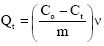
The amount of analyte adsorbed at any time t, Qt (mg adsorbate/g adsorbent), was calculated using the following mass balance equation:
 | (3) |
where, Co and Ct (mg L-1) are the initial and liquid-phase concentrations of the adsorbate, respectively, at any time t, v is the pesticide solution volume (L) and m is the adsorbent mass (g).
The removal efficiency or % sorption of pesticide and distribution coefficient (Rd) may be evaluated using the following equations:
 | (4) |
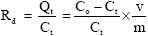 | (5) |
Rd is distribution coefficient (mL g-1).
 |
All experiments were performed at least in triplicate at pH 7.0 and 25°C unless stated otherwise. The results are the average of three independent measurements.
Column adsorption studies: Column flow studies are carried out in a column made of Pyrex glass of 50 cm length and 2.0 cm diameter (i.d.) with a silica frit at the bottom. The cross-linked chitosan-silver nanoparticle composite micro-beads (140 g) were mixed thoroughly in water (1.0-1.5 L). This colloidal mixture was then poured into the column and was filled up by tapping so that the column is filled without gaps. The solution with beads was poured until the beads level had reached the height of 22.5 cm. The Bed Volume (BV) of the beads in the column was 70 mL. The column was washed with ultra pure deionized water to ensure that there are no remnants of chemicals in the column. Pesticide solution (1 ppm) was made by dissolving 100 mg of Atrazine in 100.0 L of ultra pure deionized water. The pH was adjusted to 7.0. The influent solution of pesticide (1 ppm) was allowed to pass through the column at a constant flow rate of 5 BV/h (8.3 mL min-1), where BV is the total volume of the beads bed (silver nanoparticle-chitosan composite beads) in down flow manner (using peristaltic pump). Adsorption capacities of composite micro-beads were evaluated in two ways: Breakthrough adsorption capacity and the total capacity. They were calculated based on the total amount of Atrazine removed when the concentration of the Atrazine in the effluent from the column reached 5% and nearly 100% of the initial concentration, respectively. Usually, the breakthrough point (BP) is defined as the time when the effluent concentration (C) reaches a percentage of the influent concentration (C0), which is considered unacceptable, for example, 5% (C/C0 = 0.05) (Inglezakis et al., 2002).
The effluent solution was collected as a function of time and concentrations of the pesticide solutions were determined by measuring absorbance using Shimadzu UV-240 Spectrophotometer. Column tests were performed at different volumetric flow rates (5.5, 7, 8.5 mL min-1) to investigate the effect of flow rates on breakthrough curves and volumetric mass transfer coefficient. All experiments were carried out at room temperature. Breakthrough curve was obtained by plotting volume of the solution passed through the column vs. ratio of the column outlet concentration to the initial concentration, Coutlet/Cinlet.
Desorption studies: After the column is completely exhausted, the remaining aqueous solution in the column is drained off by pumping air through the column. Desorption of solute from loaded adsorbent is carried out by 0.1 M NaOH solution as an eluent. The eluent is pumped in to the column at a fixed flow rate of 1 mL min-1 at constant temperature. From the start of the desorption process, effluent samples are collected at different time intervals and the concentration of the adsorbates are determined by measuring the absorbance at 222 nm using a UV-vis spectrophotometer. When the concentration of the outlet solution reached almost zero, it is assumed that the column is regenerated. After the regeneration, the adsorbent column is washed with distilled water to remove NaOH from the column before the influent adsorbate solution (Atrazine) was reintroduced for the subsequent adsorption-desorption cycles. The adsorption–desorption cycles were repeated five times using the same bed to check the sustainability of the bed for repeated use.
RESULTS AND DISCUSSION
UV-Visible spectroscopy analysis of nanosilver–chitosan composites: When AgNO3 was mixed with chitosan solution, Ag+ ions could be bound to chitosan macromolecules via electrostatic (i.e., ion-dipole) interactions, because the electron-rich oxygen atoms of polar hydroxyl and ether groups of chitosan are expected to interact with electropositive transition metal cations. The chitosan solution provides nanoscopic solution domains for the growth of nanoparticles. Ag nanoparticles were formed by reduction of Ag+ using chitosan as both reducing as well as stabilizing agent and the process was accelerated by the use of microwave irradiation. The hydroxyl groups of the chitosan may also help to passivate the surfaces of these particles, in the absence of which they will aggregate as a result of high surface energies. The advantage of using microwave radiation is that it provides uniform heating around the nanoparticles and can assist the digestive ripening of such particles without aggregation. The colour of the solution changed from yellow to brown with prolonged microwave exposure. This can be attributed to the increased in the amount of silver nanoparticles formed. The characteristic brown colour of colloidal silver solution is due to the excitation of surface plasmon vibrations in the nanoparticle and provides a convenient spectroscopic signature of their formation.
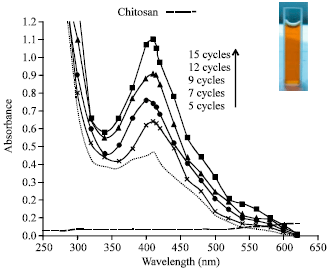 | |
| Fig. 1: | UV-Vis spectra recorded as a function of number of cycles of microwave irradiation. The irradiation period was 5 cycles up to 15 cycles (microwave exposure was 1 min per cycle). The inset of the figure shows a test tube of the silver nanoparticle solution formed at the end of 12 cycles |
It was observed that the nanoparticle solution of silver was extremely stable for more than six months with no signs of aggregation at the end of this period. The particles are thus stabilized in solution by the chitosan which also acts as a capping agent. Figure 1 shows the UV–vis spectra of the chitosan-silver nanoparticle composite solution with chitosan solution as the reference. The spectra exhibit a single, narrow and strong peak at around 410-420 nm, which is a characteristic of Surface Plasmon Resonance (SPR) of silver nanoparticles (Chen et al., 2004; Noginov et al., 2007). In metal nanoparticles such as in silver, the conduction band and valence band lie very close to each other in which electrons move freely. These free electrons give rise to a Surface Plasmon Resonance (SPR) absorption band, occurring due to the collective oscillation of electrons of silver nano particles in resonance with the light wave (Link and El-Sayed, 2003; Noginov et al., 2007).
It can be observed that the silver surface plasmon band steadily increase in intensity as a function of time. It can be seen that surface plasmon absorption band of Ag particles was observed just after 5 cycles of irradiation and increased with further irradiation cycles. The surface plasmon band in the silver nanoparticles solution remains close to 410 nm throughout the reaction period, suggesting that the particles are dispersed in the aqueous solution with no evidence of aggregation. Microwave irradiation provides rapid heating and uniform temperature distribution which leads to the fast reaction rate and narrow size distribution of the silver nanoparticles. It also provides uniform nucleation and growth conditions, leading to homogeneous nanomaterials with smaller sizes. Power dissipation is fairly uniform throughout with deep inside-out heating of the polar solvents, which leads to a better crystallinity (Saifuddin et al., 2009).
Chitosan-silver nanoparticles composites solution and interaction with pesticide: Figure 2 shows the changes in the optical absorption spectrum of chitosan-nanosilver composites solution upon exposure to 2 ppm of pesticide. Trace (a) is the absorption spectrum of chitosan-nanosilver composites solution having an absorption maximum of 410 nm (2 mL taken in the UV-Visible cuvette) and (b) was taken 2 min after the addition of 2 mL of 2 ppm Atrazine to 2 mL of the chitosan-nanosilver composite solution.
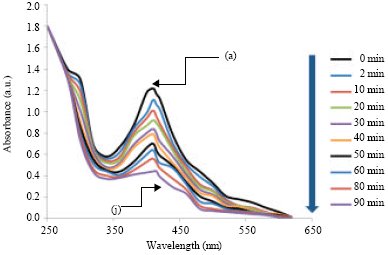 | |
| Fig. 2: | Time dependent UV-Visible spectra showing the adsorption of pesticides on silver nanoparticles. (a) is the absorption spectrum of 2 mL of chitosan-nanosilver composite solution showing the absorption maximum at 410 nm. Trace (b) was taken 2 min after the mixing of 2 mL of 2 ppm pesticide (in water) with it. Subsequent traces showed that the plasmon absorption of silver spectrum at 410 nm after 10-90 min reaction decrease in intensity |
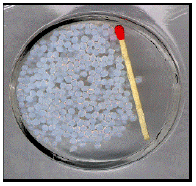 | |
| Fig. 3: | The overall view of chitosan beads |
The subsequent traces (c-j) were taken at 20 min intervals of time. As can be seen from the spectra, the plasmon absorption of Ag at 410 nm decreased slightly in intensity after 2 min and the decrease in intensity continues with time. The dampening of the intensity of the original plasmon is because of the change in the dielectric constant of silver due to the adsorption of pesticides on the nanoparticles’ surfaces. This is then followed by the particle aggregation through interlocking (Zhong et al., 2002; Link and El-Sayed, 2003; Nair and Pradeep, 2007). At this stage the pesticide adsorbed nanoparticles began to precipitate.
Characterization of the chitosan beads: The structure of chitosan, like cellulose, is an oxygen-rich natural carbohydrate (polysaccharide) consisting of anhydroglucose units joined by an oxygen linkage to form a linear molecular chain. Uniform particle size (1.75±0.05 mm) (Fig. 3) of the macroporous chitosan beads were obtained. As can be seen from Fig. 4a and b, pores with different sizes were observed and the average pore size of the beads were calculated to be 5.4 μm.
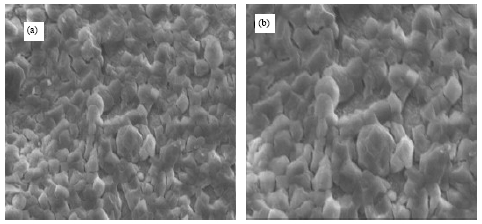 | |
| Fig. 4: | SEM images showing the surface morphologies of the chitosan beads; (a) at 3000x and (b) 4300x magnifications |
Solubility and swelling test of cross-linked chitosan: It was observed that chitosan beads were soluble in 5% acetic acid (v/v), but insoluble in both 0.10 M NaOH solution and distilled water. However after cross linking with epichlorohydrin, the cross-linked chitosan was found to be insoluble in either acidic or alkaline medium, as well as distilled water. It is well known that the high hydrophilicity of chitosan beads or raw chitosan are due to primary amine groups, which makes chitosan easily soluble in dilute acetic or formic acid solutions to yield a hydrogel in water. Therefore, the cross-linking treatment of chitosan reinforces its chemical stability in organic acidic media, making it useful for the removal of chemical pollutants from wastewaters of acidic nature.
The swelling behaviour of chitosan improved greatly after cross-linking. It was observed that non-cross-linked chitosan beads had 37.5 and 32.6% swelling when allowed to remain in distilled water and 0.1 M NaOH solution respectively for 24 h at room temperature. However, the swelling for cross-linked chitosan beads was only 15.3% in distilled water and 11.8% in NaOH under similar conditions. From the results obtained, cross-linking modification does not only increase the surface area and reinforce the chemical strength of the chitosan beads but also reduces the swelling of the beads. These more rigid and chemical stable cross-linked chitosan beads are less prone to swelling and are better suited for use in an adsorption column.
Characterization of chitosan-silver nanoparticle composite beads: A representative TEM picture recorded from the chitosan-silver nanoparticle composite deposited on a carbon coated copper TEM grid is shown in Fig. 5. The transmission electron microscope image shows the silver to be nanosized (100-220 nm) and well dispersed. The non-aggregation of the particles confirms that the chitosan-silver nanoparticles composite prepared such are quite stable. The nanoparticles were not in direct contact, indicating stabilization of the nanoparticles by a capping agent.
The morphology of the nanoparticles is varied, with majority of them spherical. By using microwave irradiation on an aqueous silver nitrate solution containing chitosan solution, we have obtained relatively mono-dispersed silver nanoparticles very rapidly. Since the synthesis utilizes only non-toxic materials and solvent, it is thought viable to readily integrate these particles into a variety of systems, especially those that are relevant to biological and biomedical applications. Chitosan-silver nanoparticles composites may not serve as an efficient pesticide removal agent in water filtration units due to the lack of adequate mechanical strength and of its porous nature. Therefore, chemical cross-linking of the chitosan polymer have been carried out to further improve its mechanical strength.
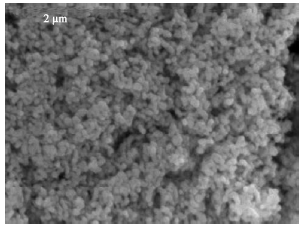 | |
| Fig. 5: | TEM images of silver nanoparticles distributed in chitosan beads |
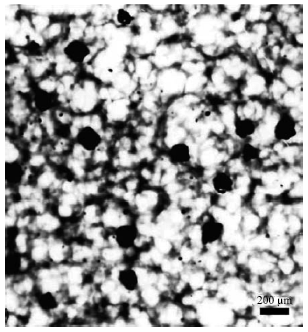 | |
| Fig. 6: | ESEM microphotograph of cross-linked chitosan-silver nanoparticles composite (X 1000) |
The SEM images of cross-linked chitosan-silver nanoparticles microbeads after being ground and sieved (<250 μm) are depicted in Fig. 6. The surface morphology of the two forms of chitosan beads show significant difference, with the cross-linked chitosan-silver nanoparticles bead featuring a more uniform structure and without primary particles on its surface.
From the surface SEM micrographs it suggests that the cross-linked chitosan was gradually produced by a cross-linking process after particle formation in alkaline solution. This result also indicates that chitosan has been chemically cross-linked successfully (Kamari et al., 2009). Epichlorohydrin was selected as a convenient base catalyzed cross-linking agent. The advantage of using epichlorohydrin as a cross-linking agent is that it does not eliminate the cationic amine function of chitosan, most notably, the cross-linking with ECH can considerably improve the wet strength of the chitosan beads (Wan Ngah et al., 2002; Lee et al., 2004). It has also been showed that epichlorohydrin cross-linked chitosan has better affinity for silver atoms compared to other cross-linking agents such as gluteraldehyde (Yoshizuka et al., 2000). The reaction of chitosan with epichlorohydrin in an acidic condition might be cross-linked at hydroxyl groups to form the epichlorohydrin cross-linked chitosan product, which is similar to the scheme that has been reported previously (Wan Ngah et al., 2002; Lee et al., 2004).
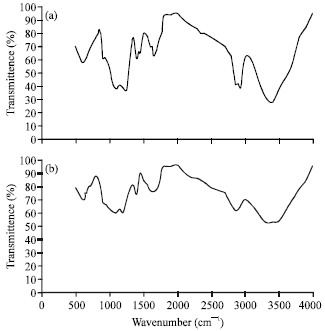 | |
| Fig. 7: | FT-IR spectra (a) Chitosan and (b) epichlorohydrine cross-linked chitosan, using KBr pellets. The range from 4000 to 400 cm-1 was scanned |
Infra Red spectra of chitosan derivatives: The characteristic IR absorption peaks of chitosan were observed (Fig. 7a), which included a broad and strong band ranging from 3200-3700 cm-1 (stretching vibration of O-H and stretching vibration of N-H). The peaks located at 2920 and 2869 cm-1 can be assigned to asymmetric and symmetric -CH2 groups. The peak located at 1652 is characteristic of C=O group of amides. The prominent peak at observed at 1375 cm-1 represents C-N stretching. The peak at 1258 cm-1 can be attributed to the C–O–C stretching. The peak at 1082 cm-1 is characteristics of C-O stretching vibration. The absorption band at 900 cm-1, corresponds to the characteristic absorption of β-D-glucose unit. The chitosan spectrum was similar to previous reports (Nunthanid et al., 2001; Ritthidej et al., 2002).
The infrared spectrum of epichlorohydrin cross-linked chitosan was rather similar to that of chitosan (Fig. 7b), since the functional groups of epichlorohydrin were also present in chitosan. Therefore, the same vibrations were observed but with different relative intensities. The absorption intensity of -NH2 group and -OH group (peak 3200-3700 cm-1) from cross-linked chitosan is obviously lower than that of -NH2 group and –OH group from chitosan, which indicates cross-linked reaction occurred between chitosan and epichlorohydrin. Moreover, the reduction in the intensities at 1375 cm-1 peak (primary amino group, -NH2) showed that most of the primary amino groups were involved in the cross-linking process.
In the case of chitosan-silver nanoparticle composite (Fig. 8), it exhibited a highly shorted stretching vibrations at 3432 cm-1, similar to the cross linked chitosan (Fig. 7b). There is also an absence of 1651 cm-1 peak that exists in plain chitosan and the appearance of additional peak at 1740 cm-1, indicate that silver particles were bound to the functional groups of chitosan. The new band at about 1740 cm-1 corresponds to the carbonyl stretch vibrations in ketones, aldehydes and carboxylic acids.
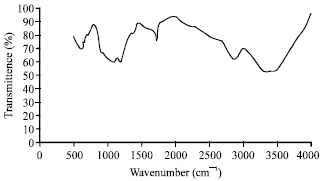 | |
| Fig. 8: | IR spectra of cross-linked chitosan-silver nanoparticle composite |
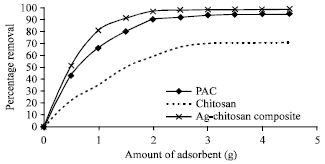 | |
| Fig. 9: | Percentage removal of pesticide from spiked ultra pure water (1 ppm) after 60 min with three different adsorbents (powdered activated carbon; Chitosan and cross-linked-silver nanoparticle composite micro-beads) with dosage ranging from 0.5 to 4.5 g |
The presence of the 1740 cm-1 signal in the metal nanoparticle–chitosan samples indicates that the reduction of the silver ions is coupled to the oxidation of the hydroxyl groups in the chitosan molecules. Peak shifting occurs due to co-ordination bond between the heavy metal atom (silver in this case) and electron rich groups oxygen/nitrogen). This causes an increase in the bond length, ultimately shifting the frequency.
Batch studies: Adsorbent dosage is an important parameter because this determines the capacity of a sorbent for a given initial concentration of sorbate. The percent removal of pesticide from water solution after 60 min with different dosages of adsorbents is given in Fig. 9. A sharp increase in percent reduction of the pesticide content (98% removal) was observed when cross-linked chitosan-silver nanoparticle composite micro-beads dosages were increased from 0.5 to 2.0 g for 1 L of pesticide solution at 1 ppm concentration (1 mg L-1). After that, a very slow increase was observed and 99% removal of pesticide was found in the dosage range of 2.0 -4.5 g. This indicates that for powdered activated carbon, removal of 94% was obtained for dosage range of to 100 mg. In contrast, pure chitosan beads showed about 73% removal of pesticide when the dosage was increased from 20-100 mg. Previous reports (Wang et al., 2005) clearly reveal that there should be a ratio between adsorbent dosage and sorbate concentration, which represent maximum percentage of adsorption.
The effects of shaking time (contact time) and initial pesticide concentration on the percentage of adsorption of pesticide onto cross-linked chitosan-silver nanoparticle composite micro-beads were studied over an agitation time of 5-150 min, at optimized pH, 120 rpm shaking speed, for 1 L of pesticide solution at 1 ppm to 25 ppm concentration using 2.5 g of adsorbent (cross-linked chitosan-silver nanoparticle composite micro-beads).
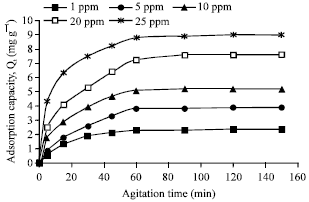 | |
| Fig. 10: | Study on variation of contact time and initial concentration of pesticide on adsorption capacity. Experiment was performed over an agitation time of 5-50 min, at optimized pH, with 120 rpm shaking speed, for 1 L of pesticide solution at 1 to 25 ppm concentration by using 2.5 g of adsorbent |
Figure 10 shows that the uptake of the pesticide from water was concentration dependent and increased with increasing initial concentrations. It was observed that the adsorption capacity of the pesticides increases to saturation with time. The equilibrium time is defined as the time taken for the maximum adsorption of pesticides onto the adsorbent surface, above which the adsorption remains constant. The equilibrium time was found to be 70 min for 1, 5, 10, 20 and 25 ppm pesticide concentration. The removal of the pesticide was rapid initially and gradually decreases with time until saturation was reached. The removal curves are single, smooth and continuous, indicating monolayer coverage of pesticide on the outer surface of the adsorbent (Sivaraj et al., 2001). With an increase in sorbate concentrations, a corresponding decrease in the distribution coefficient (Rd) was observed exhibiting limiting number of sites available for sorption at higher concentration of sorbate molecules. This may also be deduced that at low sorbate molecules/sorbent ratios, sorbate molecule adsorption involves higher energy sites. As the sorbate molecule/sorbent ratio increases, the higher energy sites are saturated and sorption begins on lower energy sites, resulting in a decrease in percent sorption (Sivaraj et al., 2001; Akhtar et al., 2007).
Column flow studies: As the above experiments resulted in complete removal of the pesticides from water in a time-dependent manner, it is then worthwhile to explore the use of this method for point-of-use drinking water filtration system for households to remove pesticides and other chemical contaminations. A column system of 70 mL bed volume was made as described earlier using about 140 g of cross-linked chitosan micro-beads impregnated with silver nanoparticles. One hundred litres of 1 ppm (1 mg L-1) pesticide solution was used as input water for the experiment. The results of the dynamic flow experiments are used to obtain the breakthrough curves for adsorption of Atrazine from aqueous solutions by plotting bed volume versus C/Co (ratio of effluent concentration to initial concentration). The breakthrough curve is shown in Fig. 11. Breakthrough adsorption capacity and the total capacity were calculated based on the total amount of Atrazine removed when the concentration of the Atrazine in the effluent from the column reached 5% and nearly 95% of the initial concentration respectively. For C/C0 = 0.05, the amount of bed volume which passed through the adsorbent was 115 BV. This means that at a flow rate of 8.3 mL min-1, 8.05 L of the solution (Atrazine) can be passed through the column before the BP is reached. For C/C0 = 0.95, the numbers of bed volume which passed through the adsorbent were 380 BV.
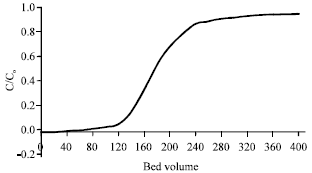 | |
| Fig. 11: | Breakthrough curve for Atrazine for cross-linked chitosan-silver nanoparticles composite micro-beads column |
As shown in Fig. 11, the results of breakthrough adsorption capacity and the total adsorption capacity are 115 and 380 μg mL-1 cross-linked chitosan-silver nanoparticle micro-beads, respectively.
When the bed is exhausted or when the effluent reaches the allowed maximum discharge level, the regeneration of the adsorbent bed becomes essential. The regeneration could be accomplished by a variety of techniques such as thermal desorption, steam washing, solvent extraction. Each method has inherent advantages and limitations. In this study, 0.1 M of NaOH solution was found to be effective in desorbing and recovering adsorbates quantitatively from the adsorption bed. The rate of desorption increases sharply, reaching a maximum with 13 mL of 0.1 M NaOH solution. The column was fully regenerated after 25 mL of 0.1 M NaOH solution had flowed through and is then reused for the removal of Atrazine. During repeated cycles, the results indicate that the column gets saturated prematurely and adsorption capacity decreases eventually. As a result, the percent desorption also decreases from first cycle to the next and thereafter a 50% reduction in the adsorption capacity occurred after the fifth cycle.
CONCLUSIONS
In this study, we have shown the feasibility of forming metal nanoparticle-chitosan composite by exposure of chitosan and aqueous solution of metal salts to microwave irradiation, in which chitosan simultaneously acts as a reductant and scaffold for the formation of well dispersed nanoparticles. This is one of the simplest, cheapest, most rapid, environmentally friendly and green processes for obtaining silver nanoparticles. UV/Vis spectroscopy reveals the surface plasmon property, while TEM images reveal the nano nature of the prepared samples. It is demonstrated in this study that silver nanoparticles-chitosan composite microbeads are excellent agents for the removal of Atrazine from aqueous solutions at neutral pH under equilibrium and column flow experimental conditions. Two grams of cross-linked chitosan-silver nanoparticles composite micro-beads were able to remove more than 94% of Atrazine from aqueous pesticide solution (1.0 mg L-1). From the breakthrough curves of the column flow studies, the total adsorption capacity was 380 μg mL-1 cross-linked chitosan-silver nanoparticle mico-beads. This shows that the removal efficiency of this adsorbent is much better than that of organo-zeolite (Lemic et al., 2006) and few other indigenous waste materials for the removal of pesticides such as rice bran (Akhtar et al., 2005) and bagasse fly ash (Gupta and Ali, 2001; Gupta et al., 2002). Regeneration studies of the column have shown that using 25 mL (one third of the bed volume) of 0.1 M NaOH solution was sufficient to completely regenerate the column. It was also demonstrated that chitosan-silver nanoparticles composites exhibited excellent reuse characteristics up to five successive adsorption cycles. Efficiency of the column only drops to 50% after the fifth adsorption-desorption cycles. The method offers a convenient and cost-effective means of removing pesticides from drinking water at point of use.
REFERENCES
- Akhtar, M., S.M. Hasany, M.I. Bhanger and S. Iqbal, 2007. Low cost sorbents for the removal of methyl parathion pesticide from aqueous solutions. Chemosphere, 66: 1829-1838.
CrossRef - Ayranci, E. and N. Hoda, 2005. Adsorption kinetics and isotherms of pesticides onto activated carbon-cloth. Chemosphere, 60: 1600-1607.
CrossRef - Bembnowska, A., R. Pelech and E. Milchert, 2003. Absorption from aqueous solutions of chlorinated organic compounds onto activated carbon. J. Colloid Interf. Sci., 265: 276-282.
CrossRef - Bulushev, D.A., I. Yuranov, E.I. Suvorova, P.A. Buffat and L. Kiwi-Minsker, 2004. Highly dispersed gold on activated carbon fibers for low-temperature CO oxidation. J. Catalysis, 224: 8-17.
CrossRef - Chandy, T. and C.P. Sharma, 1993. Chitosan matrix for oral sustained delivery of ampicillin. Biomaterials, 14: 939-944.
CrossRefDirect Link - Chen, T.C., W.K. Su and Y.L. Lin, 2004. A surface plasmon resonance study of Ag nanoparticles in an aqueous solution. Jap. J. Applied Phys., 43: L119-L122.
Direct Link - Crisafully, R., M.A.L. Milhome, R.M. Cavalcante, E.R. Silveira, D.D. Keukeleire and R.F. Nascimento, 2008. Removal of some polycyclic aromatic hydrocarbons from petrochemical wastewater using low-cost adsorbents of natural origin. Bioresour. Technol., 99: 4515-4519.
CrossRef - Cumbal, L., J. Greenleaf, D. Leun and A.K. Sen Gupta, 2003. Polymer supported inorganic nanoparticles: Characterization and environmental applications. React. Funct. Polym., 54: 167-180.
CrossRef - The European Parliament and Council of the European Union, 2006. Directive 2006/11/CE of the European parliament and council of 15 of February of 2006 on pollution caused by dangerous substances tipped in the aquatic environment of the community. Diary Official Eur. Commun., L 64: 52-59.
Direct Link - Guo, J.J., L.H. Liu, X.R. Liu, J. Lu and H.D. Zhou, 2008. Occurrence and distribution of organochlorine pesticides-lindane, p, p-DDT and heptachlor epoxide-in surface water of China. Environ. Int., 34: 1097-1103.
PubMed - Guo, T.Y., Y.Q. Xia, G.J. Hao, M.D. Song and B.H. Zhang, 2004. Adsorptive separation of hemoglobin by molecularly imprinted chitosan beads. Biomaterials, 25: 5905-5912.
CrossRefDirect Link - Gupta, V.K. and Suhas, 2009. Application of low-cost adsorbents for dye removal-A review. J. Environ. Manage., 90: 2313-2342.
CrossRefDirect Link - Hossain, M.M., M.A. Al-Saleh, M.A. Shalabi, T. Kimura and T. Inui, 2004. Thiophene hydrodesulfurization over noble metal modified Co-clay catalysts. Applied Catal. A: Gen., 274: 43-48.
CrossRef - Hua, W., E.R. Bennett and R.J. Letcher, 2006. Ozone treatment and the depletion of detectable pharmaceuticals and atrazine herbicide in drinking water sourced from the upper Detroit River, Ontario, Canada. Water Res., 40: 2259-2266.
CrossRef - Inglezakis, V.J., M.D. Loizidou and H.P. Grigoropoulou, 2002. Equilibrium and kinetic ion exchange studies of Pb2+, Cr3+, Fe3+ and Cu2+ on natural clinoptilolite. Water Res., 36: 2784-2792.
CrossRefDirect Link - Kamari, A., W.S. Wan Ngah, M.Y. Chong and M.L. Cheah, 2009. Sorption of acid dyes onto GLA and H2SO4 cross-linked chitosan beads. Desalination, 249: 1180-1189.
CrossRef - Kesari, R. and V.K. Gupta, 1998. A simple method for the spectrophotometric determination of atrazine using p-aminoacetophenone and its application in environmental and biological samples. Talanta, 47: 1085-1092.
CrossRef - Kosutic, K., L. Furac, L. Sipos and B. Kunst, 2005. Removal of arsenic and pesticides from drinking water by nanofiltration membranes. Sep. Purif. Technol., 42: 137-144.
CrossRef - Lee, S.Y., S.J. Kim, S.Y. Chung and C.H. Jeong, 2004. Sorption of hydrophobic organic compounds onto organoclays. Chemosphere, 55: 781-785.
CrossRef - Leong, K.H., L.L. Benjamin Tan and A.M. Mustafa, 2007. Contamination levels of selected organochlorine and organophosphate pesticides in the Selangor River, Malaysia between 2002 and 2003. Chemosphere, 66: 1153-1159.
CrossRef - Li, J.M., X.G. Meng, C.W. Hu and J. Du, 2009. Adsorption of phenol, p-chlorophenol and p-nitrophenol onto functional chitosan. Bioresour. Technol., 100: 1168-1173.
CrossRef - Link, S. and M.A. El-Sayed, 2003. Optical Properties and ultrafast dynamics of metallic nanocrystals. Annu. Rev. Phys. Chem., 54: 331-366.
CrossRef - Macquarrie, D.J., B. Gotov and S. Toma, 2001. Silica-supported palladium-based catalysts for clean synthesis. Platinum Metals Rev., 45: 102-110.
Direct Link - Matsui, Y., Y. Fukuda, T. Inoue and T. Matsushita, 2003. Effect of natural organic matter on powdered activated carbon adsorption of trace contaminants: Characteristics and mechanism of competitive adsorption. Water Res., 37: 4413-4424.
PubMed - Murugadoss, A. and A. Chattopadhyay, 2008. A green chitosan-silver nanoparticle composite as a heterogeneous as well as micro-heterogeneous catalyst. Nanotechnology, 19: 015603/1-015603/9.
CrossRef - Nair, A.S. and T. Pradeep, 2007. Extraction of chlorpyrifos and malathion from water by metal nanoparticles. J. Nanosci. Nanotechnol., 7: 1871-1877.
PubMed - Noginov, M.A., G. Zhu, M. Bahoura, J. Adegoke and C. Small et al., 2007. The effect of gain and absorption on surface plasmos in metal nanoparticles. Applied Phys. B, 86: 455-460.
CrossRef - Nunthanid, J., S. Puttipipatkhachorn, K. Yamamoto and G.E. Peck, 2001. Physical properties and molecular behavior of chitosan films. Drug Dev. Ind. Pharm., 27: 143-157.
PubMed - Pradeep, T. and Anshup, 2009. Noble metal nanoparticles for water purification: A critical review. Thin Solid Films, 517: 6441-6478.
CrossRefDirect Link - Quignard, F., A. Choplin and A. Domard, 2000. Chitosan: A natural polymeric support of catalysts for the synthesis of fine chemicals. Langmuir, 16: 9106-9108.
CrossRef - Riahi, G., D. Guillemot, M. Polisset-Thfoin, A.A. Khodadadi and J. Fraissard, 2002. Preparation, characterization and catalytic activity of gold-based nanoparticles on HY zeolites. Catalysis Today, 72: 115-121.
CrossRef - Ritthidej, G.C., T. Phaechamud and T. Koizumi, 2002. Moist heat treatment on physico-chemical change of chitosan salts film. Int. J. Pharm., 232: 11-22.
CrossRefDirect Link - Saifuddin, N., C.W. Wong and A.A.N. Yasumira, 2009. Rapid biosynthesis of silver nanoparticles using culture supernatant of bacteria with microwave irradiation. J. Chem., 6: 61-70.
CrossRefDirect Link - Wang, S., Y. Boyjoo, A. Choueib and Z.H. Zhu, 2005. Removal of dyes from aqueous solution using fly ash and red mud. Water Res., 39: 129-138.
CrossRefDirect Link - Sivaraj, R., C. Namasivayam and K. Kadirvelu, 2001. Orange peel as an adsorbent in the removal of acid violet 17 (acid dye) from aqueous solutions. Waste Manage., 21: 105-110.
CrossRef - Shu, X.Z. and K.J. Zhu, 2001. Chitosan/gelatin microspheres prepared by modified emulsification and ionotropic gelation. J. Microencapsul., 18: 237-245.
CrossRefPubMedDirect Link - Ternes, T.A., M. Meisenheimer, D. McDowell, F. Sacher and H.J. Brauch et al., 2002. Removal of pharmaceuticals during drinking water treatment. Environ. Sci. Technol., 36: 3855-3863.
CrossRef - Vigneshwaran, N., R.P. Nachane, R.H. Balasubramanya and P.V. Varadarajan, 2006. A novel one-pot green synthesis of stable silver nanoparticles using soluble starch. Carbohydrate Res., 341: 2012-2018.
CrossRef - Vincent, T. and E. Guibal, 2002. Chitosan-supported palladium catalyst. 1. Synthesis procedure. Ind. Eng. Chem. Res., 41: 5158-5164.
CrossRefDirect Link - Ngah, W.S.W., C.S. Endud and R. Mayanar, 2002. Removal of copper(II) ions from aqueous solution onto chitosan and cross-linked chitosan beads. React. Funct. Polym., 50: 181-190.
CrossRefDirect Link - Wei, D.W., W.P. Qian, Y. Shi, S.H. Ding and Y. Xia, 2007. Mass synthesis of single-crystal gold nanosheets based on chitosan. Carbohydr. Res., 342: 2494-2499.
CrossRef - Wei, Y.C., S.M. Hudson, J.M. Mayer and D.L. Kaplan, 1992. The crosslinking of chitosan fibers. J. Polym. Sci. Part A: Polym. Chem., 30: 2187-2193.
CrossRef - Wu, L. and S.M.C. Ritchie, 2006. Removal of trichloroethylene from water by cellulose acetate supported bimetallic Ni/Fe nanoparticles. Chemosphere, 63: 285-292.
CrossRef - Yang, C.M., P.H. Liu, Y.F. Ho, C.Y. Chiu and K.J. Chao, 2003. Highly dispersed metal nanoparticles in functionalized SBA-15. Chem. Mater., 15: 275-280.
CrossRef - Yoshizuka, K., Z. Lou and K. Inoue, 2000. Silver-complexed chitosan microparticles for pesticide removal. Reactive Functional Polymers, 44: 47-54.
CrossRef - Zhang, Z.L., H.S. Hong, X.H. Wang, J.Q. Lin, W.Q. Chen and L. Xu, 2002. Determination and load of organophosphorus and organochlorine pesticides at water from Jiulong river estuary. China Mar. Pollut. Bull., 45: 397-402.
CrossRef - Zhong, F.X., L. Han, L.B. Israel, J.G. Daras, M.M. Maye, N.K. Ly and C.J. Zhang, 2002. Colorimetric detection of thiol-containing amino acids using gold nanoparticles. Analyst, 127: 462-465.
Direct Link - Akhtar, M., M.I. Bhanger, S. Iqbal and S.M. Hasany, 2005. Efficiency of rice bran for the removal of selected organics from water: kinetic and thermodynamic investigations. J. Agric. Food Chem., 53: 8655-8662.
PubMed - Lemic, J., D. Kovacevic, M. Tomasevic-Canovic, D. Kovacevic, T. Stanic and R. Pfend, 2006. Removal of atrazine, lindane and diazinone from water by organo-zeolites. Water Res., 40: 1079-1085.
PubMed - Gupta, V.K. and I. Ali, 2001. Removal of DDD and DDE from wastewater using bagasse fly ash, A sugar industry waste. Water Res., 35: 33-40.
CrossRefPubMedDirect Link - Gupta, V.K., C.K. Jain, I. Ali, S. Chandra and S. Agarwal, 2002. Removal of lindane and malathion from wastewater using bagasse fly ash-a sugar industry waste. Water Res., 36: 2483-2490.
CrossRefPubMedDirect Link