

S. El-Hawary
Department of Pharmacognosy, Faculty of Pharmacy, Cairo University, Cairo, Egypt
K. El-Fouly
National Organization for Drug Control and Research, Cairo, Egypt
N.M. Sokkar
Department of Pharmacognosy, Faculty of Pharmacy, Cairo University, Cairo, Egypt
Z. Talaat
National Organization for Drug Control and Research, Cairo, Egypt
Asian Journal of Biochemistry
Year: 2011 | Volume: 6 | Issue: 2 | Page No.: 122-141







ABSTRACT
DNA fingerprint of Albizia lebbeck and the other species cultivated in Egypt was carried out for identification. Gravimetric determination of tannins in leaf and seed was found to be 4 and 5.3%, respectively and colorimetric determination of condensed tannins was 0.82 and 1.3%, respectively. Protein content, by Micro-Kjeldahl method, in different organs ranged from 7.49 and 25.48%. Amino acids, analyzed by HPLC-Pico-Tag method, were identified as 17 components in the seed, leaf and pericarp and 15 components in the stem; seed and leaf showed higher yields of essential (42.19 and 50.16%) and non essential (57.81 and 49.80%) amino acids, respectively. Results showed significant amount of essential amino acids above the recommended amount by WHO. Minerals investigation using atomic absorption spectrometry exhibited that potassium and sodium were major and amounted to 745.40 and 287.60 mg 100 g-1, respectively in seed and 660.90 and 253.50 mg 100 g-1, respectively in leaf, followed by calcium, magnesium and zinc. Vitamins analysis revealed that vitamin C, analyzed by 2, 6-dichloro-indophenol titrimetric method, was the major in the seed and leaf (56.80 and 37.04 mg 100 g-1, respectively) followed by β-carotene, analyzed by HPLC/UV (210.50 and 209.80 μg 100 g-1, respectively). GC/MS analysis of lipoidal matter showed that the methyl esters of fatty acids ranged from 46.40 to 52.30%. SaFA= 29.82-61.38%, MUFA= 15.46-30% and PUFA= 21.48-40.65%; linoleic acid was the major fatty acid in seed, leaf and pericarp (37.49, 32.72 and 20.28%, respectively). β-Sitosterol was the major unsaponifiable component in seed and leaf ( 35.97 and 26.98%, respectively).
PDF Abstract XML References Citation
Received: August 07, 2010;
Accepted: October 13, 2010;
Published: February 09, 2011
How to cite this article
S. El-Hawary, K. El-Fouly, N.M. Sokkar and Z. Talaat, 2011. A Phytochemical Profile of Albizia lebbeck (L.) Benth. Cultivated in Egypt. Asian Journal of Biochemistry, 6: 122-141.
DOI: 10.3923/ajb.2011.122.141
URL: https://scialert.net/abstract/?doi=ajb.2011.122.141
DOI: 10.3923/ajb.2011.122.141
URL: https://scialert.net/abstract/?doi=ajb.2011.122.141
INTRODUCTION
Albizia lebbeck L. (Woman's Tongue) tree is a well known tree native to India (Tripathi et al., 1979; Lowry et al., 1998) with compound leaves, flat oblong fruits, round cream colored seeds (Ghani, 2003). It was first introduced in Egypt in 1869 (www.miamidade.gov/derm/plant_womans_tongue.asp). It grew five meters in one year and produced 100-120 kg edible dry matter per year (Lowry, 1989). A. lebbeck is a fodder tree for semi-arid regions in the tropics and subtropics (Prinsen, 1988; Orwa et al., 2009). Its seedlings developed a long, stout taproot at an early age and are drought-tolerant (Parrotta, 2003). It has the Arabic names: lebbeck, labakh or daqn el-Basha; The bark is used locally in India for tanning fishing nets, treating boils, as a soap, anthelmintic, anti-inflammatory and in treatment of bronchitis, toothache and leprosy (Rashid et al., 2003; Kirtikar and Basu, 1980); leaves and seeds were used for eye problems (Orwa et al., 2009). Previous reports discussed the analysis of the nutritional value of the seeds (Khajuria and Singh, 1968; Gaulier, 1968; Randha, 1969; Mukherjee, 1977; Khatta and Katoch, 1983; Kumar and Toky, 1994; Biswas et al., 2002; Chaurasia et al., 2006); glycosides (Varshney, 1976), terpenoids, steroids, saponins (Pal et al., 1995), anthraquinones and other phenolics (Deshpande and Shastri, 1977), volatile oil (Jain and Mishra, 1963; Asif et al., 1986;); tannin (Rayudu and Rajadurai 1965; El-Sherbeiny et al., 1971; Deshphande and Kumari, 1976) gum (Farooqi and Kaul, 1962) and lipoidal matter (Kufuku and Huta, 1934; Farooq and Varshney, 1954; Gupta and Chakarbarty, 1958, 1964; Chowdhury et al., 1984; Agrawal and Singh, 1991). Current literature markedly lacked enough data and information about tannins, protein, amino acids, vitamins, minerals and lipids contents in different tissues of Albizia lebbeck L. widely cultivated in Egypt; this study aimed to identify a comparative study of the nutritional and medicinal values of the different organs of the tree and to direct the large amounts of its organs (waste) to be used as a commercial source of food supplement.
MATERIALS AND METHODS
Leaf, stem, pericarp and seed of Albizia lebbeck L. were obtained from trees grown in Agricultural Research Center and EL- Orman garden, Giza- Egypt, during the year of 2008. Taxonomical identity was kindly verified by Dr. M. Abd El- Hafez, Agricultural Research Center, Giza.
Chemicals and reagents: Amino acids, aspartic acid, theronine, serine, glutamic acid, proline, glycine, alanine, cystein, valine, methionine, isoleucine, leucine, tyrosine, phenylalanine, hisitidine, lysine, arginine (Sigma, USA products). Vitamins: ascorbic acid, vitamins A, E and D ( B.D.H Poole, England and E. Merck Darmstadt, Germany products). Test solutions of dilute alkalis and acids were prepared. Solvents were purified adopting the procedures described by Vogel (1961). Reagents for amino acid derivatization: Redry solution, a mixture of 200 μL methanol+200 μL 0.2 N sodium acetate +100 μL triethylamine; derivatization reagent; a mixture of 350 μL methanol and 50 μL (PITC) phenylisothio-cyanate. Reagent for tannins: a hide powder from E-Merck, Darmstadt, Germany.
Sample for lipids analysis: Air-dried powdered leaf, seed, pericarp and stem (100 g, each) of Albizia lebbeck L. were separately exhaustively extracted with light petroleum in a continuous extraction apparatus. The solvent in each case was distilled off under reduced pressure giving (20.00, 18.76, 15.58 and 17.95 g, respectively).
DNA fingerprinting of Albizia species: DNA was isolated from leaves of A. porase L., A. julibrissin L. and A. lebbeck L. cultivated in Egypt as follows: One gram of fresh sample of each cultivar was powdered in liquid nitrogen, suspended in 5 mL preheated CTAB buffer (cetyl trimethyl ammonium bromide) and incubated at 65°C for 1 h with occasional shaking. The suspension was then mixed with 1/3 volume of chloroform, mixed gently, centrifuged and the upper phase was transferred to a new sterilized tube. Extraction was repeated with an equal volume of chloroform. The nucleic acids (aqueous layer) were either spooled using a Pasteur pipette or sedimented by centrifugation. The pellet was washed carefully twice with 70% ethanol, dried at room temperature and resuspended in 0.5 mL TE buffer (Tris EDTA). DNA was purified by incubation of the resuspended sample at 37°C for 30 min with RNAase (Boehringer, 1980). DNA concentration was determined by electrophoresis of 5 μL of sample along with serial dilutions of Lambda DNA in 1.4% agarose. PCR amplification was performed in 20 μL reaction mix containing 30 ng genomic DNA, 1.0 unit Taq polymerase (Sigma), 200 mM each of dATP, dGTP, dTTP, 20 μM random primers (Operon) and the appropriate amplification buffer. The mixture was assembled on ice, overlaid with a drop of mineral oil. Amplification was performed for 45 cycles, using a Biometra Yno thermal cycler (Germany), as follows: First cycle at 94°C for 3 min followed by 45 cycles at 94°C for 30 sec, 35°C for 60 sec and 72°C for 2 min (for denaturation, annealing and extension, respectively). The samples were finally incubated for 10 min at 72°C and another 10 min at 62°C. The amplified products were separated by horizontal electrophoresis in 1.4% agarose gel at 90 volts for one hour in TAE buffer, pH 8.0 and subsequently visualized by staining the gel in 0.2 mg mL-1 ethidium bromide solution and photographed under UV light using a Polaroid camera.
Determination of tannins
Gravimetric method for determination of total tannins: Tannin content of the air- dried powdered leaf and stem of A. lebbeck L. was determined adopting hide powder method (Horvath, 1981). The difference in the dry weight of the extract before and after treatment with standard hide powder was taken as an approximate measure of tannin content. A blank determination was carried out twice using distilled water, the residue weight G0 = 0. The tannin percentage was calculated according to the following equation:
 |
Where:
| G1 | = | Weight of the total water-soluble residue containing tannin in g |
| G2 | = | Weight of residue non-absorbed by hide after removal of tannin in g |
| G0 | = | Weight of a blank residue using distilled water |
| W | = | Weight of air dried plant organ in mg |
The result in each case was the average of three determinations:
Colourimetric determination of condensed tannins (proanthocyanidins): Proanthocyanidins in the air-dried powdered leaf and stem of A. lebbeck L. were determined adopting a chemical analysis in which, proanthocyanidins were oxidatively depolymerized in butanol-HCl mixture into proanthocyanidins (Hagerman and Butler, 1994). Condensed tannins (% in dry matter) as leucocyanidin equivalent were calculated by the formula:
 |
This formula assumes that the effective E1%, 1 cm, 550 nm of leucocyanidin is 460. Results were the average of three determinations.
Determination of total protein: Total nitrogen content was determind for the air-dried powdered samples of leaf, seed, pericarp and stem of A. lebbeck L. using micro-Kjeldahl method according to AOAC (1980); calculation was carried out in mg g-1 powder using the following equation:
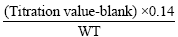 |
where, 0.14 is a factor when N/100 HCl is used for titration as 1 mL of N/100 HCl = 0.14 mg of nitrogen, WT = sample weight (g).
Determination of amino acids: Total amino acid contents in the air- dried powdered samples of leaf, seed, pericarp and stem of A. lebbeck L. were analyzed using the amino acid analyzer (spectrophysics analytical P 4000 Multisolvent Delivery system for HPLC analysis) of amino acids according to Cohen et al. (1989). The amino acid analyzer was applied under the following condition; Picp-Tag amino acids column 150x3.9 mm; Spectra physics P2000 variable wave length- detector at 254 nm and spectra focus optical scanning detector; flow rate: 1 mL min-1; injection volume: 20 μL; mobile phase: sodium acetate trihydrate pH 6.4 (solvent A) -acetonitrile 60% (solvent B); flow rate: 0.2 mL min-1; pressure of buffer: 0-50 bars; pressure of reagent: 0-150 bars; reaction temperature: 123°C; solvents used for the amino acid (HCl supra pure from Merck).
Determination of vitamins
Determination of vitamin C (ascorbic acid) content: Ascorbic acid content in the air-dried powdered samples of leaf, seed, pericarp and stem of A. lebbeck L. was determined by 2, 6- dichloro- indophenol titrimetric method (Boyer, 1986; Thompson, 1990). The principle depends on the oxidation of L-ascorbic acid to L-dehydro ascorbic acid by the indicator dye 2, 6-dichloro-indophenol. Vitamin C content was calculated according to the following equation:
 |
Where:
| C | = | Milligram of ascorbic acid mL-1 of dye |
| V | = | Milliliter of dye used for titration of diluted sample (average of 3 determinations) |
| DF | = | Dilution factor |
| WT | = | Sample weight (g) |
The results were the average of three determinations.
Determination of vitamin A (β-carotene) content: β-Carotene in the air-dried powdered samples of leaf, seed, pericarp and stem of A. lebbeck L. was determined spectrophotometrically according to AOCS (1993) UV-visible spectrophotometer, shimadzu UV 240 (P/N204-58000) was used for recording UV spectra and measuring the absorbance in UV range. The concentration of β -carotene measured was compared with a standard (1 μg mL-1 which had an absorbance of 0.25 at 450 nm). The β -carotene content was calculated according to the following equation:
 |
Where:
| As | = | Absorbance of sample |
| Astd | = | Absorbance of standard (0.25) |
| Cstd | = | Concentration of standard (1 μg g-1) |
| V | = | Volume of standard for absorbance measurement (1 mL) |
| DF | = | Dilution factor (25/10) |
| WT | = | Sample weight (g) |
 |
Determination of vitamin E (α-tocopherol) content: Vitamin E content in the air-dried powdered samples of leaf, seed, pericarp and stem of A. lebbeck L. was determined by HPLC Hewlett Packard series 1050 with UV detector; column: Hypersil BDS-C8, 5 μm, 250x4.6 mm; flow rate: 1 mL min-1; injection volume: 20 μL; mobile phase: methanol-deionized water (75:25 V/V) and according to AOCS (1993).
Determination of vitamin D (Cholecalciferol) content: Vitamin D in the air dried powdered samples of leaf, seed, pericarp and stem of A. lebbeck L. was determined by HPLC Hewlett Packard series 1050 under the same conditions as applied for vitamin E and according to AOAC (2000).
Determination of the minerals: The acid-soluble ash was prepared from powdered samples of leaf, seed , pericarp and stem (3 g, each) of A. lebbeck L. using 20% HCl. Analysis of mineral content was carried out adopting the method described by Farag et al. (1980). A Hewlett Packard HPLC Series 1100, USA equipped with degasser, quaternary pump, autosampler and diode array detector were used. Column (Hewlett Packard): Ultrasphere octadecylsilyl (ODS) Hypersil C18, 5 μm, 250x4.0 mm; injection volume range: 50-200 μL; flow rate: 0.8 mL min-1. Isocratic elution; mobile phase: 2 mM ethylenediamenetetraacetic acid phosphate (EDTA) pH 6.9.
GC/ MS of the unsaponifiable matter and the fatty acid methyl esters of the petroleum ether extract: Finnegan SSQ7000 gas chromatography coupled with mass spectroscopy was used for lipid analysis; column: DB-5 fused silica (5% phenyl methyl polysiloxane); temperature programming for unsaponifiable matter: 50°C increased to 300°C by the rate of 5°C min-1 then isothermally for 5 min while for fatty acids methyl esters: 150°C for 4 min, increased to 280°C by the rate of 5°C min-1. Then isothermally for 4 min; carrier gas: helium; UV detector; sample size: 2 μL; mass range: 50-500 m/z; detector temperature: 250°C; flow rate: 1 mL min-1; injection port temperature: 280°C; mobile phase: methanol.
| • | Four samples of free fatty acids were separately prepared from the light petroleum extracts of leaf, seed, pericarp and stem of A. lebbeck L. applying the method of British Pharmacopoeia Commission (1973). Solutions of their methyl esters were prepared according to the method mentioned by Finar (1973) and 2 μL of chloroformic solution (2%) of each sample was analysed by GC/ MS |
| • | Four samples of the unsaponifiable matter of leaf, seed, pericarp and stem of A. lebbeck L. were separately prepared according to Egyptian Pharmacopoeia and 2 μL of chloroformic solution (2%) of each sample was analysed by GC/ MS |
Identification of the fatty acid methyl esters, the hydrocarbons and sterols was achieved by comparing their retention times and mass fragmentation patterns with those of the database libraries (Wiley (Wiley Int.USA) and NIST (Nat. Inst. St. Technol. USA)). The quantitative estimation of each peak was done using a computing integrator adopting the internal normalization procedure.
RESULTS AND DISCUSSION
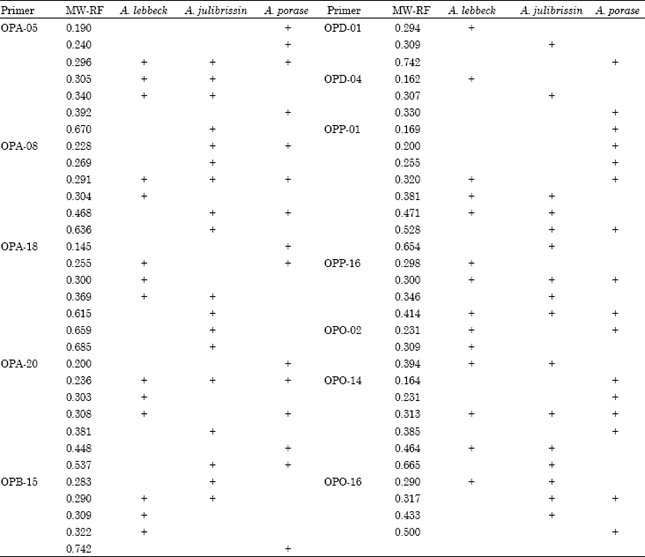
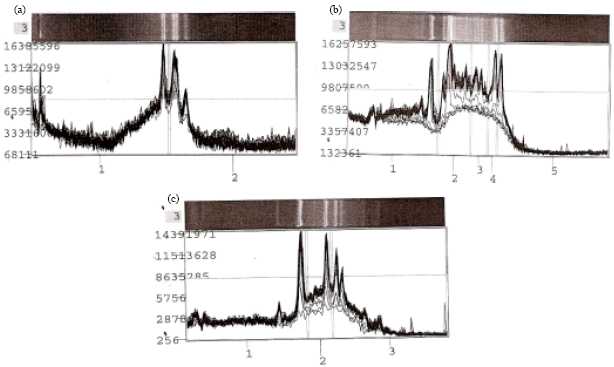
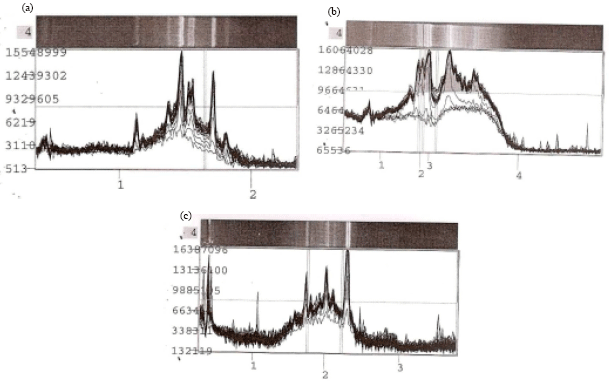
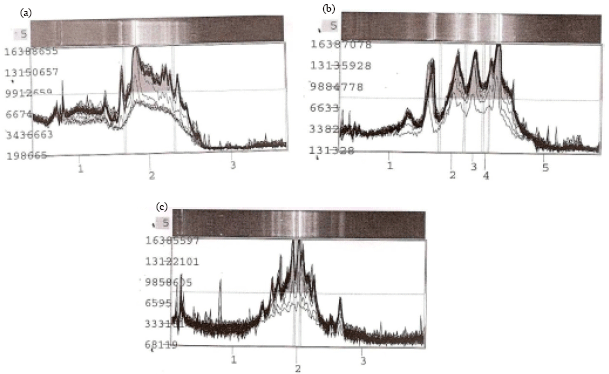
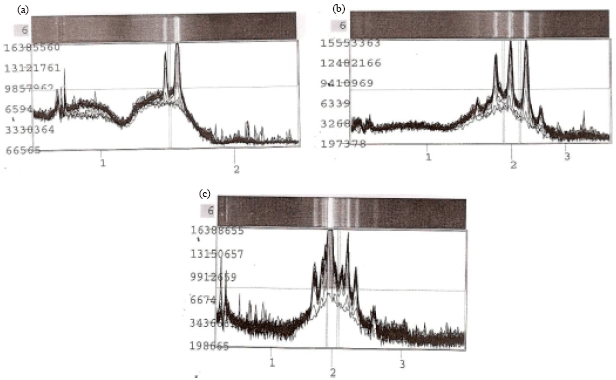
RAPD analysis of Albizia cultivated in Egypt using 12 different primers (Table 1, Fig. 1a-c) revealed that: OPA-05 (Fig. 2), A. julibrissin D. at 0.670 Kbp and A. porase L. at 0.190, 0.240 and 0.392 Kbp; OPA-08 (Fig. 3), A. julibrissin D. at 0.269 and 0.636 Kbp and A. lebbeck L. at 0.304; OPA-18 (Fig. 4), A. lebbeck L. at 0.300 Kbp, A. julibrissin D. at 0.615, 0.659 and 0.685 Kbp and A. porase L. at 0.145 Kbp; OPA-20 (Fig. 5), A. Lebbeck L. at 0.303 Kbp, A. julibrissin D. at 0.381 Kbp and A. porase L. at 0.200 and 0.448 Kbp; OPB-15(Fig. 6), A. lebbeck L. at 0.309 and 0.322 Kbp, A. julibrissin D. at 0.283 Kbp and A. porase L. at 0.742 Kbp OPD-01 (Fig. 7), A. lebbeck L. at 0.294 Kbp, A.julibrissin D. at 0.309 Kbp and A. porase L. at 0.742 Kbp; OPD-04 (Fig. 8), A. lebbeck L. at 0.162 Kbp, A. julibrissin D. at 0.307 Kbp and A. porase L. at 0.330 Kbp; OPP-01 (Fig. 9), A. julibrissin D. at 0.654 Kbp and A. porase L. at 0.169, 0.200 and 0.255 Kbp; OPP-16 (Fig. 10), A. lebbeck L. at 0.298 Kbp, A. julibrissin D. at 0.346 Kbp; OPO-02 (Fig. 11), A. lebbeck L. at 0.309 Kbp, OPO-14 (Fig. 12), A. julibrissin D. at 0.665 Kbp and A. porase L. at 0.164, 0.231, 0.385 Kbp; OPO-16 (Fig. 13), A. julibrissin D. at 0.433 Kbp and A. porase L. at 0.500 Kbp.
| Table 1: | The RAPD analysis of the species of A. lebbeck, A. julibrissin and A. porase with twelve primers |
 | |
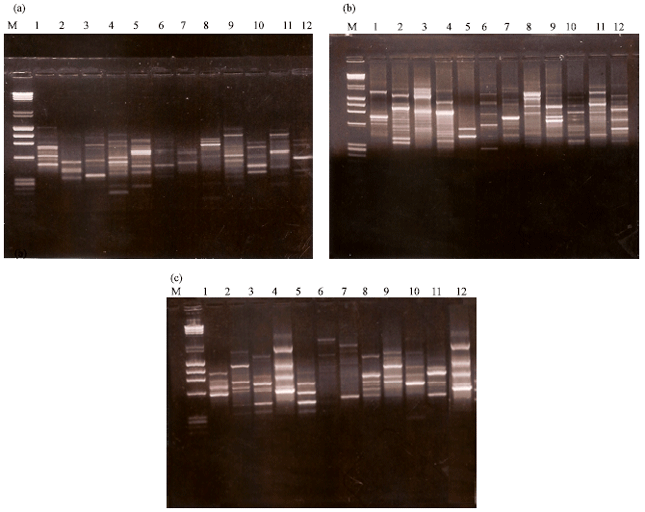 | |
| Fig. 1: | Photographs of electrophoresis of DNA shows RAPD bands of twelve primers with three species of Albizia under investigation, lane M: resembles marker, L1: OPA-05 primer, L2: OPA-08 primer, L3: OPA-18 primer, L4: OPA-20 primer, L5: OP B-15 primer, L6: OPD-01 primer, L7: OPD-04 primer, L8: 1- OPP-01 primer, L9: OPP-16 primer, L10: OPO-02 primer, L11: OPO-14 primer, L12: OPO-16 primer |
In this study, the presence of the same bands in DNA of three species of Albizia indicated degree of taxonomical relationship between the tested plants; also the presence of characteristic bands in DNA of each species offered a help for differentiation between these species.
Tannin: Results of the gravimetric determination of total tannins in the leaf and stem of A. lebbeck L. were 4 and 5.3%, respectively, while colorimetric determination of condensed tannins revealed the presence of 0.82 and 1.3% of proanthocyanidins, respectively. Tannin content in the organs under investigation were lesser than those recorded in bark (7-11%) (Rayudu and Rajadurai, 1965). The seed and pericarp were nearly devoid of tannins.
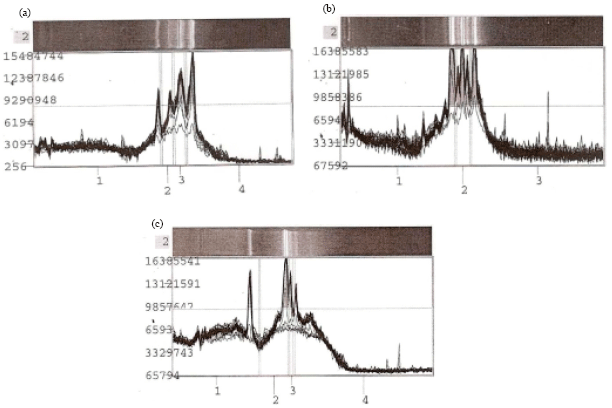 | |
| Fig. 2: | The biogenesis software analytical peaks showing RAPD bands three species of Albizia with OPA-05 primer. (a) Albizia lebbeck L., (b) Albizia julibrissin D. and (c) Albizia porase L. |
 | |
| Fig. 3: | The biogenesis software analytical peaks showing RAPD bands three species of Albizia with (OPA-08) primer. (a) Albizia lebbeck L., (b) Albizia julibrissin D. and (c) Albizia porase L. |
 | |
| Fig. 4: | The biogenesis software analytical peaks showing RAPD bands three species of Albizia with (OPA-18) primer. (a) Albizia lebbeck L., (b) Albizia julibrissin D. and (c) Albizia porase L. |
 | |
| Fig. 5: | The biogenesis software analytical peaks showing RAPD bands three species of Albizia with(OPA-20) primer. (a) Albizia lebbeck L., (b) Albizia julibrissin D. and (c) Albizia porase L. |
 | |
| Fig. 6: | The biogenesis software analytical peaks showing RAPD bands three species of Albizia with (OPB-15) primer. (a) Albizia lebbeck L., (b) Albizia julibrissin D. and (c) Albizia porase L. |
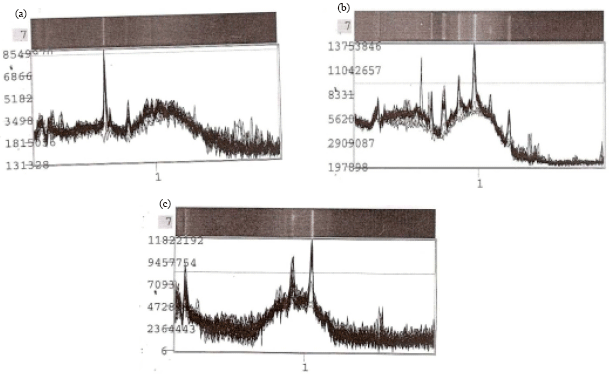 | |
| Fig. 7: | The biogenesis software analytical peaks showing RAPD bands three species of Albizia with (OPD-01) primer. (a) Albizia lebbeck L., (b) Albizia julibrissin D. and (c) Albizia porase L. |
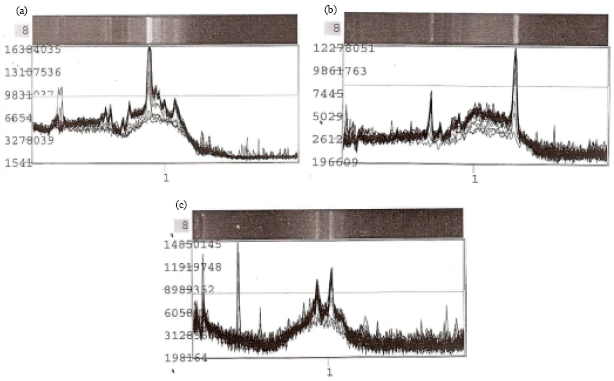 | |
| Fig. 8: | The biogenesis software analytical peaks showing RAPD bands three species of Albizia with OPD-04 primer. (a) Albizia lebbeck L., (b) Albizia julibrissin D. and (c) Albizia porase L. |
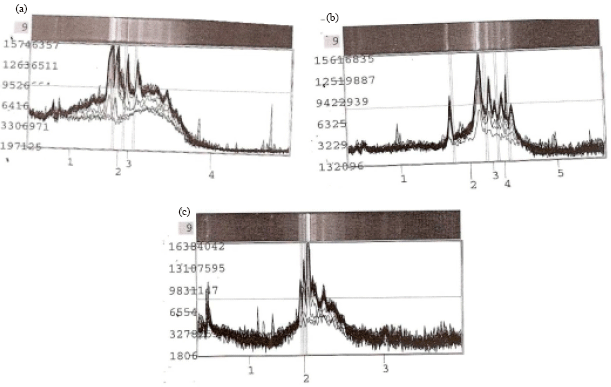 | |
| Fig. 9: | The biogenesis software analytical peaks showing RAPD bands three species of Albizia with (OPP-01) primer. (a) Albizia lebbeck L., (b) Albizia julibrissin D. and (c) Albizia porase L. |
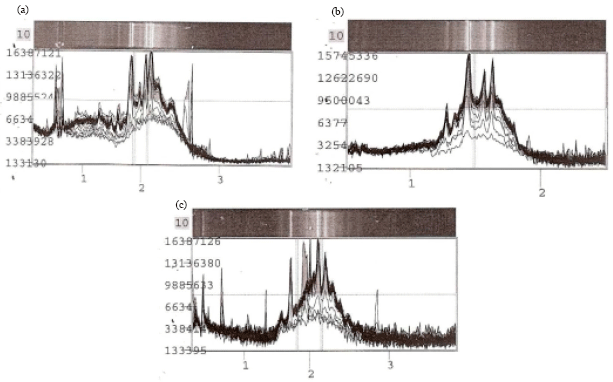 | |
| Fig. 10: | The biogenesis software analytical peaks showing RAPD bands three species of Albizia with (OPP-16) primer. (a) Albizia lebbeck L., (b) Albizia julibrissin D. and (c) Albizia porase L. |
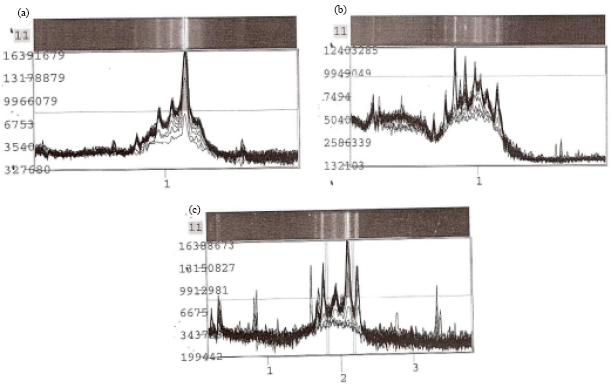 | |
| Fig. 11: | The biogenesis software analytical peaks showing RAPD bands three species of Albizia with (OPO-02) primer. (a) Albizia lebbeck L., (b) Albizia julibrissin D. and (c) Albizia porase L. |
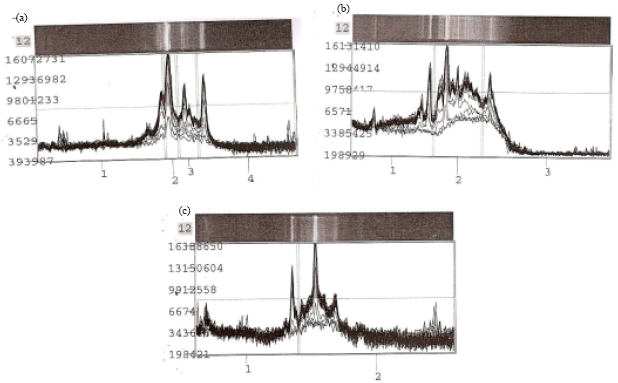 | |
| Fig. 12: | The biogenesis software analytical peaks showing RAPD bands three species of Albizia with (OPO-14) primer. (a) Albizia lebbeck L., (b) Albizia julibrissin D. and (c) Albizia porase L. |
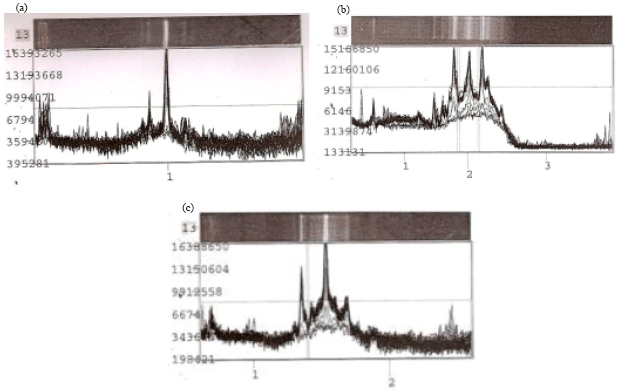 | |
| Fig. 13: | The biogenesis software analytical peaks showing RAPD bands three species of Albizia with (OPO-16) primer. (a) Albizia lebbeck L., (b) Albizia julibrissin D. and (c) Albizia porase L. |
| Table 2: | Total amino acids in different organs of A. lebbeck L. |
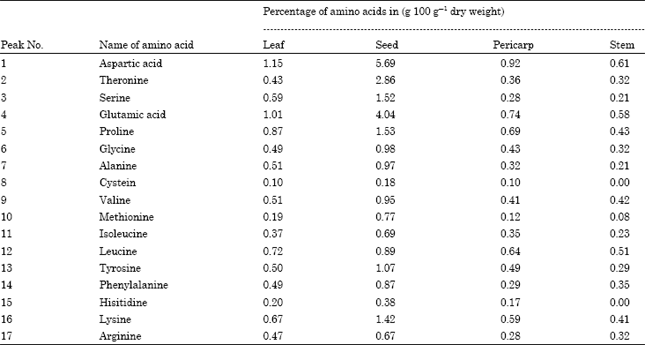 | |
| *Each amino acid was calculated in g 100 g-1 dry weight of each organ | |
Total protein: The amount of protein content in leaf, seed, pericarp and stem of A. lebbeck was found to be 15.14, 25.48, 9.04 and 7.49%, respectively. As the RDA value of the protein levels for adults ranges from 34 -56 g day-1 according to the Food and Nutrition Board, it was easy to calculate percentage coverage of daily protein needs due to the intake of 100 g dried powdered leaf, seed, pericarp and stem that represented: 13.39, 27.03, 16.14 and 45.50% of the minimum reported RDA and 22.05 , 44.52, 26.59 and 74.94% of the maximum levels, respectively. Previous reports (Khajuria and Singh, 1968; Pall, 1979) discussed the protein content in leaf of Albizia lebbeck L. that differs from our investigation that discussed protein content in the different tissues of the plant.
Amino acids: Results of analysis of amino acids (Table 2) revealed the detection of 17 components in each of the seed, leaf and pericarp of Albizia lebbeck L. eleven of them were essential and 6 were non essential, while the stem contained only 15 amino acids, that cystein and hisitidine were not detected. Seed and leaf of A. lebbeck L. recorded a higher percent of amino acid content represented as: the essential (42.19 and 50.16%) and the non essential (57.81 and 49.80%), respectively. Aspartic acid was found to be the major component in the seed, leaf, pericarp and stem (5.69, 1.15 , 0.92 and 0. 61 g 100 g-1 dry weight, respectively) followed by glutamic acid (4.04, 1.01, 0.47 and 0.58 g 100 g-1 dry weight, respectively). According to the regulation presented by WHO, it was found that the daily recommended amounts of the essential amino acids/kg body weight of adult human: threonine (15 mg), valine (26 mg), methionine (10.4 mg), isoleucine (20 mg), tyrosine and phenylalanine (together 25 mg), leucine (39 mg); it was found that daily diet of at least 100 g dry weight of leaf, seed, pericarp and stem of A. lebbeck will be considered as a good source of essential amino acids higher than that recommended by WHO.
| Table 3: | Analysis of vitamins in different organs of A. lebbeck |
 | |
| *Each vitamin was calculated/ 100 g dry weight of each organ | |
| Table 4: | Analysis of minerals in different organs of A. lebbeck L. |
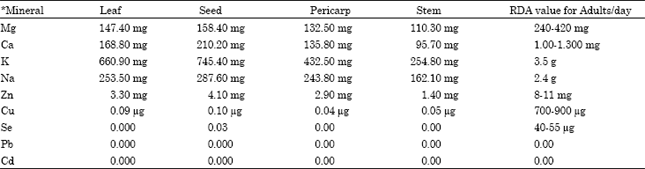 | |
| *Mineral content was calculated/100 g dry weight of each organ | |
Previous analysis (Gaulier, 1968, Randha, 1969) of seed and pericarp reported the same amino acids in addition to tryptophane.
Vitamins: Seed of Albizia lebbeck L. (Table 3) exhibited the highest vitamins content followed by the leaf. Vitamin C was the major in the seed and leaf (56.8and 37.04 mg 100 g-1/dry wt. plant organ, respectively), followed by β-carotene (210.50 and 209.80 μg 100 g-1 dry wt. plant organ, respectively). Vitamin C content in seed and leaf of Albizia lebbeck L. turns out to be higher than most common fruits such as pear (4 mg 100 g-1), apple ( 6 mg 100 g-1), apricot (11 mg 100 g-1), mango (16 mg 100 g-1), lime (20 mg 100 g-1), similar to other fruits such as tangerine (30 mg 100 g-1), grapefruit (30 mg 100 g-1) or orange (50 mg 100 g-1) and lower than guava (100 mg 100 g-1) (Combs, 1992). According to RDA values, 100 g of dried seed supplies the daily human needs of vitamin C, followed by leaf that covers 74.08% of amount needed of vitamin C. To our knowledge this is this first report for the investigation of the vitamin content different organs of Albizia lebbeck L.
Minerals: Seed of Albizia lebbeck L. (Table 4) recorded the highest minerals content followed by the leaf; potassium and sodium being the majors (745.43 and 287.63 mg 100 g-1 dry wt. plant, respectively) in seed and (660.95 and 253.57 mg 100 g-1 dry wt., respectively) in leaf, followed by calcium and magnesium in seed (210.2 and 158.4 mg 100 g-1 dry wt., respectively) and in leaf (168.86 and 147.41 mg 100 g-1, respectively). Zinc was the major micro- elements in seed, leaf, pericarp and stem under investigation and represented by (4.1, 3.3, 2.9 and 1.4 mg 100 g-1 dry wt., respectively). Heavy metals were not detected which indicated the safety of the plant; this was the first report to carry out an evaluation of the minerals content in different organs A. lebbeck L. Unfortunately, it is difficult to obtain the necessary minerals from food because of mineral-deficient soils that are common throughout the world today, so A. lebbeck L. is considered as a good natural source of minerals that can give us a part of mineral daily needs according to RDA.
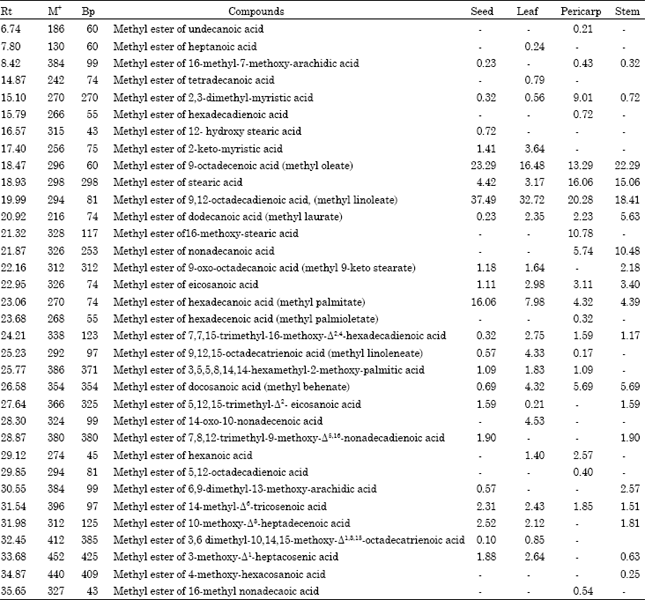
| Table 5: | GC/MS analysis of the methyl esters of fatty acids in different organs of A. lebbeck L. |
 | |
To our knowledge, no previous reports were found dealing with minerals content of Albizia lebbeck L.
Lipids: GC/MS of fatty acid methyl esters of the lipoidal matter of seed, leaf, pericarp and stem of A. lebbeck L. (Table 5) revealed the identification of 22, 22, 21 and 19 components representing 49.7, 52.3, 47.6 and 46.4%, respectively of the total lipids. SaFA was found to be: 13, 14, 13, 12 compounds and represented by: 29.82, 33.78, 61.38 and 52.28%, respectively. MUFA were: 4, 4, 3, 4 compounds and amounted to: 30, 25.57, 15.46 and 26.24%, respectively; PUFA were: 5,4,5,3 compounds and amounted to: 40.38, 40.65, 23.16 and 21.48%, respectively. Linoleic acid was the major fatty acid in seed, leaf and pericarp (37.49, 32.72 and 20.28%, respectively) followed by oleic acid in seed, stem and leaf (23.29, 22.29 and 16.48%, respectively), stearic acid in pericarp (16.06%), oleic and linoleic acids in the stem (22.29 and 18.41%, respectively).
| Table 6: | GC/MS analysis of the unsaponifiable matter of different organs of A. lebbeck L. |
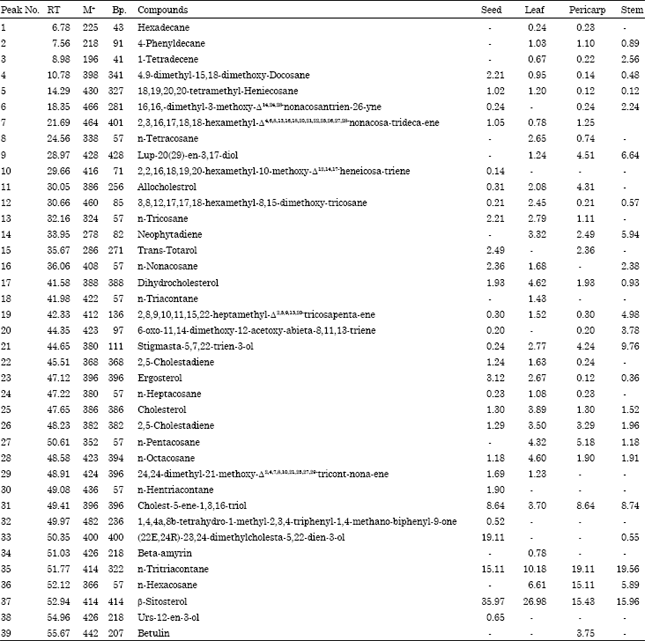 | |
GC/MS analysis of the unsaponifiable matter of the seed, leaf, pericarp and stem (Table 6) led to the identification of 28, 30, 30 and 23 components, respectively; β-sitosterol was the major component in seed and leaf being of 35.97 and 26.98%, respectively, followed by (22E, 24R)-23, 24-dimethylcholesta-5, 22-dien-3-ol (19.11%) in seed and n-triacontane (10.18%) in leaf. On the other hand, the major components in pericarp and stem were found to be n-tritricontane (19.11 and 19.56%, respectively) and β-sitosterol (15.43 and 15.96%, respectively). Previous studies (Asif et al., 1986) reported the presence of aliphatic alcohols, taraxerol, β-amyrin, cycloartenol, lupeol, 24-methylene cycloartanol in the unsaponifiable lipid that differed from our detection. The comparative study between the four organs under investigation was carried out for here the first time.
CONCLUSION
DNA fingerprinting of three species of Albizia cultivated in Egypt, drew the attention of the forage working, development groups and conservation of Albizia species. The development of DNA Markers has opened a new perspective study of the genetic relationships in plants. Random amplified polymorphic DNA (RAPD) has generated a large number of polymorphic markers and it is the mostly common methods used. The observed results of leaf, seed, pericarp and stem of A. lebbeck L. showed a pronounced high protein (7-25%), essential and non essential amino acids (that exceeds the recommended demands according to WHO), mineral and vitamin contents supported the traditional use of the plant as a good fodder. From the GC/MS analysis of lipoidal matter, some unsaturated fatty acids were detected that can be used as a source of bioactive fatty acids having a positive impact on human health.
REFERENCES
- Hagerman, A.E. and L.G. Butler, 1994. Assay of condensed tannins or flavonoid oligomers and related flavonoids in plants. Methods Enzymol., 234: 429-437.
PubMedDirect Link - Kumar, N. and O.P. Toky, 1994. Variation in chemical contents of seed and foliage in Albizia lebbek (L.) Benth. of Agroforestry Syst., 25: 217-225.
CrossRef