

J. Ohakwe
Department of Statistics, Faculty of Biological and Physical Sciences, Abia State University, P.M.B. 2000, Uturu, Abia State, Nigeria
I.S. Iwueze
Department of Physical Sciences, College of Natural and Applied Sciences, Renaissance University, P.M.B. 01183, Ugbawka, Enugu State, Nigeria
D.C. Chikezie
Department of Statistics, Faculty of Biological and Physical Sciences, Abia State University, P.M.B. 2000, Uturu, Abia State, Nigeria
Asian Journal of Applied Sciences
Year: 2011 | Volume: 4 | Issue: 2 | Page No.: 166-175







ABSTRACT
The increasing level of road traffic accident in Imo State and the consequent injuries and deaths strengthened the case for its regular analysis. Data on recorded cases of road traffic accidents were collected from the Motor Traffic Division (MTDRTR), the Nigerian Police Force, Divisional Headquarters Umuguma, Owerri West, Imo State Police Command. Using the method of time series decomposition, traffic road accidents were characterized to have an upward trend and significant seasonal influences. Using chi-square test of significance, it was discovered that there were significant differences among the various causes of accidents and accident cases (Minor, fatal and serious) with respect to types of vehicles involved over the years. Out of 5921 accident cases, reckless driving, inexperience and mechanical fault and road defects accounted for 30.3, 21.5 and 21.1%, respectively. Two motorcycles, motorcycle-vehicle and vehicle-vehicle crashes are the lead types and have resulted in 38.9, 37.5 and 14.9% of the total of 855 deaths recorded within the period of study. Furthermore, it was also found that private cars, minibuses and taxis accounted for most of the accidents with 94.7% of the total accidents.
PDF Abstract XML References Citation
How to cite this article
J. Ohakwe, I.S. Iwueze and D.C. Chikezie, 2011. Analysis of Road Traffic Accidents in Nigeria: A Case Study of Obinze/Nekede/Iheagwa Road in Imo State, Southeastern, Nigeria. Asian Journal of Applied Sciences, 4: 166-175.
DOI: 10.3923/ajaps.2011.166.175
URL: https://scialert.net/abstract/?doi=ajaps.2011.166.175
DOI: 10.3923/ajaps.2011.166.175
URL: https://scialert.net/abstract/?doi=ajaps.2011.166.175
INTRODUCTION
A Road Traffic Accident (RTA) is when a road vehicle collides with another vehicle, pedestrian, animal or geographical or architectural obstacle. The RTAs can result in injury, property damage and death. RTA results in the deaths of 1.2 m people worldwide each year and injures about 4 times this number (WHO, 2004). In this study, a road traffic accident is defined as accident which took place on the road between two or more objects, one of which must be any kind of a moving vehicle (Jha et al., 2004). Road Traffic Accidents (RTAs) are increasing with rapid pace and presently these are one of the leading causes of death in developing countries.
The morbidity and mortality burden in developing countries is rising due to a combination of factors, including rapid motorisation, poor road and traffic infrastructure as well as the behavior of road users (Nantulya and Reich, 2002). This contrasts with technologically advanced countries where the indices are reducing (Oskam et al., 1994; O’Neill and Mohan, 2002).
Imo State, a slight heavily motorized country with poor road conditions and transport systems has a high rate of Road Traffic Accidents (RTAs) and the tendency is on the increase. The recognition of RTA as a crisis in Nigeria inspired the establishment of the Federal Road Safety Commission (FRSC).
The FRSC was established by the government of the Federal Republic of Nigeria vide Decree 45 of 1988 as amended by Decree 35 of 1992, with effect from 18th February, 1988. The Commission was charged with responsibilities for, among others, policymaking, organization and administration of road safety in Nigeria.
As can be seen from the trend over a 15-year period (1971-1985) (Asogwa and Obionu, 1986), legislative and other countermeasures such as the establishment of FRSC and the Vehicle Inspection Officials (VIO) have not recorded spectacular achievement. Records still show that RTA in Nigeria requires attention.
For developing measures aimed at reducing the rate of RTA and the consequent injuries and fatalities, there is a need for regular evaluation of the RTA in terms of the trend, major causes, vehicles involved and types among other factors and this is the purpose of this study.
According to AUSTROADS (1994), road accidents occur as a result of one, or more than one of the following factors: Human factors; Vehicle factors; Road and environmental factors. Driving faster or slower than the flow of traffic-which may or may not accord with the posted speed limit-has robustly been demonstrated to increase the likelihood and severity of crashes, as shown by the Solomon Curve (OOIDA, 2003).The factors of traffic accidents are driver, the highway and motor vehicles (Aaron and Strasser, 1990; Balogun and Abereoje, 1992; Luby et al., 1997; Mock et al., 1999). Most traffic accidents often involve the three elements. Most RTAs involve motor vehicles but Bicycles or Pedestrians accidents can occur without vehicles (Stutts and Hunter, 1999). A high proportion of RTAs can be apportioned to unsafe human acts. The drunken drivers of motor vehicles make the clearest example (Hijar et al., 2000). Reckless and dangerous driving, alcoholism, faulty pedestrian attitude, etc constitute the major causes in Nigeria (Ezenwa, 1986; Odero, 1998).
Eke et al. (2000) using data collected form University of Port Harcourt Teaching Hospital (UPTH) from January 1986 to December 1995 found that 70% of total accidents in Port Harcourt, Nigeria occurred during the rainy seasons and that most accidents occurred during the weekends. They went further to recommend that the roles of road users and agents responsible for keeping the roads safe should be defined so that responsibility for mishaps can be apportioned.
This study follows the same path and analyses data on the reported number of RTAs for the period 2000-2008 along (Obinze/Ihegwa/Nekede) road in Owerri West Local Government Area (LGA), Imo State, Southeast Nigeria, collected from the Motor Traffic Division (MTDRTR), of the Nigerian Police Force, Divisional Headquarters Umuguma Owerri West Imo State Police Command.
The Obinze/Ihegwa/Nekede road is approximately a 26 km road that leads to Federal University of Technology, Owerri (FUTO), Federal Polytechnic, Nekede and Imo State Polythecnic (former College of Agriculture) from Owerri, the capital city of Imo State and as a result is very busy and hugely important to Imo State and Federal Governments. Considering the importance of the road and the increased level of RTAs in recent years along the road, there is need for this study aimed at characterizing the RTA to provide an enabling base for the development of countermeasures by the Government and the Traffic control agents to reduce the incidences of RTA.
MATERIALS AND METHODS
Data for the study were collected on monthly basis from the Motor Traffic Division (MTDRTR), the Nigerian Police Force, Divisional Headquarters Umuguma, Owerri West, Imo State Police Command for the period January 2001 December 2008. The data were classified into types (minor, serious and fatal), cause, types of vehicles and number of persons involved.
Considering that the data is a time-sequence data collected at regular interval (monthly), we would adopt the technique of time series analysis in analyzing the data. Descriptive statistics would also be used to summarize the data.
Time series analysis refers to that body of principles and techniques, which deal with analysis of the observed data Xt , t = 1, 2, ....n. Usually the data are analyzed in order to gain an understanding of the underlying generating mechanism of the process, Xt, t∈Z (Delurgio, 1998; Priestley, 1981). Since the emphasis on time series analysis is on model building, the following model are always considered.
 | (1) |
 | (2) |
Or the Multiplicative model with additive error (irregular) component given by:
 | (3) |
where for time t, Xt denotes the observed value of the series, Tt is the trend, Stthe seasonal component, Ct the cyclical component and It, the irregular component of the series (Chatfield, 2004; Kendall and Ord, 1990). Model (3) may also be grouped under mixed models. Considering the short period of time involved in this study, the cyclical component is superimposed into the trend and we obtain a trend-cycle component denoted by Mt (simply referred as trend). In this case Eq. 1-3, respectively become,
 | (4) |
 | (5) |
 | (6) |
For our choice of model, the data would speak for itself.
The data on monthly RTAs is presented in a two dimensional table (Buys-Ballot Table (Buy-Ballot, 1847) accessed in Wei 1989 in Table 1. A time series plot of the data is shown in Fig. 1, while the plots of the yearly mean and standard deviations are shown in Table 1.
From Table 1, the series is can be seen to have seasonal effects with a slight upward trend. There is an upsurge of the series, though of varying magnitude in the months of January and December. In Table 1, it is seen that the standard deviation is not stable and mimics the mean. It increases with the mean suggesting a multiplicative model. Minitab was used to decompose the data into its components namely; the trend, seasonal and irregular (residuals) components as well as plotting the ACF of the residual series.
| Table 1: | Number of accidents by months |
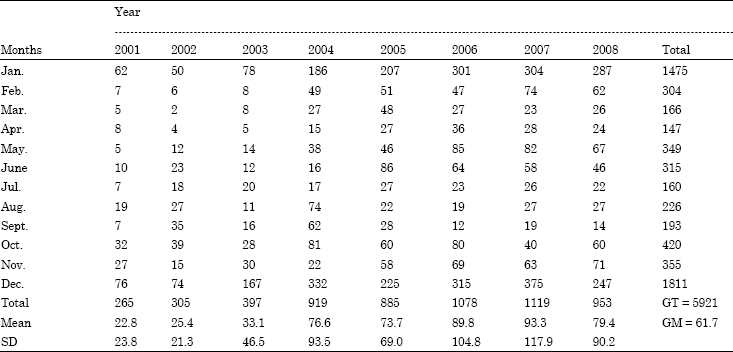 | |
| Note: GT: Grand total, GM: Grand mean | |
| Table 2: | Type of accident cases by type |
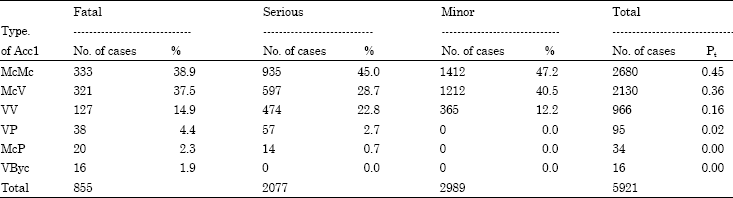 | |
| χ2 value= 359.81 and χ2 6, 0.05 = 12.59, Note: For the Chi-square test to be performed, the rows-VP, McP, VBcy were pooled to VV | |
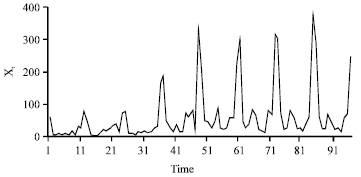 | |
| Fig. 1: | A time series plot the road accident data (Xt) |
In order to ascertain the adequacy of the fitted model, we assessed the (ACF) of the residual series It (Xt -(Mt *St)) (Table 2). For model adequacy at 5% level of significance, the autocorrelation coefficients are all expected to lie in the interval:
 |
where, n is the number of observations.
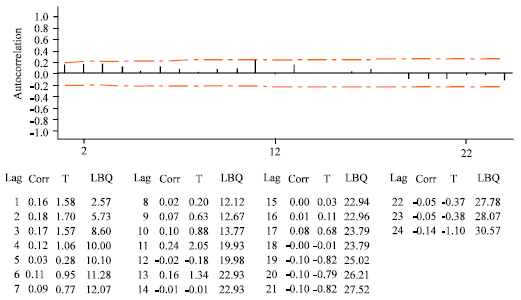 | |
| Fig. 2: | ACF of the residual series |
The ACF of the residual series with the autocorrelation coefficients at various lags are shown in Fig. 2. It is clear from Fig. 2 that all the coefficients lie within the interval except at lag 11 whose value is 0.24. However, there is not enough evidence to reject the model at 5% level of significance since there is only one value and did not occur at the seasonal lag or multiples of it. For detailed discussion of residual analysis (Ljung and Box, 1978; Box et al., 1994).
The categories (Fatal, Serious and Minor) of RTAs by types are shown in Table 2. Using Chi-square test, it was established that there is a significance difference between the various categories of RTA by types since the test statistic (80.53) exceeds the critical value of χ2 with 42 degrees of freedom at 5% level of significance (χ242, 0.05 = 58.14). It is obvious from Table 2 that out of the 5921 incidences of RTAs, two-Motorcycle-crash (McMc) came across the other types of RTA with 45.3%, followed by Motorcycle-Vehicle (McV) and vehicle-Vehicle (VV) with 36.0 and16.3%, respectively. In terms of fatality McMc and McV came on top with 38.9 and 37.5%, respectively followed by VV with 14.9%.
Data on causes of RTAs by types are presented in Table 3 while that of vehicles involved is presented in Table 4. Using Chi-square test, it was established that there is a significance difference between the various causes of RTA over the years since the test statistic (80.53) exceeds the critical value of χ2 with 35 degrees of freedom at 5% level of significance (χ235, 0.05 = 49.73). Using Marascuillo test procedure (SEMATECH, 2003) to compare the various proportions of the RTA by causes, significant differences were discovered between the proportion caused by reckless driving (P1) and those of inexperience (P2), Mechanical fault and bad road (P3) and unknown causes (P5) and also between P2 Vs P5 and P3 and P5 ( Table 6). From Table 3, reckless driving accounted for greater number of the RTAs with 30.3% followed by inexperience and mechanical fault and bad road accounting for 21.5 and 21.1%, respectively. There is no significant difference between the proportions caused by inexperience and mechanical fault and bad road as shown in Table 6.
| Table 3: | Number of accidents by cause |
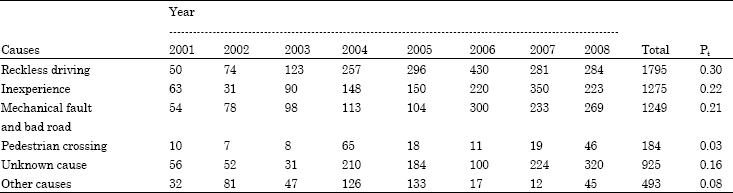 | |
| χ2value = 917.85 and χ242, 0.05 = 49.73, Pt: Proportion | |
| Table 4: | Number and type of motor vehicles involved in RTA |
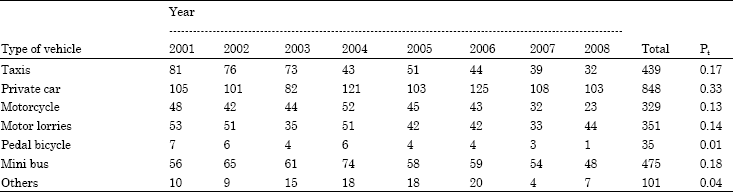 | |
| χ2 value = 80.53 and χ242, 0.05 = 85.14 | |
| Table 5: | Monthly seasonal indices |
 | |
| Table 6: | Marascuillo test procedure for types of vehicle involved in RTA |
 | |
| Pi is the proportion by cause, P1: Reckless driving, P2: Inexperience, P3: Mechanical fault and bad road, P5: Unknown causes; the proportions due to pedestrian crossing and other causes were ignored since they are of negligible magnitude | |
Similarly, Chi-square test suggested significant difference between the types of accident over the years since the test statistic (917.85) exceeds the critical value ofχ2 with 42 degrees of freedom at 5% level of significance (χ242, 0.05). Also using Marascuillo test procedure to compare the various proportions of the RTA by vehicle types, significant differences were discovered between the proportions involving Private cars (P2) and those of Taxis (P1), Motorcycle (P3) Motor Lorries (P4) and Mini buses (P6) and also between P2 Vs P3, P2 Vs P4 and P2 Vs P6 (Table 7). On the number of vehicles involved, out of a total of 2578 motor vehicles involved over the period, Private cars accounted for 32.9% (Note that there were no significant differences among all other contrasts not involving Private cars (P2).
| Table 7: | Marascuillo test procedure for causes of RTA |
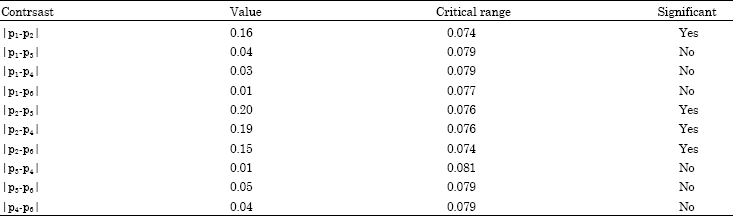 | |
| Pt: Taxis, P2: Private cars,P3: Motorcycles, P4: Motor lorries, P6: Mini buses; the proportions due to pedal bicycles and other types of Vehicles were ignored since they are of negligible magnitude | |
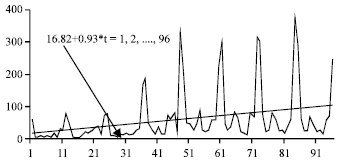 | |
| Fig. 3: | A plot of the data and its trend line |
Finally, a plot of the data with its trend line is given in Fig. 3 while the monthly seasonal indices are given in Table 5. By the trend line, it is clear that the RTA increased by a factor of approximately 1 over the constant level of 16 cases over the period of study. It is also seen from Table 5 that the months of December and January topped the indices with 3.58 and 3.33, respectively followed by October, November and June with 0.91, 0.72 and 0.65, respectively.
DISCUSSION
From the results of the study, it is clear that the incidences of the RTA are on the increase and characterized by seasonal factors as can be seen from the high values of the seasonal indices in Table 5 for the months of January, February, May, June, October, November and December. This study is in line with previous studies in developing countries which suggest that RTA has been on the increase. It also agrees with the results of the study by Eke et al. (2000) that there are seasonal variations in RTA cases. However, it is at variance with it with respect to the period where it occurs most. Eke et al. (2000) found that RTAs occur most during the rainy season (June, July and August) while ours are in the first and second quarters precisely in the months of January and December which are dry season period. Considering the fact that heavy road traffics lead to more RTAs, the difference may be explained by the following facts;
| • | Universities and Polytechnics close for Christmas holidays and students go home in the month of December and to return in the month of January on re-opening |
| • | The heavy traffic on all Nigerian roads of which the Obinze/Iheagwa/Nekede road is no exemption as a result of the Christmas festival spanning through 1st and 2nd quarters (1st quarter-January, February and March; 2nd quarter-October, November and December) of the year in Igbo land, Southeastern Nigeria |
| • | The months of May and June are very rainy periods and RTA is expected to occur more during this period as a result of bad road and reduced visibility whenever it is raining |
It also agrees with Ezenwa (1986) and Odero (1998) that reckless driving is a lead cause of RTA in Nigeria.
The reason for the high level of RTA involving Motorcycles (McMc and McV) is not far fetched. As a result of the high level of unemployment in Nigeria, a lot of the unemployed youths took to Motor-cycle-riding popularly known in Nigeria as Okada- riding (Okada-riding is the use of Motorcycle as a means of transportation) as a means of livelihood without being well grounded in good-road-using capabilities such as ability to read signs and obey traffic rules and regulations. No wonder the Imo State Government has now started banning Okada riding in most of the major cities.
It is not uncommon that reckless driving, a human factor (AUSTROADS, 1994) caused a greater percentage of the RTA. This may be attributed to the fact that many of the students who ply the road with their parents or relatives vehicles are bound to be reckless in driving with a view of impressing their fellow students and most of them are also inexperienced in driving. This factor also partly explained why larger numbers of vehicles, involved in RTAs along the road are private cars. More so, most of the staff of the Institutions live in Owerri, the capital city of Imo State and are frequent users of the road with their private vehicles to and fro.
Mechanical fault and road defects (MRD) which can be grouped under Vehicle and road and environments factors respectively are also significant cause of RTA. This is in agreement with AUSTROADS (1994) that says that one or more of human, Vehicle and road and environment factors must be involved for RTA to occur. This may be attributed to the fact that the conditions of most Nigerian roads are generally poor and majority of the vehicles are fairly used, imported from Europe and Asia (These imported fairly used cars are locally called Belgium) and majority of them have been used for over 15 years in Nigeria.
On the part of inexperience which is a human factor, there are too many I-Can-Drive (ICD) drivers (ICD means just the ability to move vehicles without knowing the rules and regulations guiding road use) using the road of which a good number of the students belong to this class.
On the part of Mini-buses and Taxis being significantly involved in RTAs is due to the fact that they are the major means of transport for the students to and fro. This finding is in agreements with Eke et al. (2000) and Thanni and Kehinde (2006). While the former have observed that cars and buses are commonly involved in the casualties of RTAs in Nigeria followed by motorcycles and Lorries, the latter found that minibuses, the popular mode of commercial transportation was involved in 63.9% of RTAs, while cars were involved in 14.8% of cases. Motorcycles and pedal bicycles were involved in 6.2 and 0.6% of cases, respectively while Lorries and trailers were involved in 1.1% of cases each.
Based on the results of the study, the following preventive measures are suggested:
| • | Training of drivers should be made a very serious affair and must be properly supervised by qualified personnel and traffic road control agents |
| • | Drivers’ licenses should only be issued to those who have passed through a series of Driver and Traffic Safety Tests (DTST) |
| • | Motor vehicles should be thoroughly inspected for roadworthiness before registration. Inspection checklist should include the number of years the vehicle has been used, rear and side view mirrors, windscreen wipers, speedometer, brakes and brake lights, trafficators, reverse and parking lights and so on (Nwokoro, 2005) |
| • | The FRSC, VIO and other Traffic wardens should step up to their responsibilities and should go extra miles during the traffic heavy periods (festive and rainy periods) of high RTA level |
| • | Driver and Traffic Safety Education (DTSE) should be offered as a pre-requisite to the issuance of driving licenses. DTSE should also be offered in Primary and Post-primary schools and Tertiary Institutions |
CONCLUSIONS
The fundamental finds of this study are that RTAs in Imo State, Nigeria are characterized by an upward trend and seasonal effect of an appreciable magnitude. Crashes-Motorcycles-Motorcycle (McMc), Motorcycles-Vehicle (McV) and Vehicle-Vehicle (VV) are the lead types and accounted for the greater number of deaths. Reckless driving, inexperience and mechanical fault and bad roads are the major causes while Private cars, Minibuses and Taxis were predominantly involved in RTA.
The increasing toll of RTA in Imo State, Nigeria and consequent deaths and injuries constitute a public health problem which requires a serious attention since these deaths and injuries may be preventable.
Though the data used in the study were collected only on Obinze/Iheagwa/Nekede road, however the finds provides an insight into the trend and characteristics of RTAs in Nigeria.
Finally, it is our utmost belief that the preventive measures proffered in this paper will yield spectacular results in Imo State and Nigeria in general if properly and honestly adopted.
ACKNOWLEDGMENT
The authors wish to thank the Motor Traffic Division (MTDRTR) of the Nigerian Police Force, Divisional Headquarters Umuguma, Owerri West, Imo State Police Command Nigeria for the data of this study.
REFERENCES
- Asogwa, S.E. and C.N.Obionu, 1986. Urban pedestrian accidents and the efficiency of counter measure. Central Afr. J. Med., 31: 62-65.
PubMed - Balogun, J.A. and O.K. Abereoje, 1992. Pattern of road traffic accidents cases in a Nigerian university teaching hospital between 1987 and 1990. J. Trop. Med. Hyg., 95: 23-29.
PubMed - Eke, N., E.N. Etebu and S.O. Nwosu, 2000. Road traffic accident mortalities in port harcourt, Nigeria. Anil Aggrawals Internet J. Forensic Med. Toxicol., Vol 1(2).
Direct Link - Ezenwa, A.O., 1986. Trends and characteristics of road traffic accidents in Nigeria. J. R. Soc. Health, 106: 27-29.
PubMed - Hijar, M., C. Carrillo, M. Flores, R. Anaya and V. Lopez, 2000. Risk factors in highway traffic accidents: A case control study. Accid. Anal. Prevention, 32: 703-709.
PubMedDirect Link - Jha, N., D.K. Srinivasa, G. Roy and S. Jagdish, 2004. Epidemiological study of road traffic accident cases: A study from South India. Indian J. Community Med., 29 : 20-24.
Direct Link - Luby, S., I Hassan, N. Jahangir, N. Rizvi and M. Farooqi et al., 1997. Road traffic injuries in Karachi: The disproportionate role of buses and trucks. Southeast Asian J. Trop. Med., 28: 395-398.
PubMedDirect Link - Ljung, G.M. and G.E.P. Box, 1978. On a measure of lack of fit in time series models. Biometrika, 65: 297-303.
Direct Link - Mock, C., J. Amegashie and K. Darteh, 1999. Role of commercial drivers in motor vehicle related injuries in Ghana. Injury Prevention, 5: 268-271.
PubMedDirect Link - Nantulya, V.M. and M.R. Reich, 2002. The neglected epidemic: Road traffic injuries in developing countries. Br. Med. J., 324: 1139-1141.
PubMedDirect Link - Odero, W., 1998. Alcohol - related road traffic injuries in Eldoret, Kenya. East Afr. Med. J., 75: 708-711.
PubMedDirect Link - O'Neill, B. and D. Mohan, 2002. Reducing motor vehicle crash deaths and injuries in newly motorizing countries. BMJ., 324: 1142-1145.
Direct Link - Oskam, J., J. Kingma and H.J. Klasen, 1994. The Groningen trauma study. Injury patterns in a Dutch trauma centre. Eur. J. Emergency Med., 1: 167-172.
PubMedDirect Link - Priestley, M.B., 1981. Spectral Analysis and Time Series. 1st Edn., Academic Press, London, ISBN-10: 0125649010, pp: 653.
Direct Link - Stutts, J.C. and W.W. Hunter, 1999. Motor vehicle and roadway factors in pedestrians and bicyclist injuries. Accident Anal. Prevention, 31: 505-514.
PubMedDirect Link - Thanni, L.O.A. and O.A. Kehinde, 2006. Trauma at a Nigerian teaching hospital: Pattern and documentation of presentation. Afr. Health Sci., 6: 104-107.
Direct Link
EKWUEME JOSEPH OKEY Reply
this is a very good analysis and it servs as a very good matrial for related research work.
EYONG, CLEMENT KOKO Reply
This paper is academically rich and detailed in its conceptual analysis.